The Logistics Management System Web App brings 29 connected modules — from consignment booking and live shipment tracking to dispatch, proof of delivery, fleet, billing and financial reports — into one login-based browser tool. Its Operations Dashboard surfaces 12 KPI cards and 5 analytical charts with a branch filter, and the whole system runs on Google Apps Script, so there is no server to rent and no per-user subscription.
Most growing transport and courier businesses run on a patchwork of Excel files, WhatsApp updates and paper PODs. That works until volumes climb — then bookings get lost, customers chase status, and month-end billing becomes a scramble. This Logistics Management System Web App replaces that patchwork with a single, multi-user system your whole team logs into, while your data stays in your own Google account.
Get the Logistics Management System Web App
🚀 Try the Live Demo Before You Buy
We have deployed this web app in our own Google account so you can test every page, every role, and every module — with real sample data — before purchasing. No signup, no email required.
🔑 Test Login Credentials
Sign in as admin for full access to all modules, settings, users, archive database, import/export and audit log — or explore any of the 7 role logins below to see exactly what each team member can and cannot do.
💡 What you get after purchase: The full source code (Code.gs + Index.html) plus a step-by-step deployment guide so you can deploy your own private instance in your own Google account in under 15 minutes.
Key Features of the Logistics Management System Web App
- 29 modules on one dataset — bookings, tracking, dispatch, POD, warehouse, masters, fleet, freight pricing, billing, payments, expenses, reports, documents, import/export and full administration all connect together.
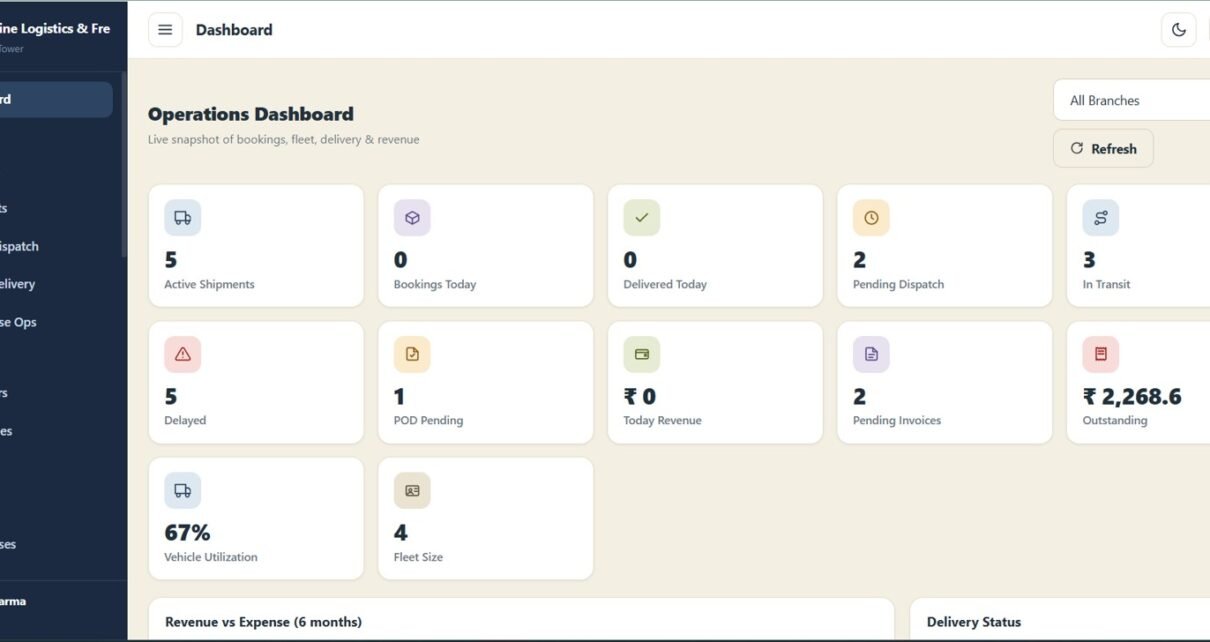
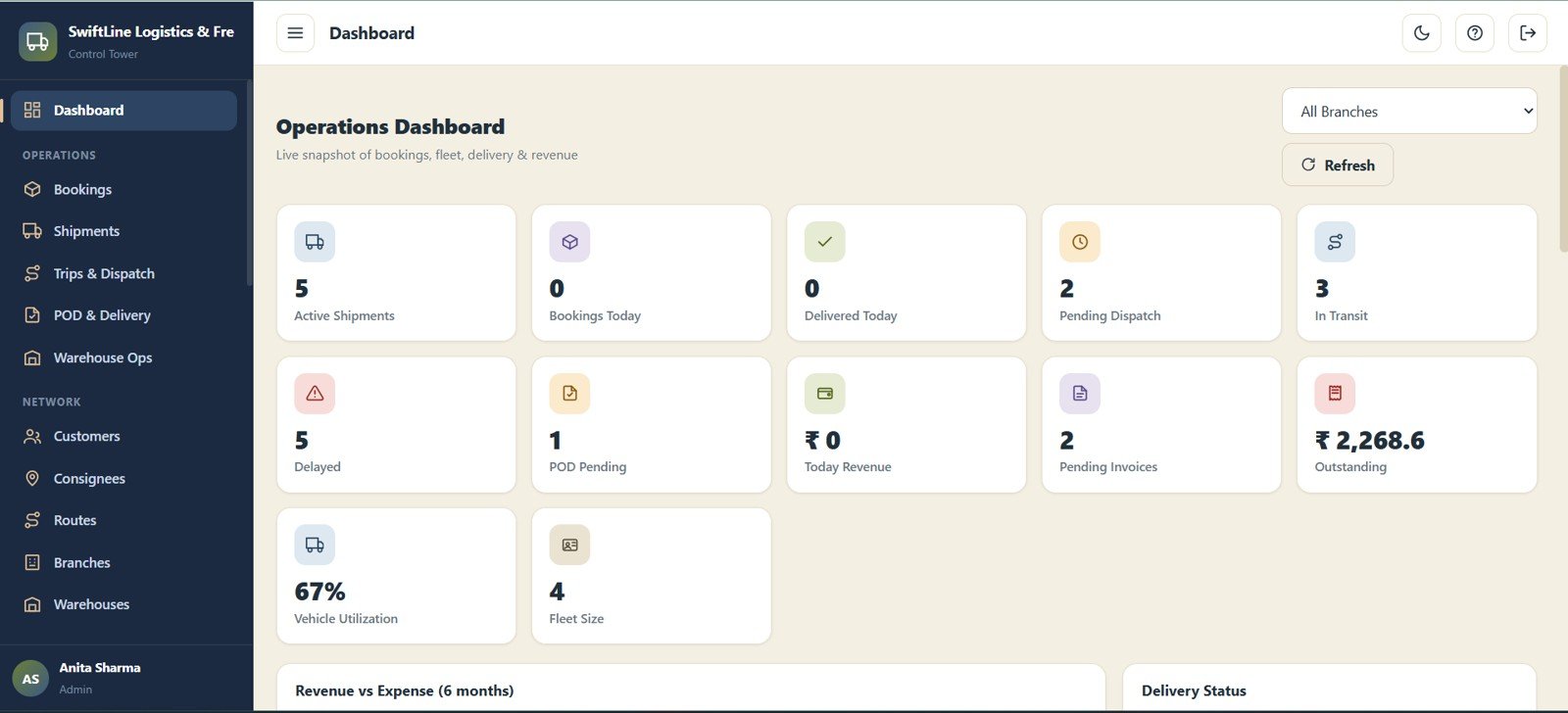
- Operations Dashboard — 12 live KPI cards (Active Shipments, Bookings Today, Delivered Today, Pending Dispatch, In Transit, Delayed, POD Pending, Today Revenue, Pending Invoices, Outstanding, Vehicle Utilization, Fleet Size) plus 5 charts, all filterable by branch.
- End-to-end consignment lifecycle — a booking flows from LR to live tracking to POD to invoice without ever leaving the app.
- Complete fleet suite — Vehicles, Drivers, Maintenance, Fuel Log and Vendors track capacity, insurance and licence expiry, fuel cost and service schedules.
- Multi-user login with branch access — Admin and User roles decide who sees which branch, and the Audit Log records every action.
Inside the Logistics Management System Web App: Every Module Explained
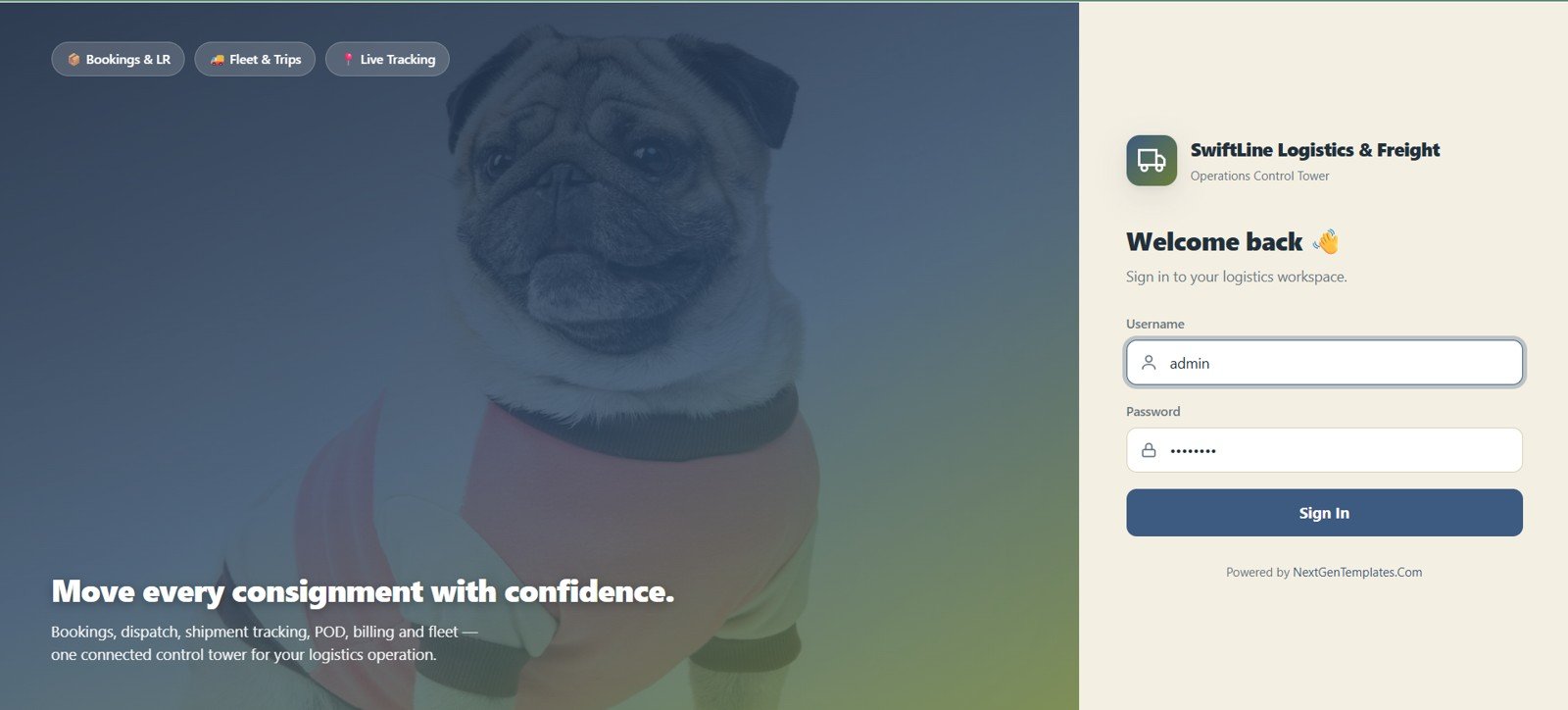
Login Page
The workspace sign-in screen with username and password fields, company and workspace branding, and quick highlights of the key modules the app covers. Role-based access means each user only reaches the branches and modules they are allowed to.
Operations Dashboard — KPI Cards
Twelve KPI cards summarise the whole operation: Active Shipments, Bookings Today, Delivered Today, Pending Dispatch, In Transit, Delayed, POD Pending, Today Revenue, Pending Invoices, Outstanding, Vehicle Utilization and Fleet Size. A branch filter recalculates every card for the selected office.
Operations Dashboard — Charts
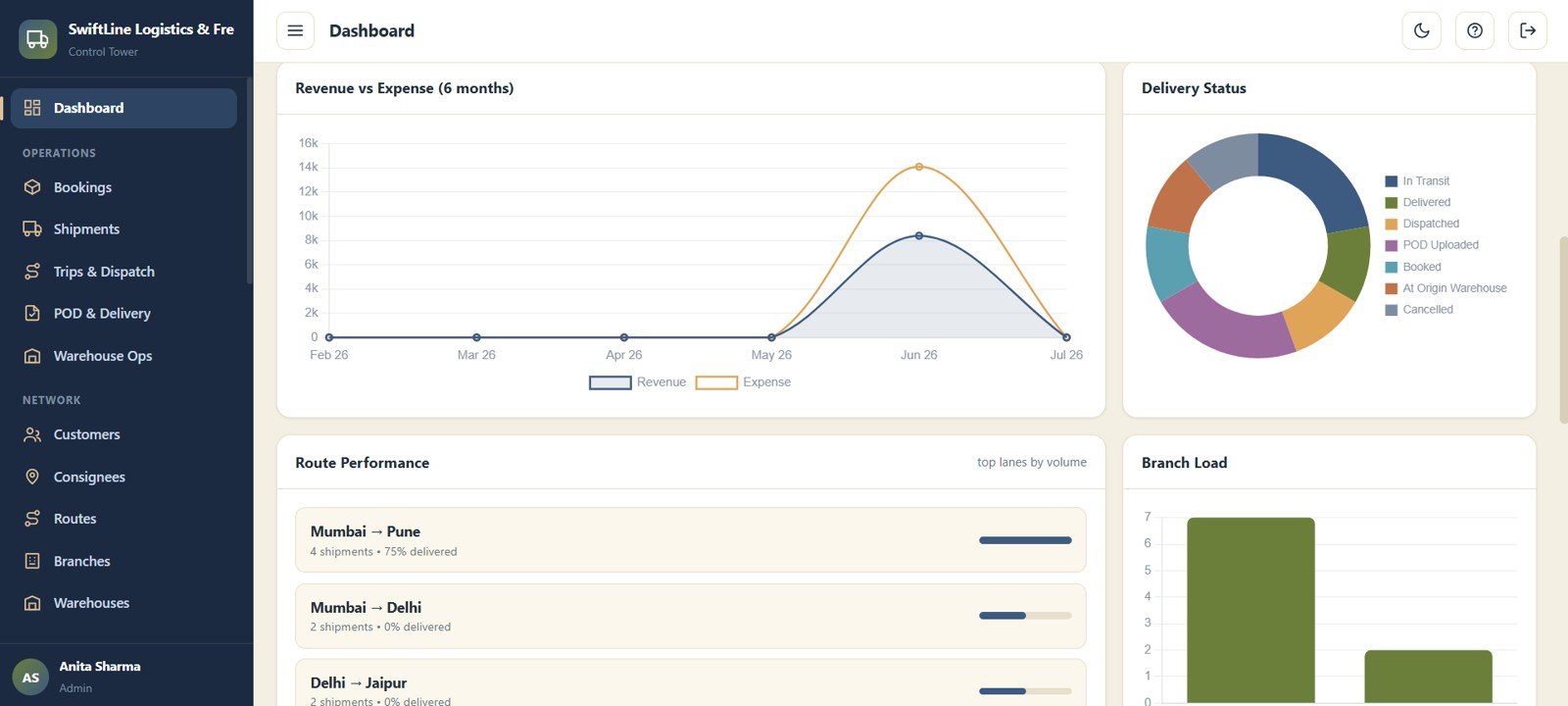
Five charts sit below the cards: Revenue by Month, Expense by Month, Delivery Status by Stage, Route Performance by Lane and Branch Load by Branch. They reveal income versus cost trends, where shipments sit in the pipeline, and which lanes and branches carry the load.
Bookings / Consignments
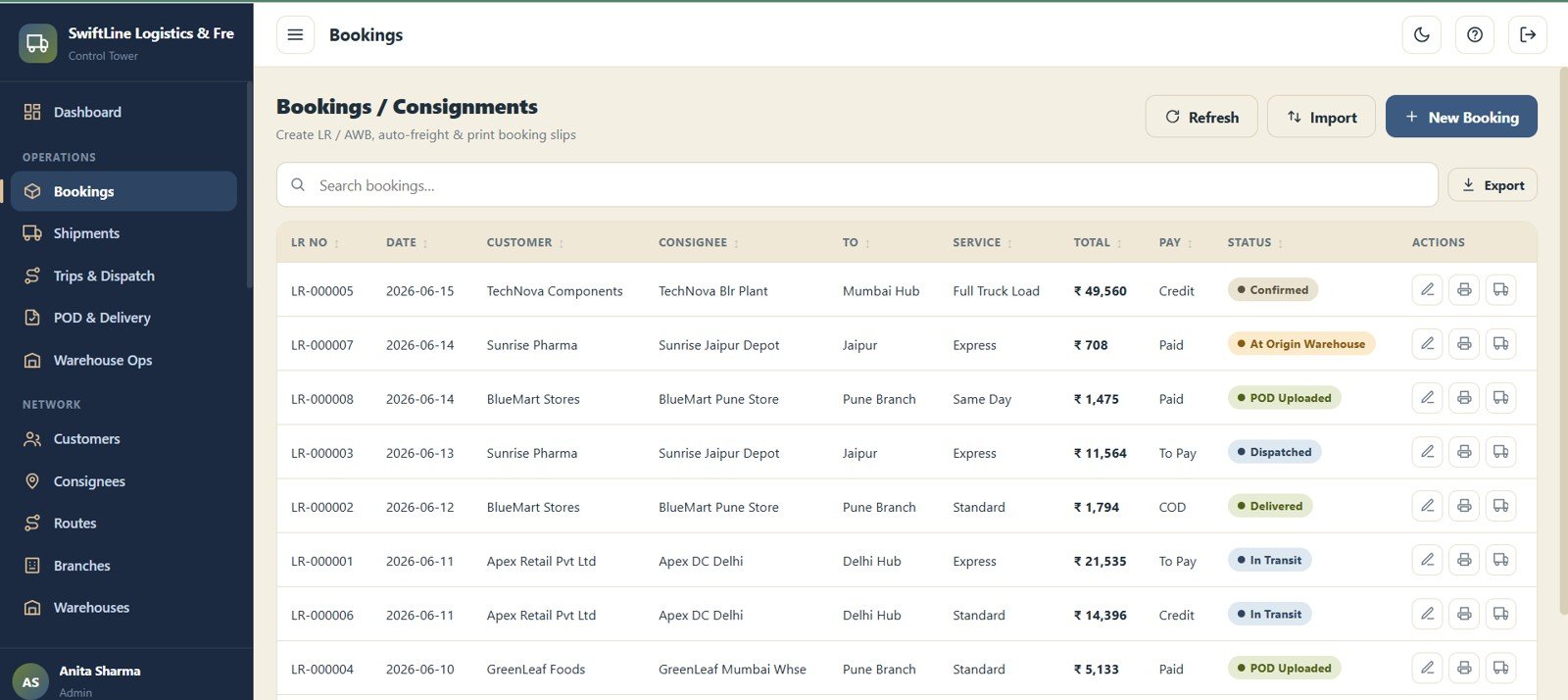
Create and manage every consignment with LR No, Date, Customer, Consignee, To (Destination), Service Type, Total Value, Payment Mode and Status. The searchable, sortable table becomes the single source of truth for every job.
Shipment Tracking
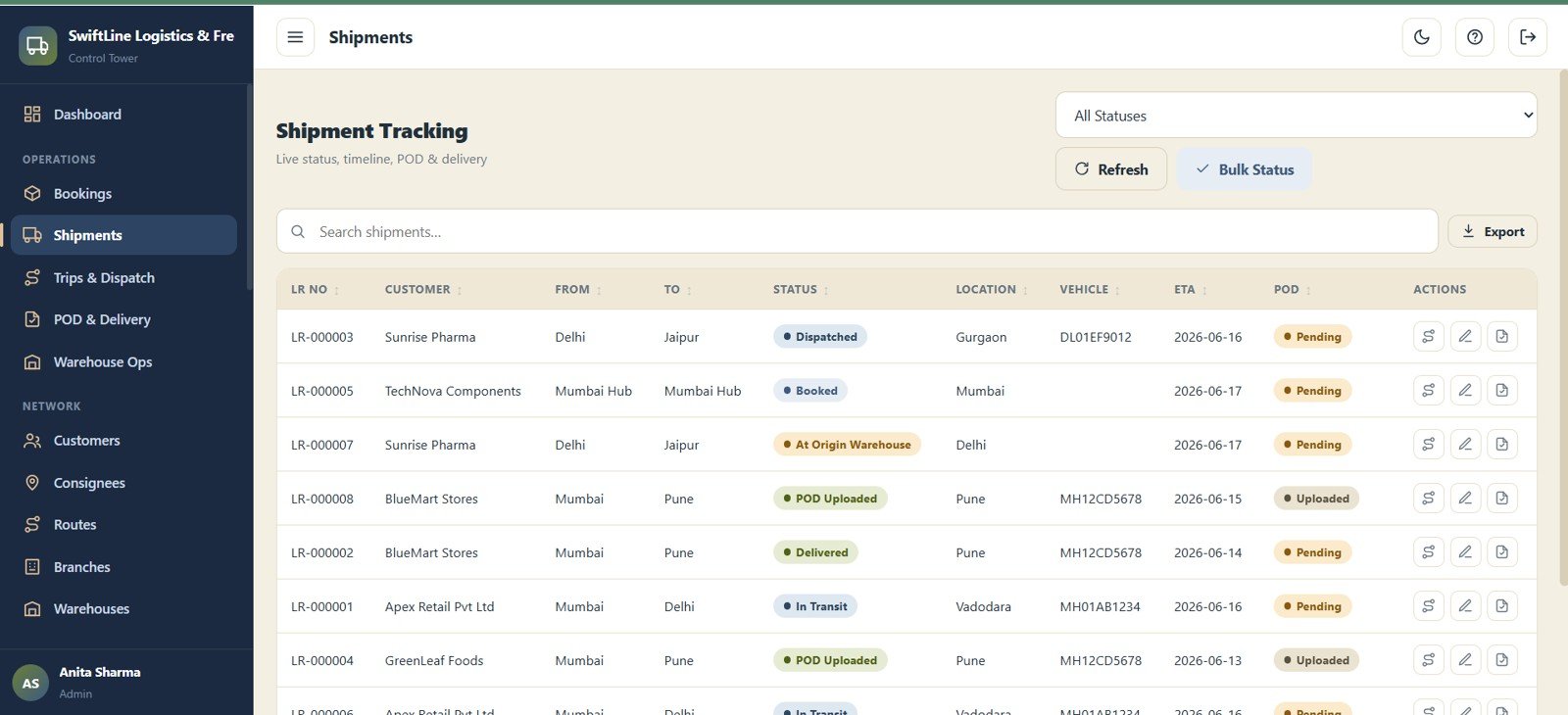
Track the live status of every shipment with LR No, Customer, From, To, Status, Current Location, Assigned Vehicle, ETA and POD Status. Staff answer status queries in seconds instead of chasing drivers.
Trips & Dispatch
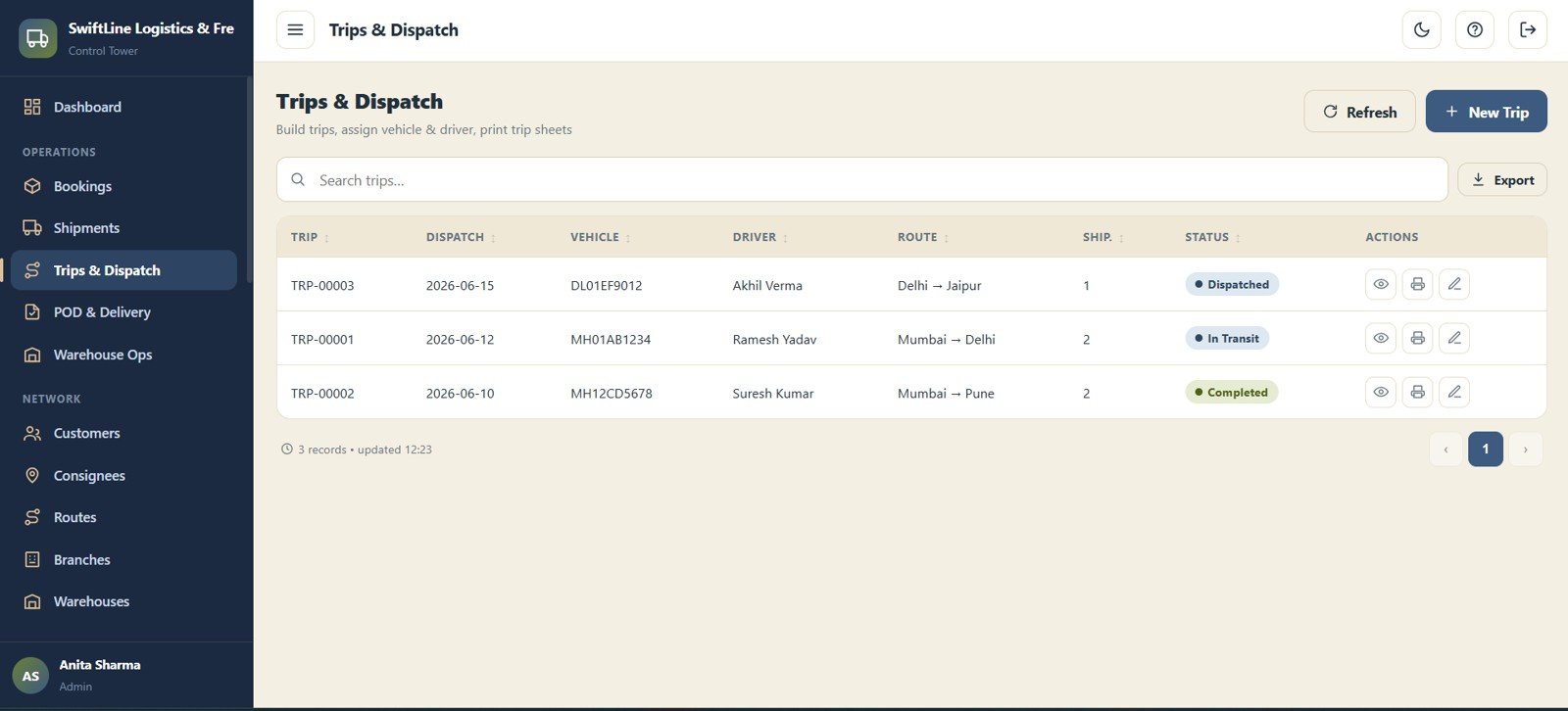
Build trips and assign vehicles and drivers with Trip No, Dispatch Date, Vehicle, Driver, Route, Number of Shipments and Status. Consolidating consignments onto one trip pushes up vehicle utilisation.
POD & Delivery Proof
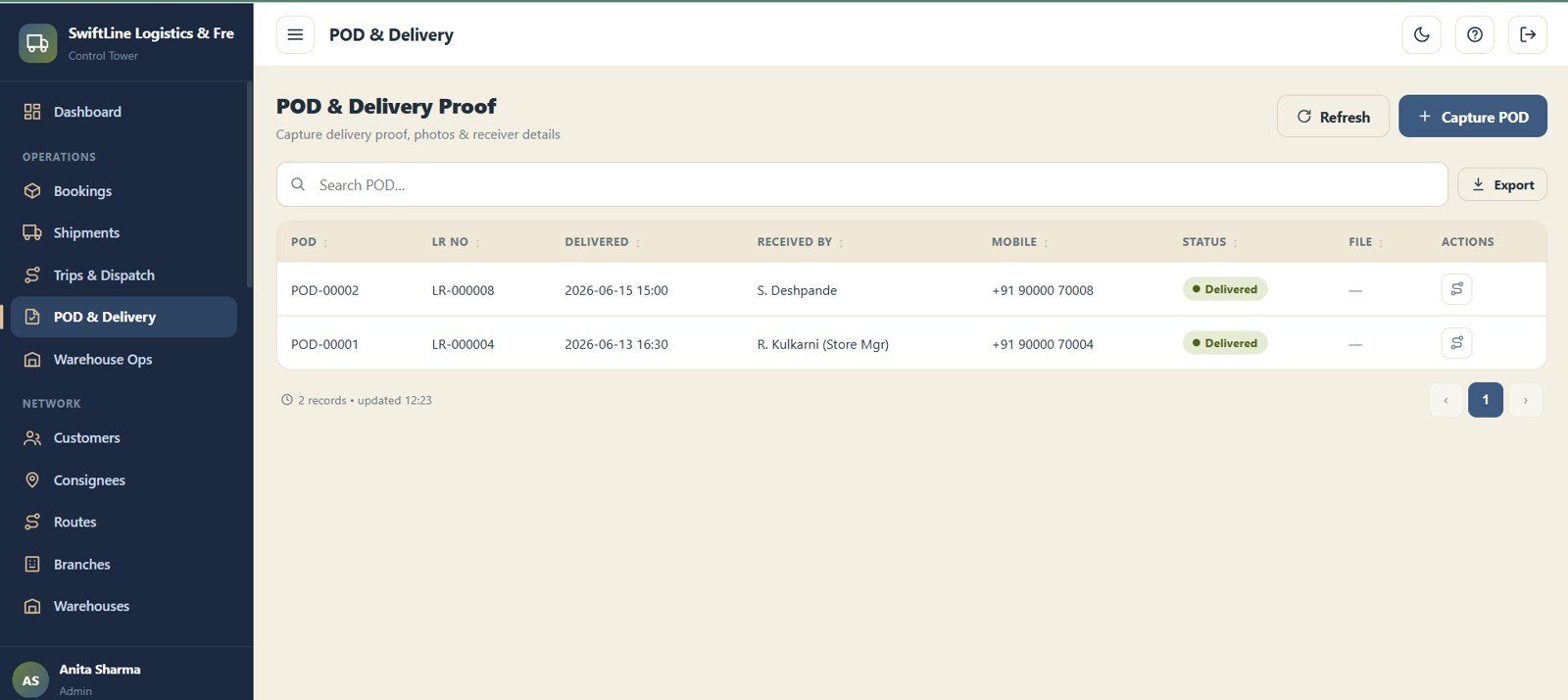
Capture proof of delivery with POD No, LR No, Delivered Date & Time, Received By, Mobile and Status. Each closed POD feeds the POD Pending KPI and unlocks invoicing.
Warehouse Operations
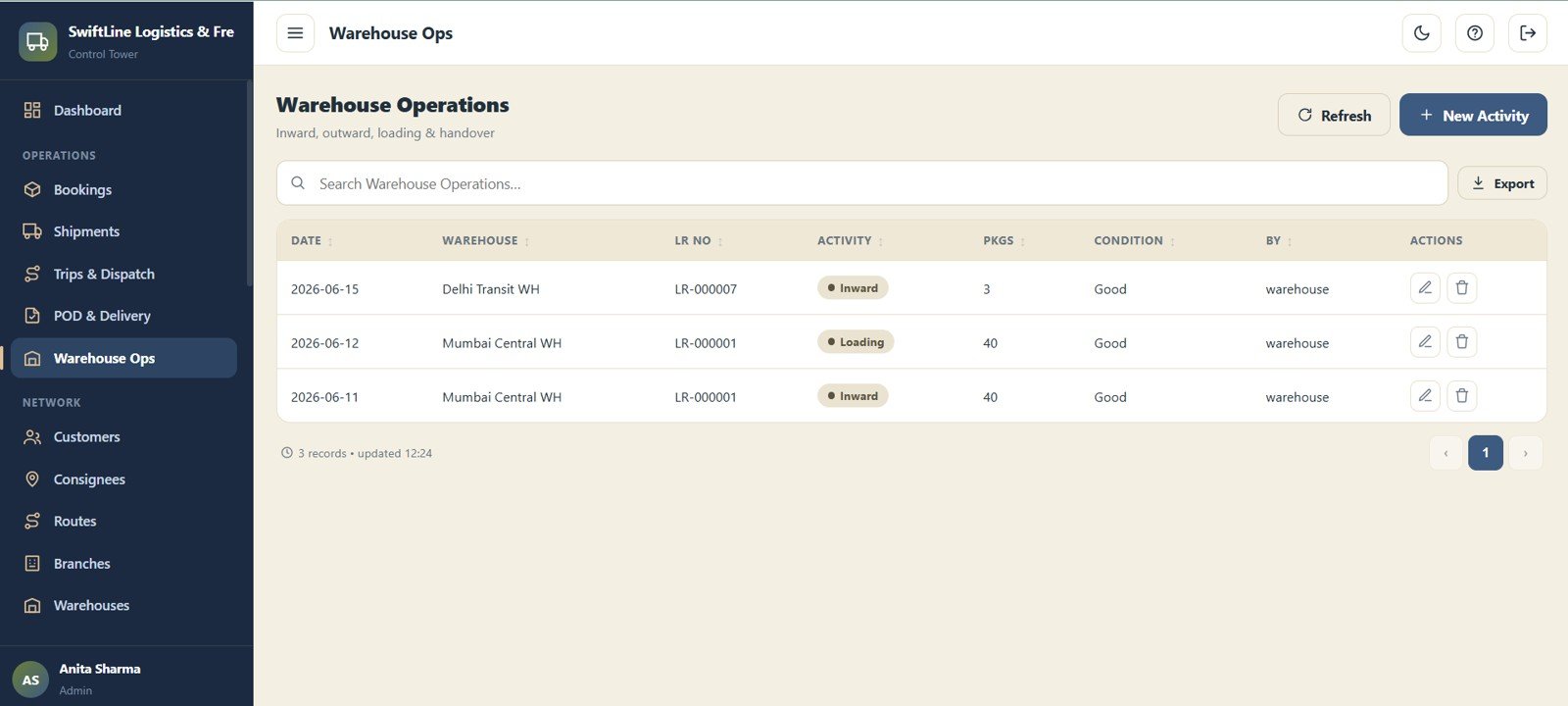
Log inward, outward and loading activity at each warehouse with Date, Warehouse, LR No, Activity, Packages, Condition and Logged By. Hub handling stays accountable and traceable to the consignment.
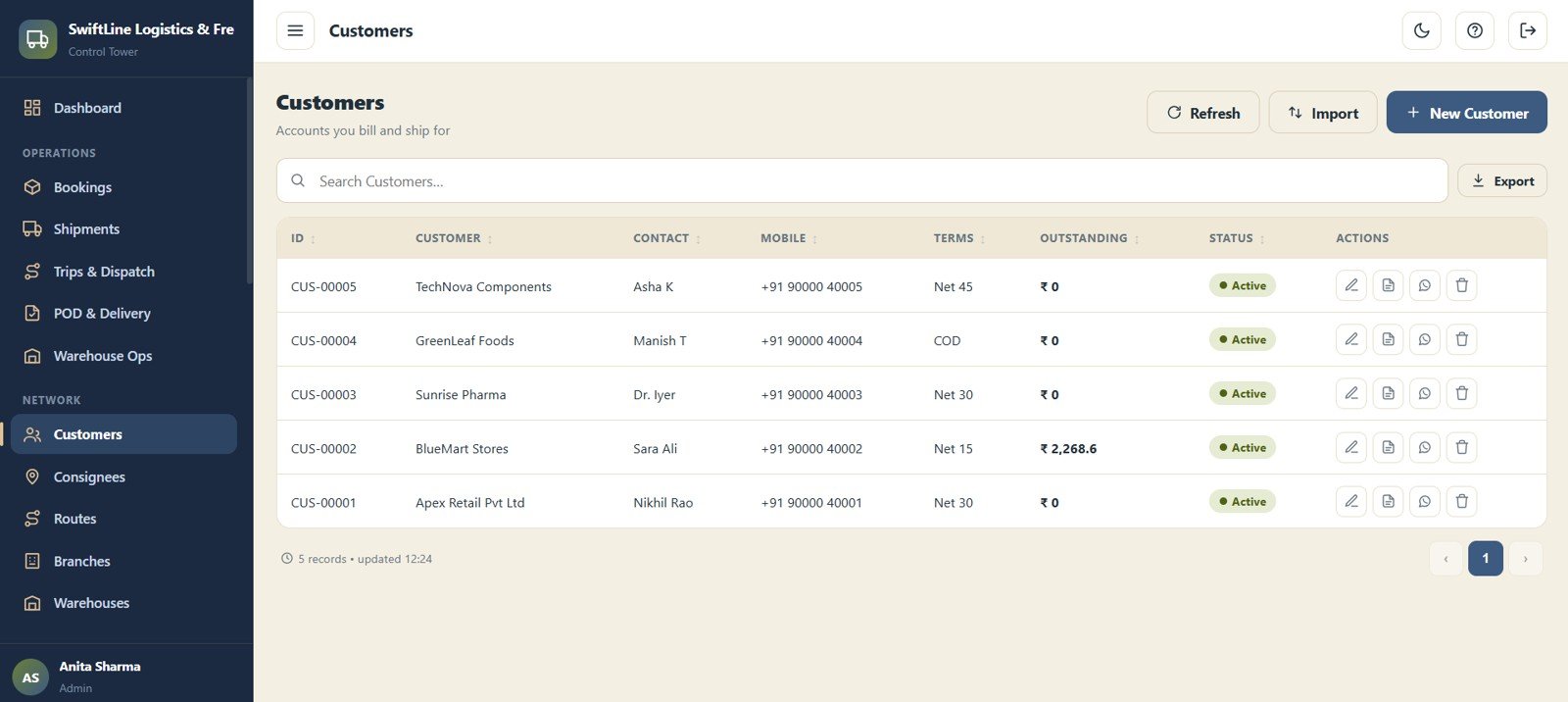
Customers
Manage every account you bill and ship for with ID, Customer, Contact Person, Mobile, Payment Terms, Outstanding and Status. The Outstanding field links straight into billing and payments.
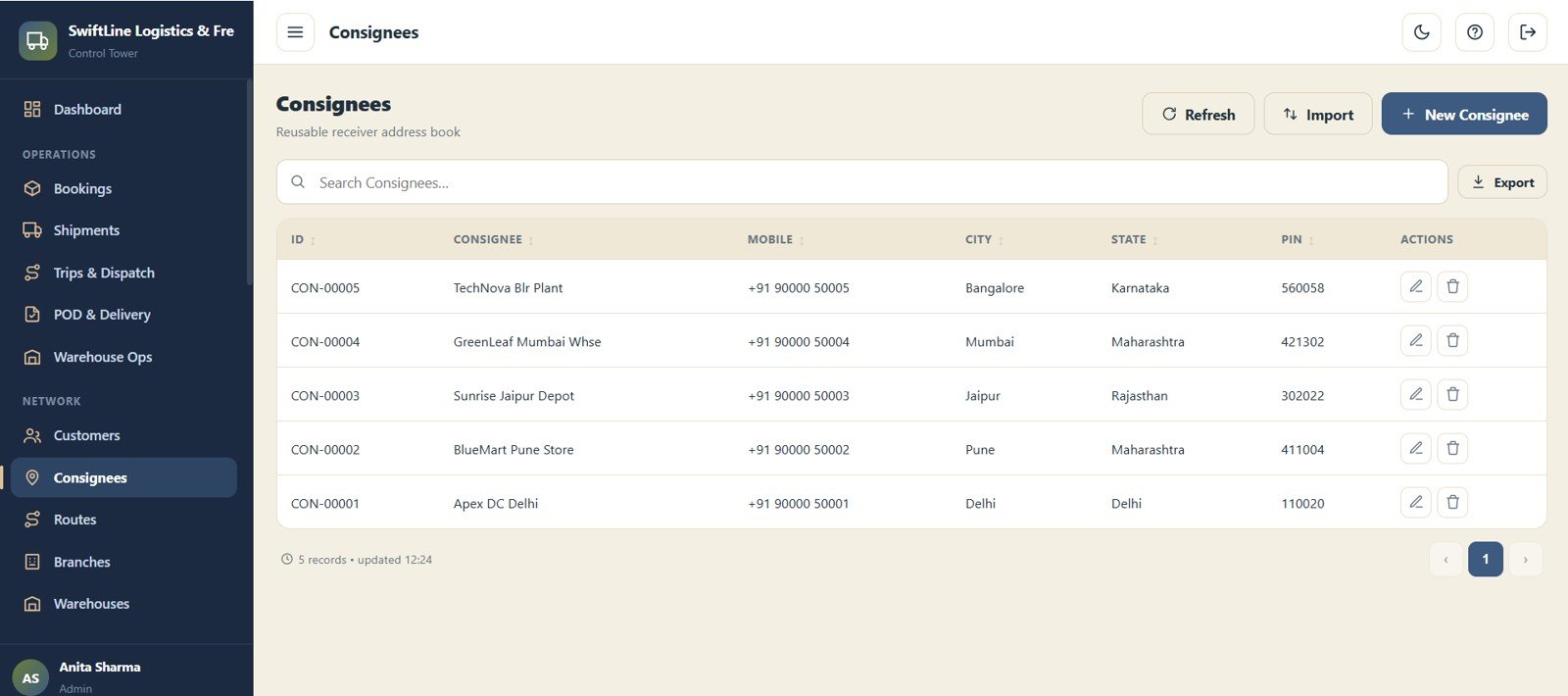
Consignees
A reusable receiver address book storing ID, Consignee, Mobile, City, State and PIN Code. Once saved, bookings to that address take seconds.
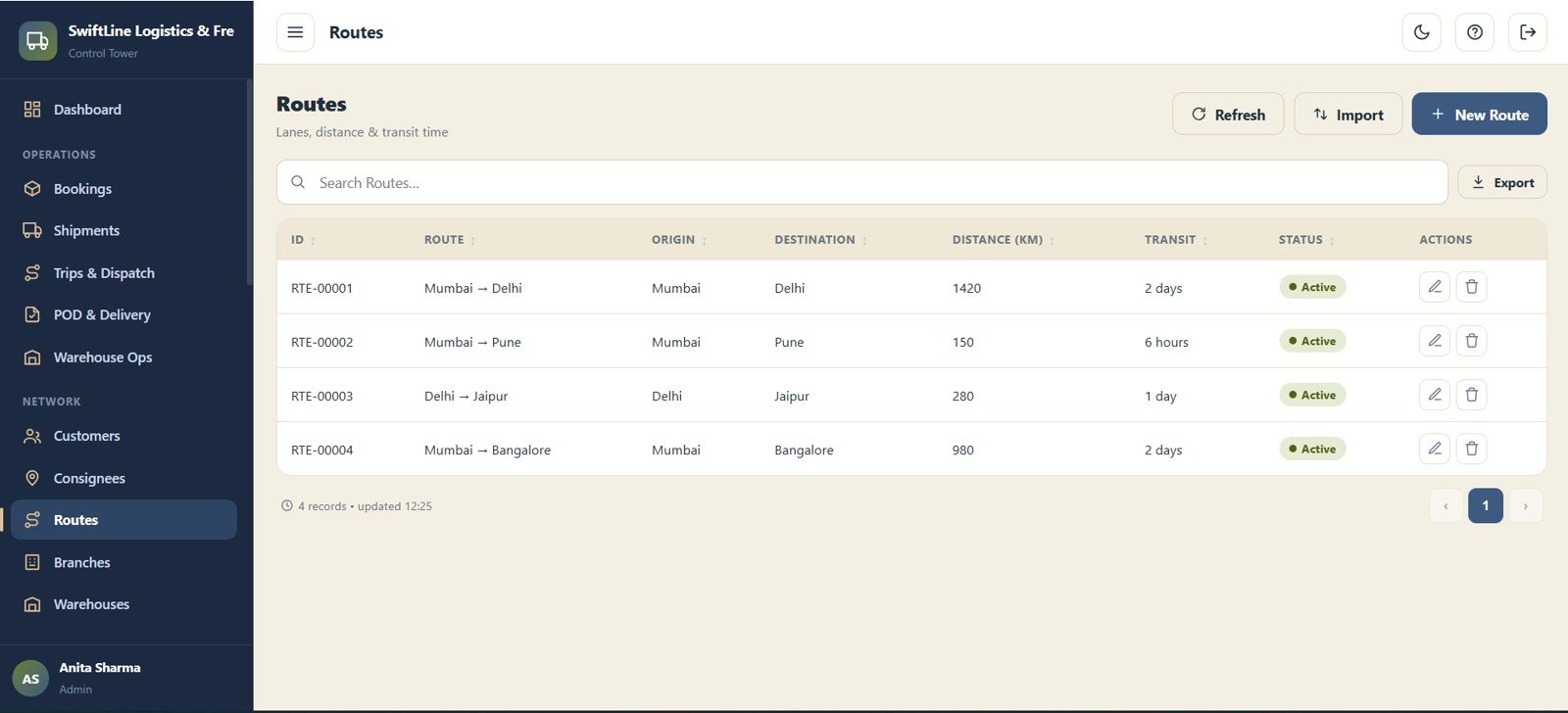
Routes
Manage every lane you operate with ID, Route, Origin, Destination, Distance (KM), Transit Time and Status. Route data feeds both freight pricing and the Route Performance by Lane chart.
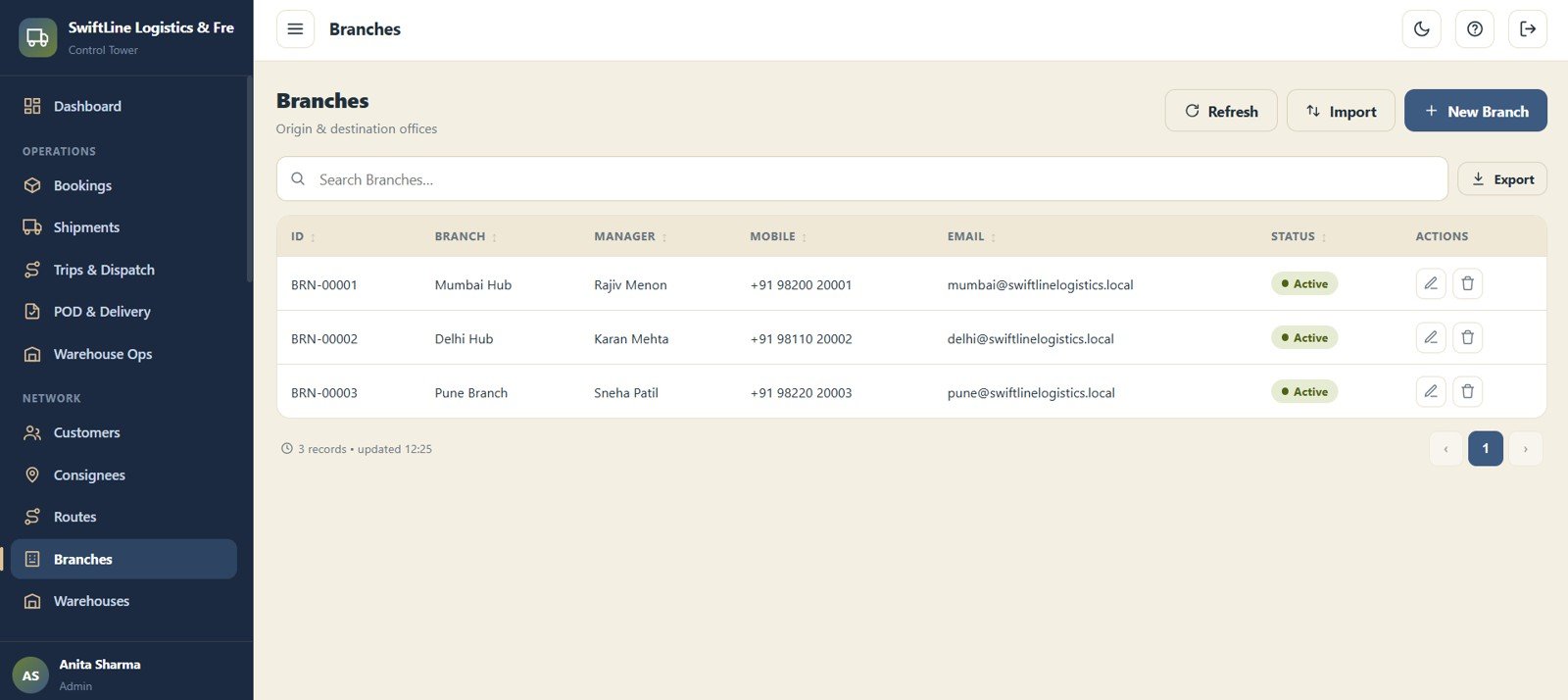
Branches
Manage origin and destination offices with ID, Branch, Manager, Mobile, Email and Status. Branches drive the dashboard filter and branch-level access control.
Warehouses
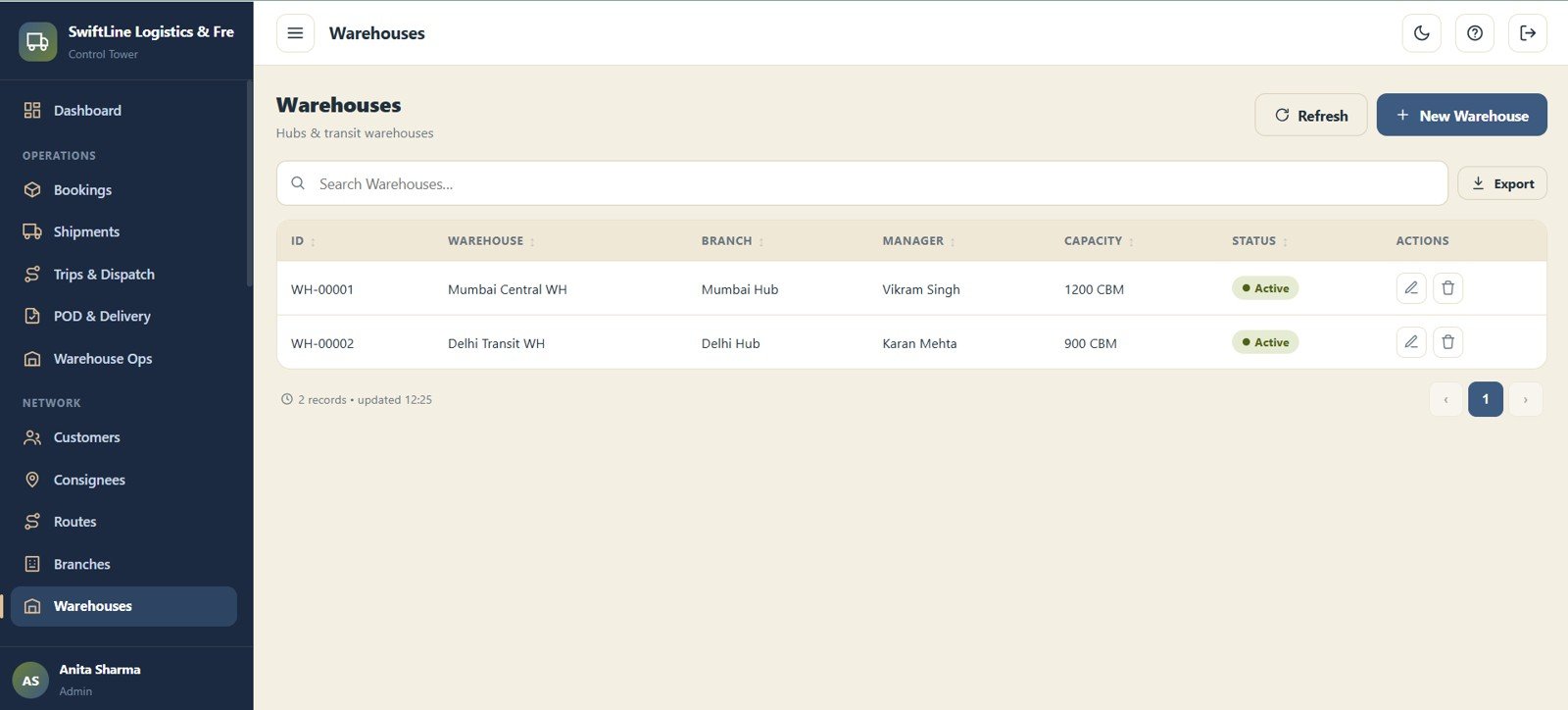
Manage hubs and transit warehouses with ID, Warehouse, Branch, Manager, Capacity and Status. Linking each warehouse to a branch keeps the network map accurate.
Vehicles
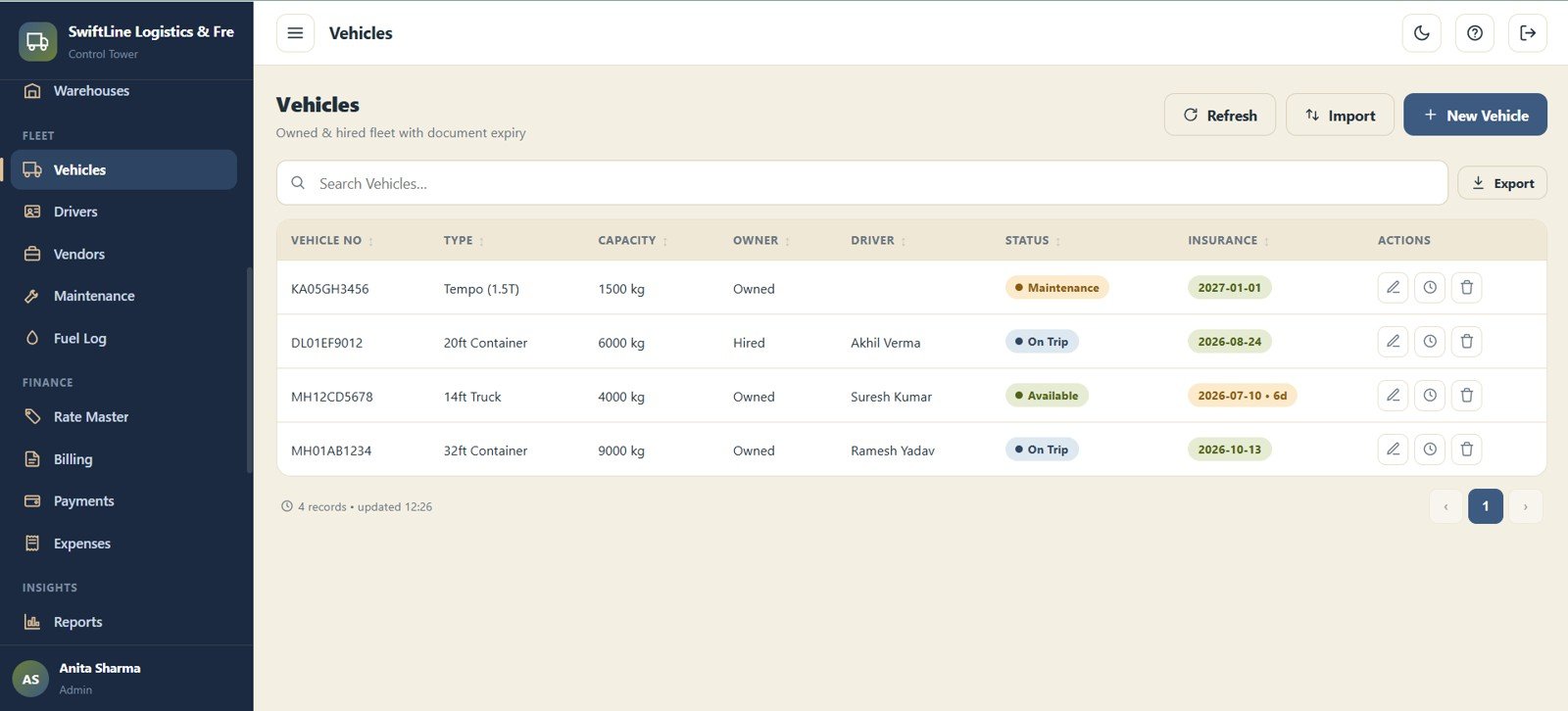
Manage the owned and hired fleet with Vehicle No, Type, Capacity, Owner, Driver, Status and Insurance Expiry. Insurance expiry tracking keeps the fleet compliant.
Drivers
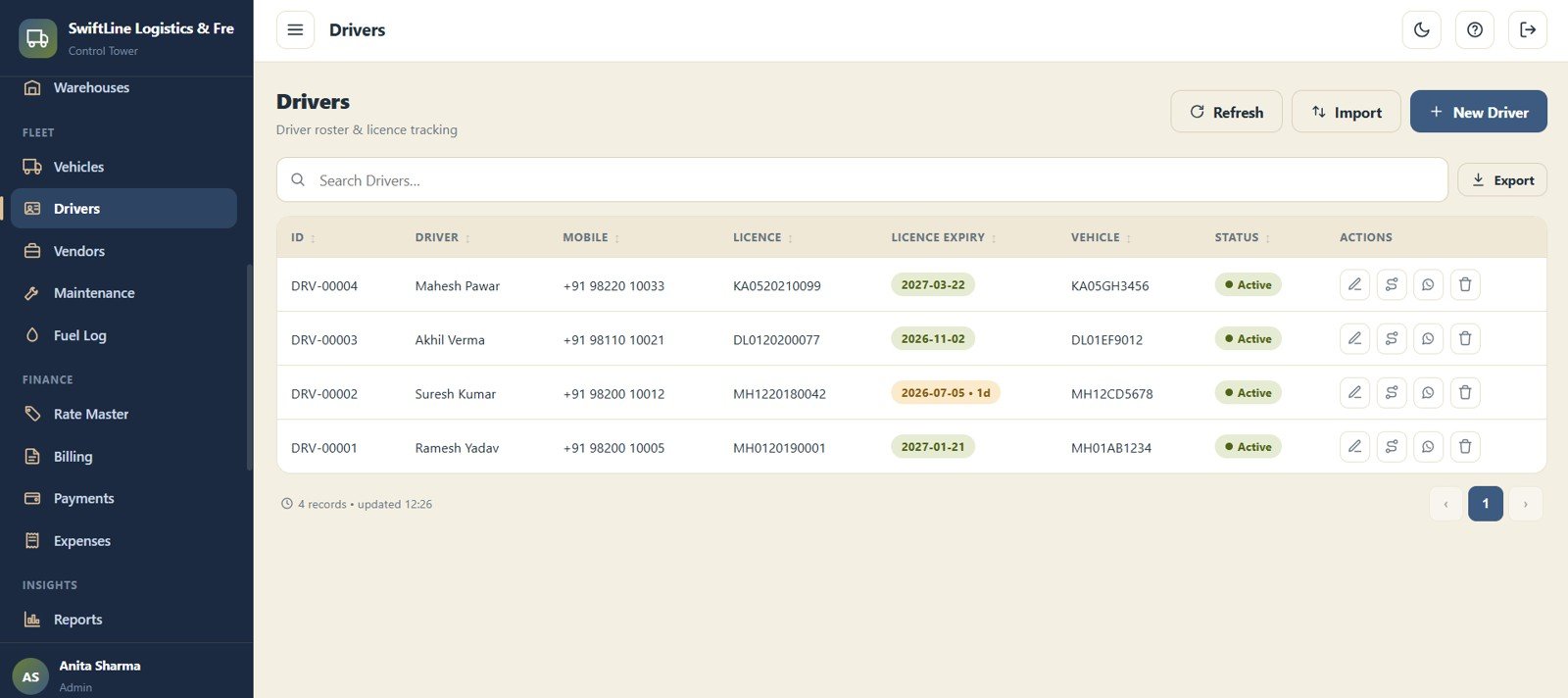
Manage the driver roster and licence tracking with ID, Driver, Mobile, Licence No, Licence Expiry, Vehicle and Status. Licence expiry visibility lowers compliance risk.
Vendors / Transporters
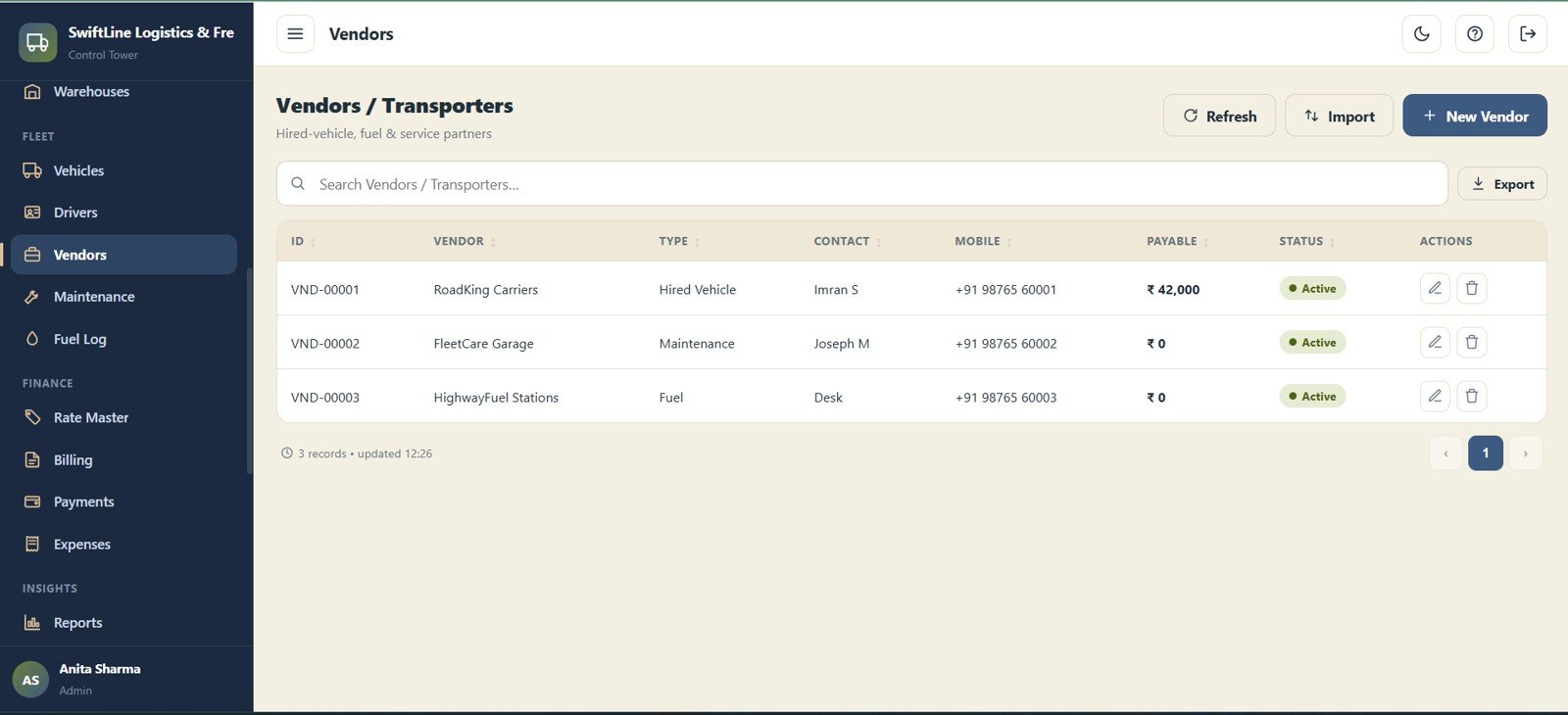
Manage hired-vehicle, fuel and service partners with ID, Vendor, Type, Contact Person, Mobile, Payable and Status. The Payable field keeps outstanding vendor balances visible.
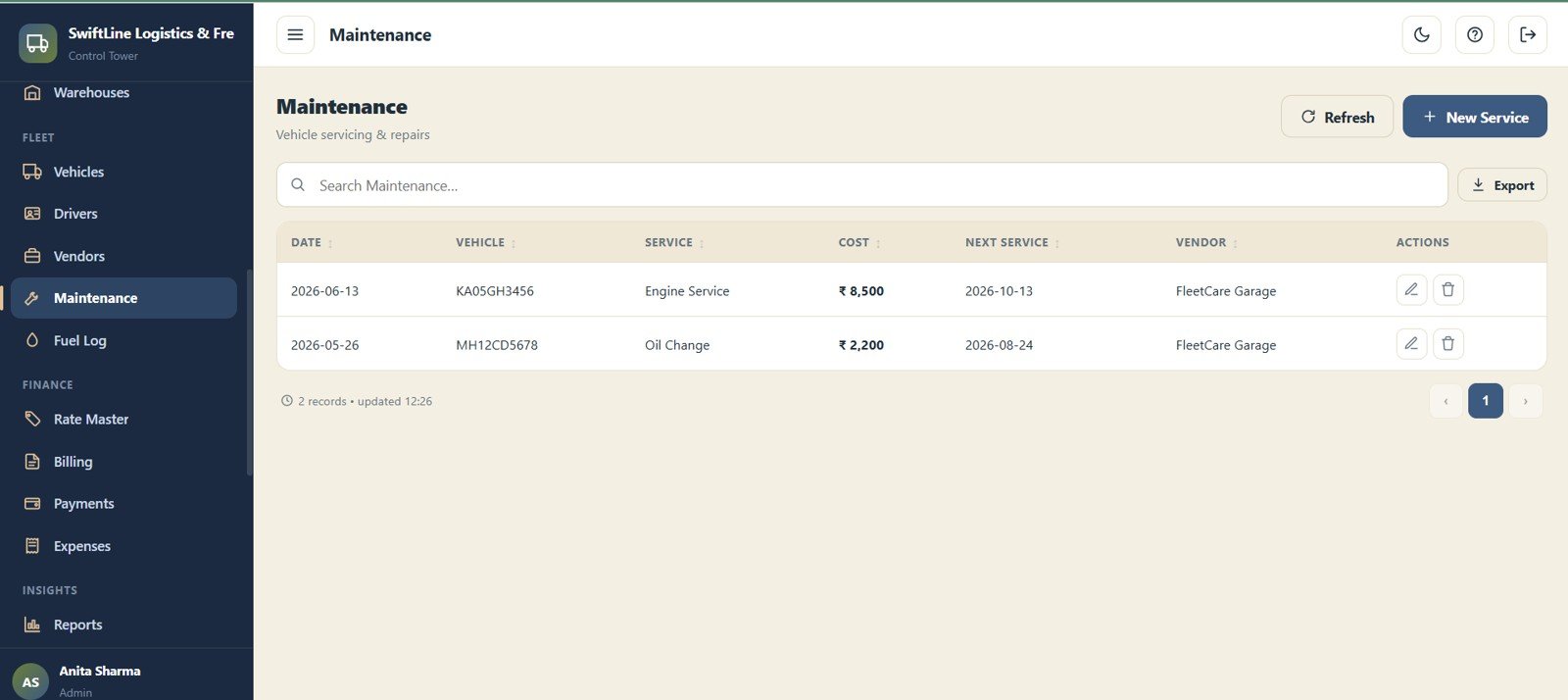
Maintenance
Log vehicle servicing and repairs with Date, Vehicle, Service, Cost, Next Service and Vendor. Next-service dates make sure a truck is never overdue.
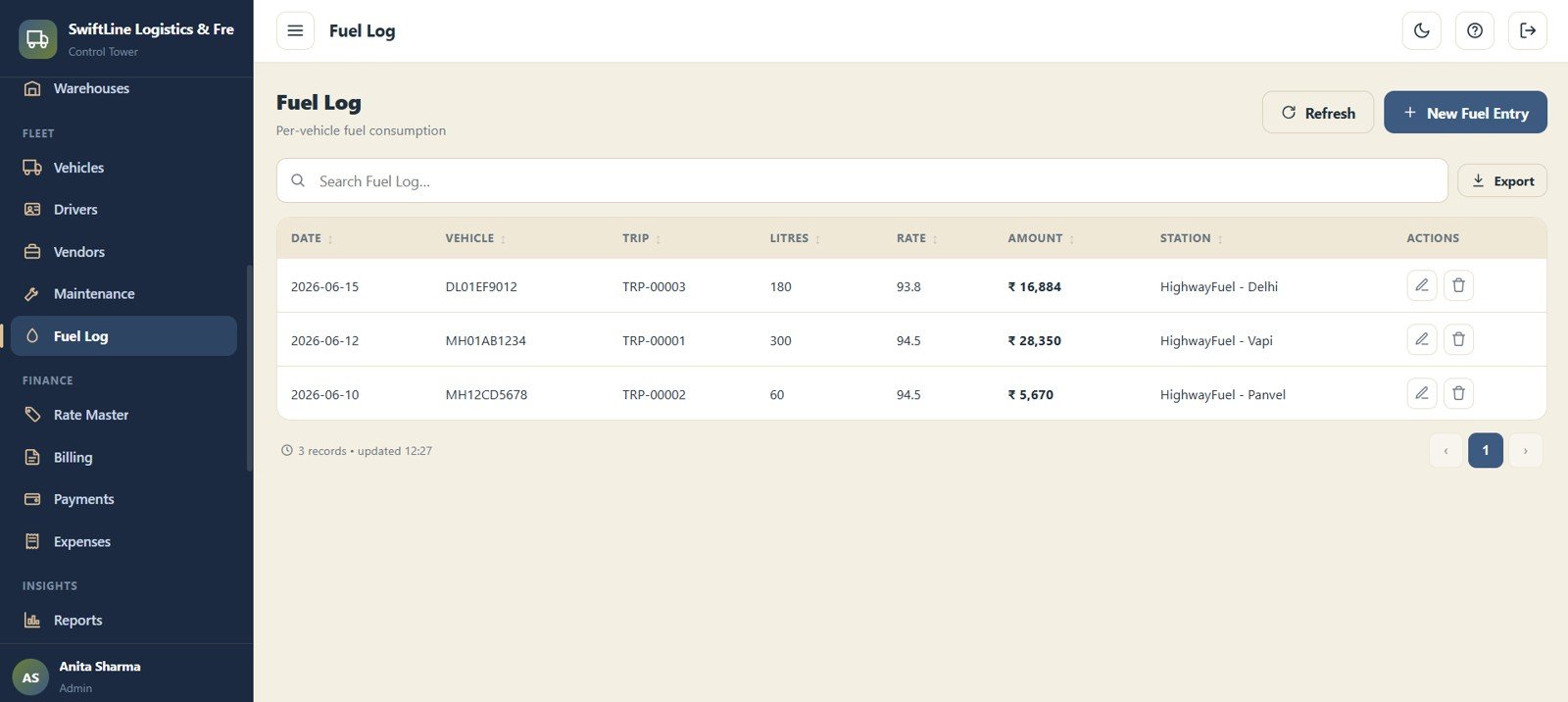
Fuel Log
Record per-vehicle fuel consumption with Date, Vehicle, Trip, Litres, Rate, Amount and Station. Fuel data rolls into the Expense by Month chart and per-trip cost analysis.
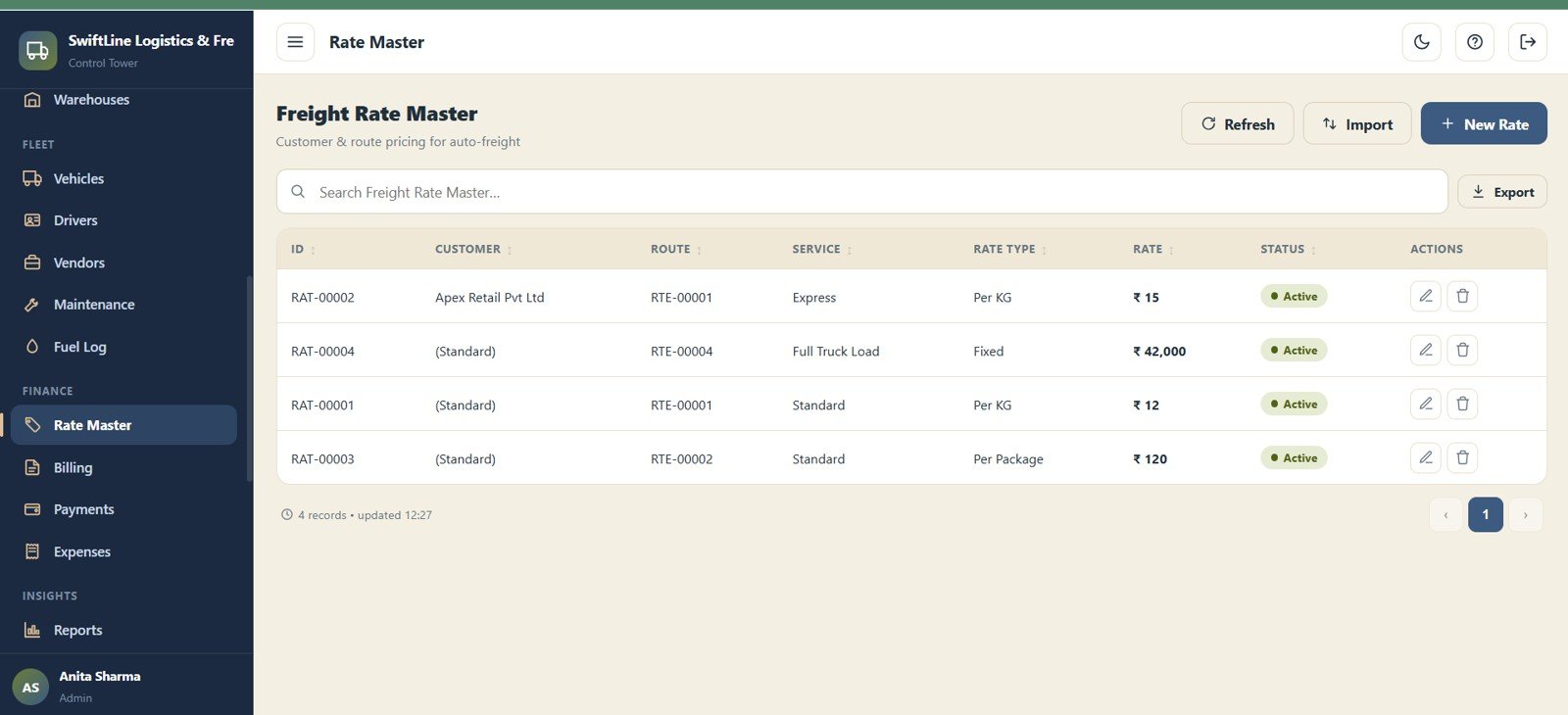
Freight Rate Master
Manage customer and route pricing for automatic freight calculation with ID, Customer, Route, Service, Rate Type, Rate and Status. Set the rate once and matching bookings price themselves.
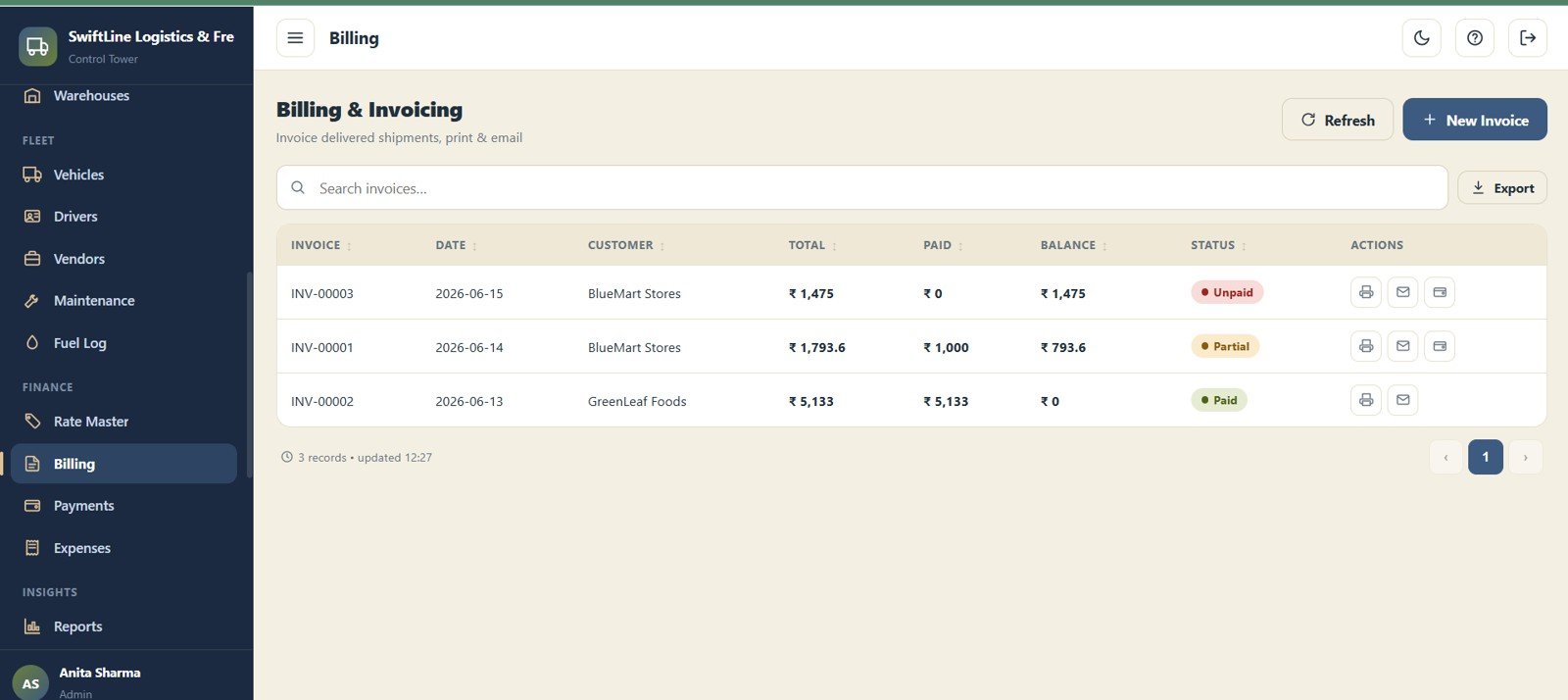
Billing & Invoicing
Invoice delivered shipments and track payment status with Invoice No, Date, Customer, Total, Paid, Balance and Status. Balances feed the Outstanding KPI and each customer ledger.
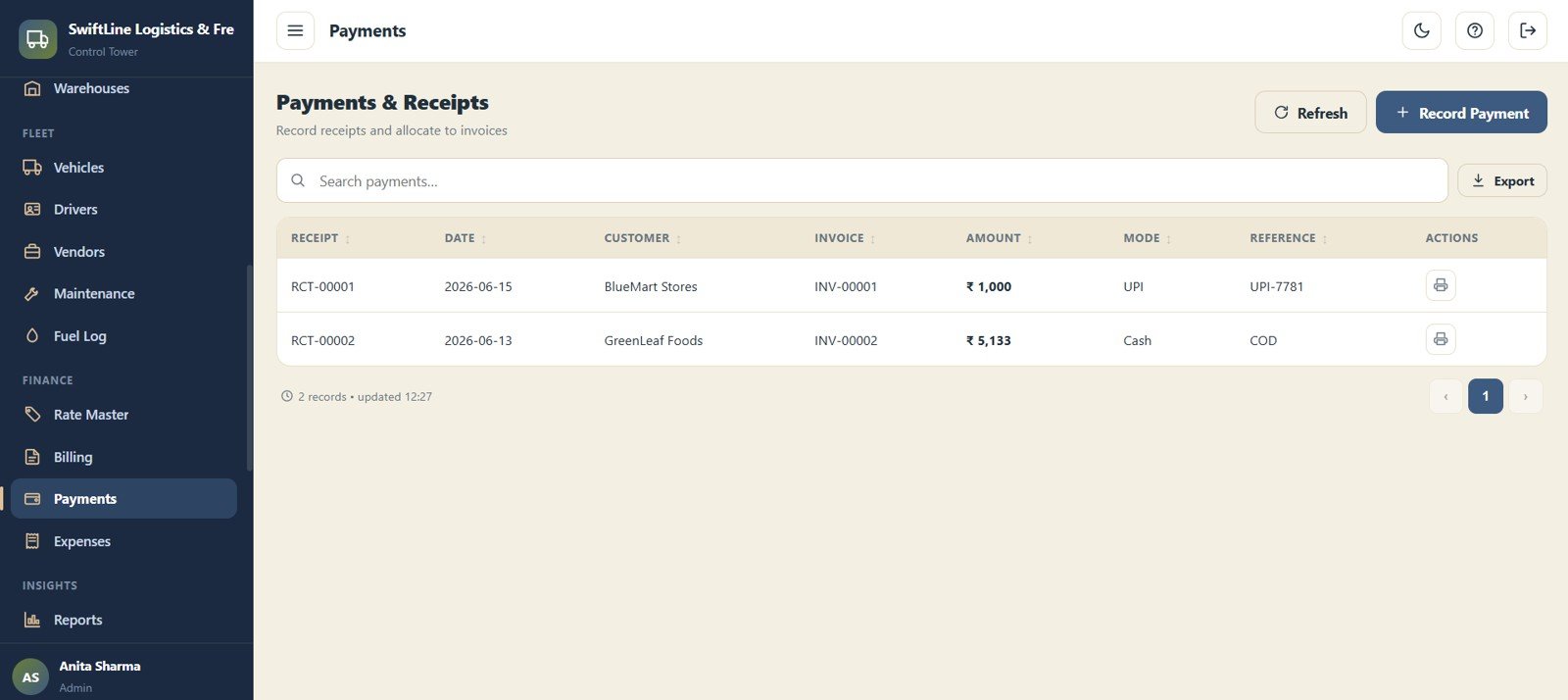
Payments & Receipts
Record receipts and allocate them to invoices with Receipt No, Date, Customer, Invoice, Amount, Mode and Reference. Allocations keep every invoice balance accurate.
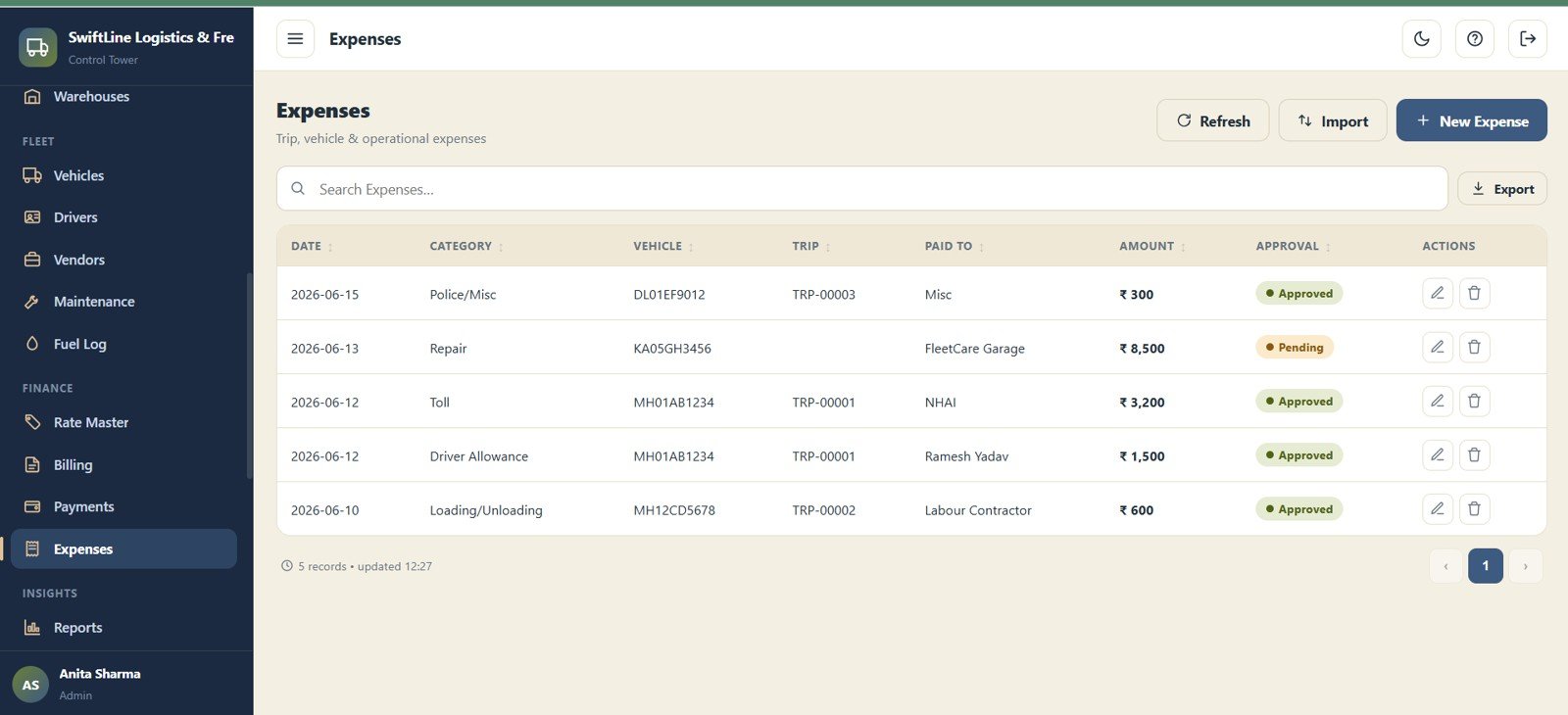
Expenses
Log trip, vehicle and operational expenses with approvals using Date, Category, Vehicle, Trip, Paid To, Amount and Approval Status. Approved expenses feed the Expense by Month analysis.
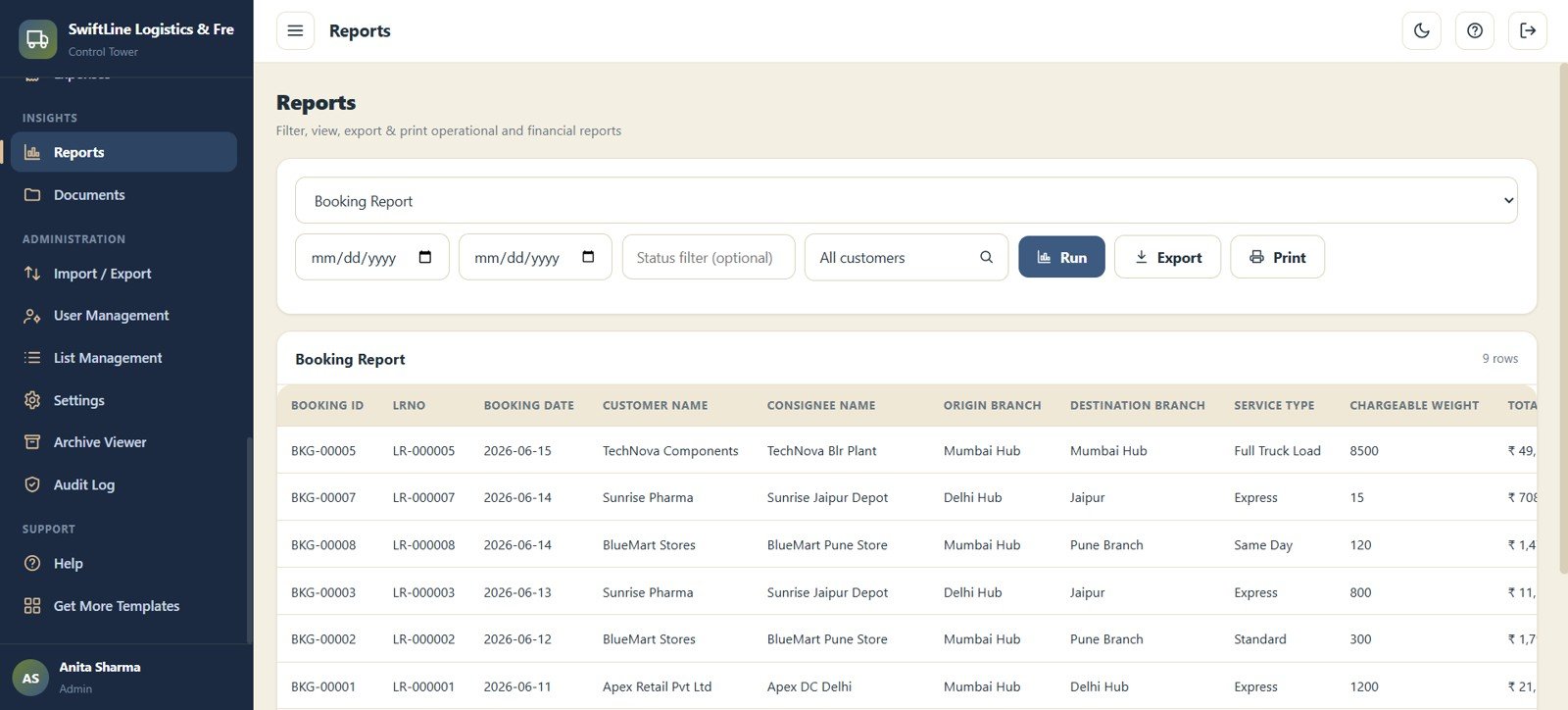
Reports
Filter, run, export and print operational and financial reports by Report Type, Date Range, Status Filter and Customer Filter, with Run / Export / Print actions. Live data becomes shareable summaries in a click.
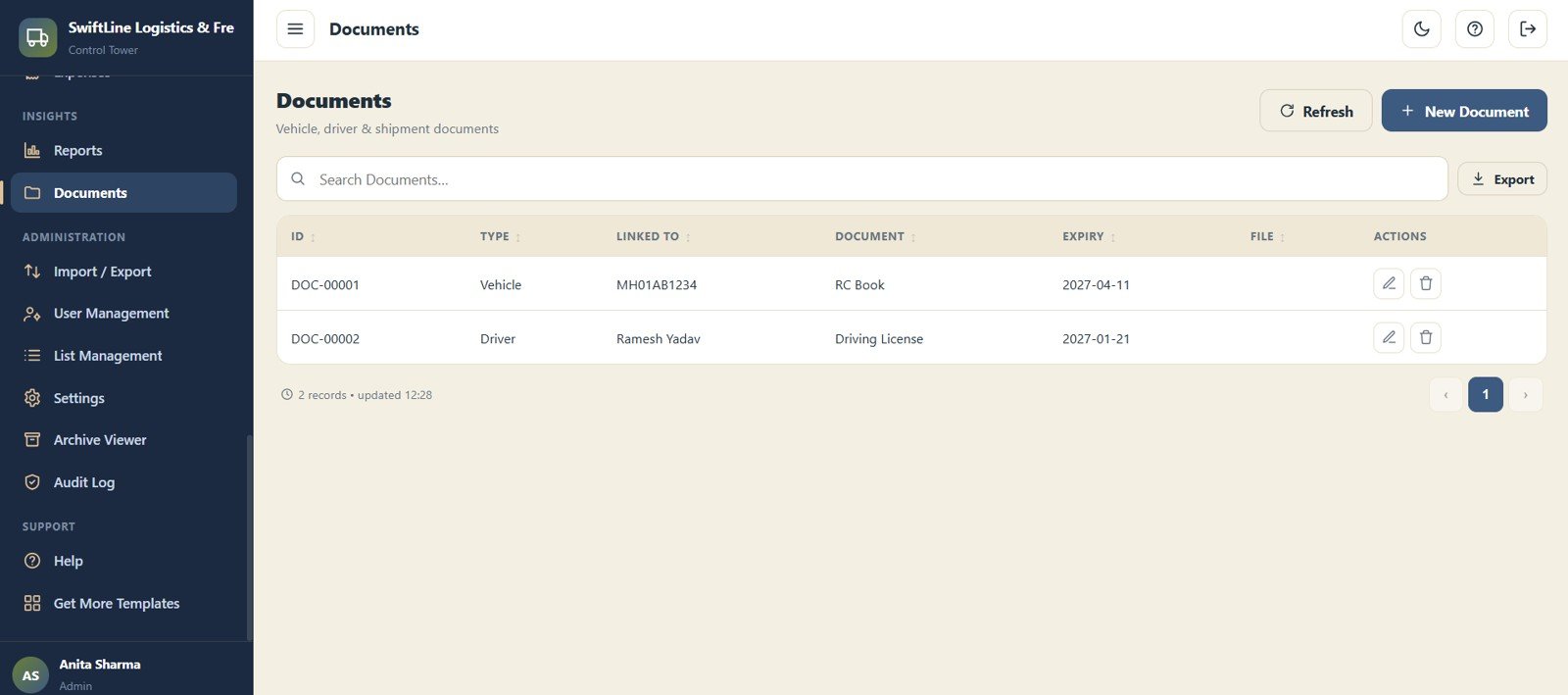
Documents
Store vehicle, driver and shipment documents with expiry tracking using ID, Type, Linked To, Document, Expiry and File. Compliance paperwork stays attached to the right record.
Import / Export
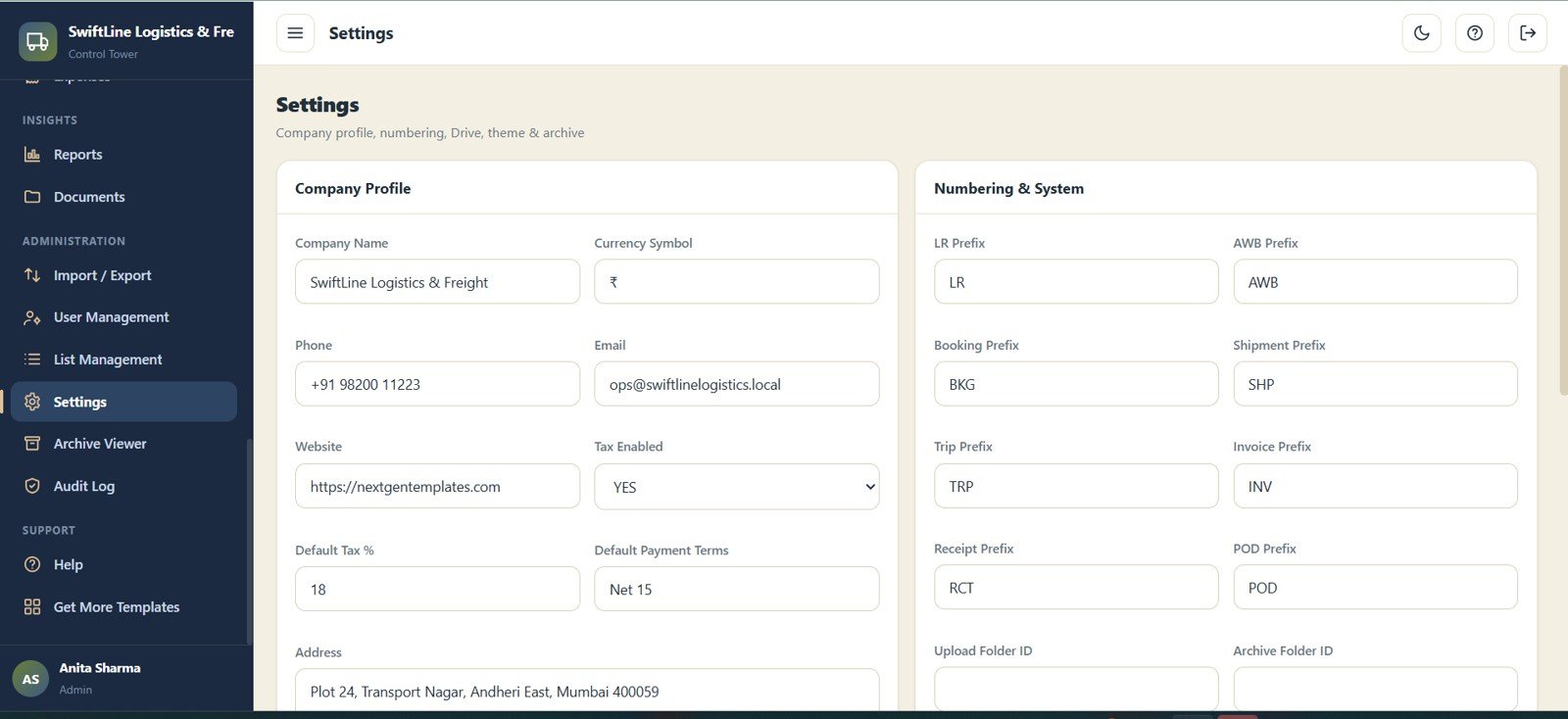
Bulk import and export data by module with a Module Selector, Template Download, Import File, Export Data and Import Log. Onboarding existing data or backing it up takes minutes.
User Management
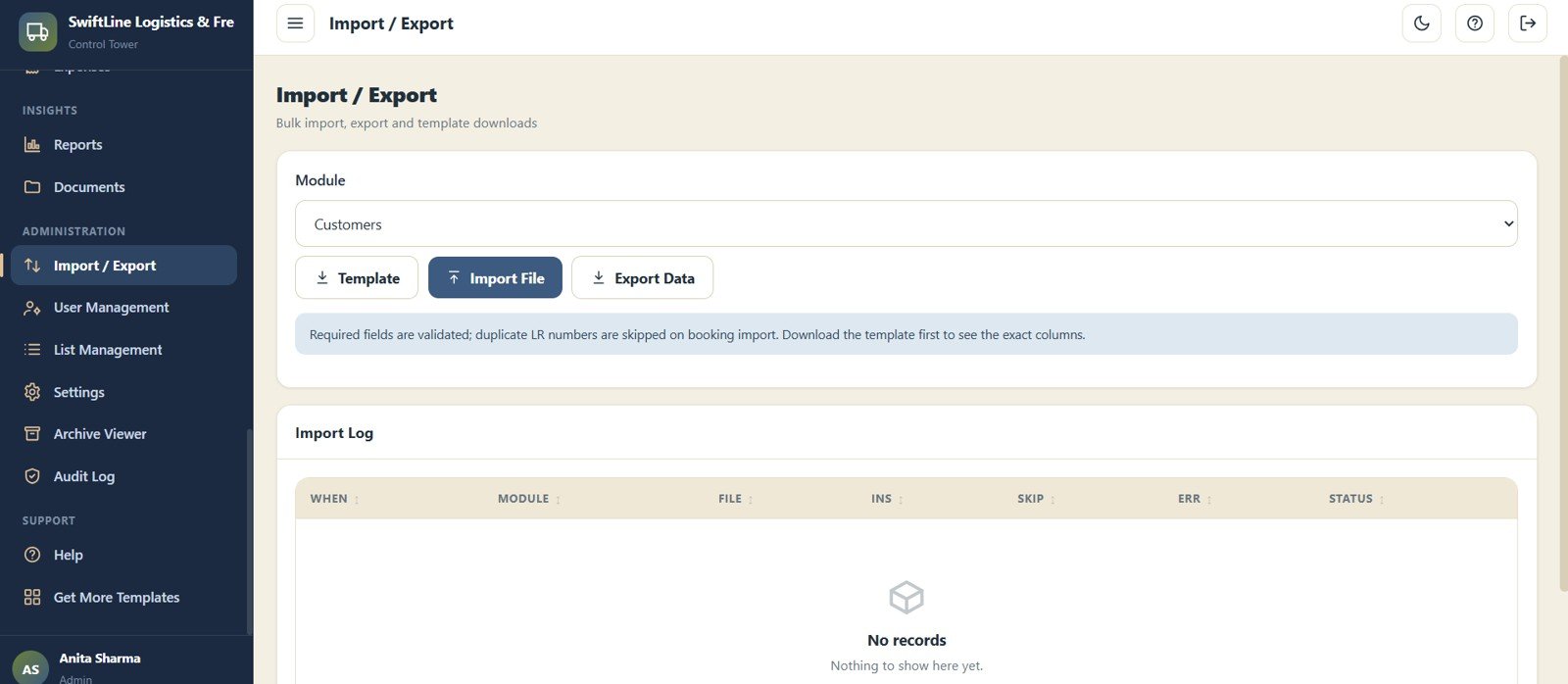
Manage accounts, roles and branch access with ID, Name, Username, Role, Branch, Email and Status. Admins decide exactly who can see and edit each branch.
List Management
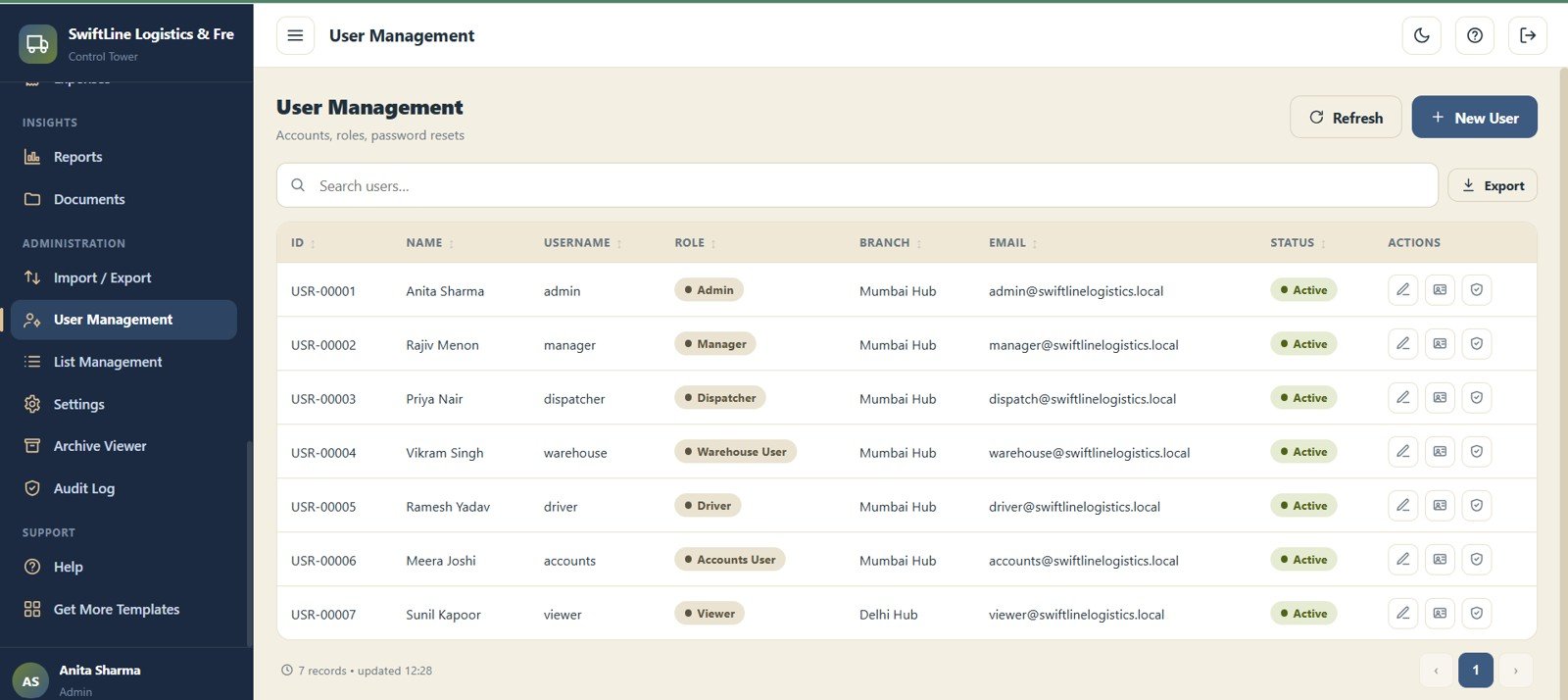
Manage the dropdown values used across the system with ID, List Type, Value, Sort Order and Status. Tidy lists keep data entry consistent everywhere.
Settings
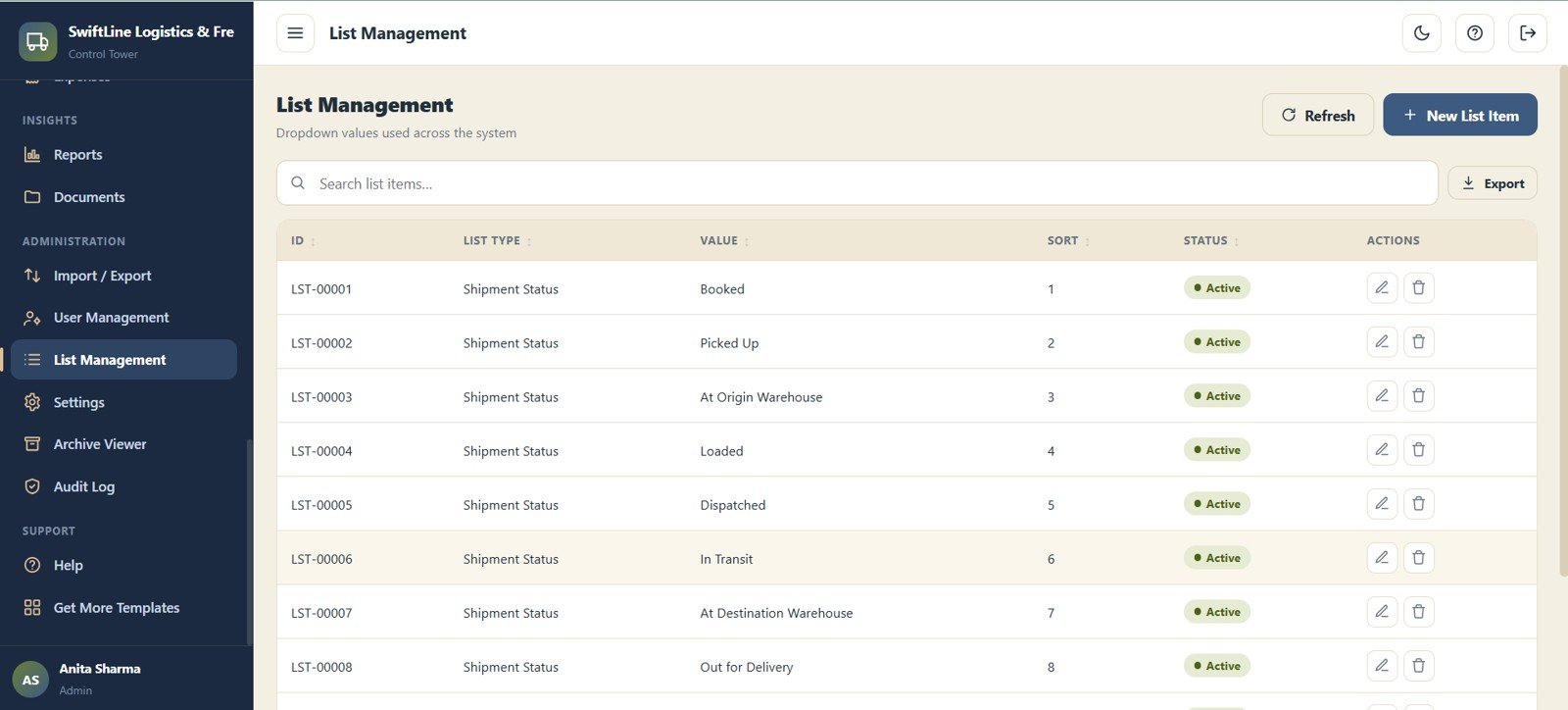
Manage the company profile (Name, Currency, Phone, Email, Address, Tax %) plus numbering prefixes for LR, AWB, Booking, Shipment, Trip, Invoice, Receipt and POD. Configure the whole system from one screen.
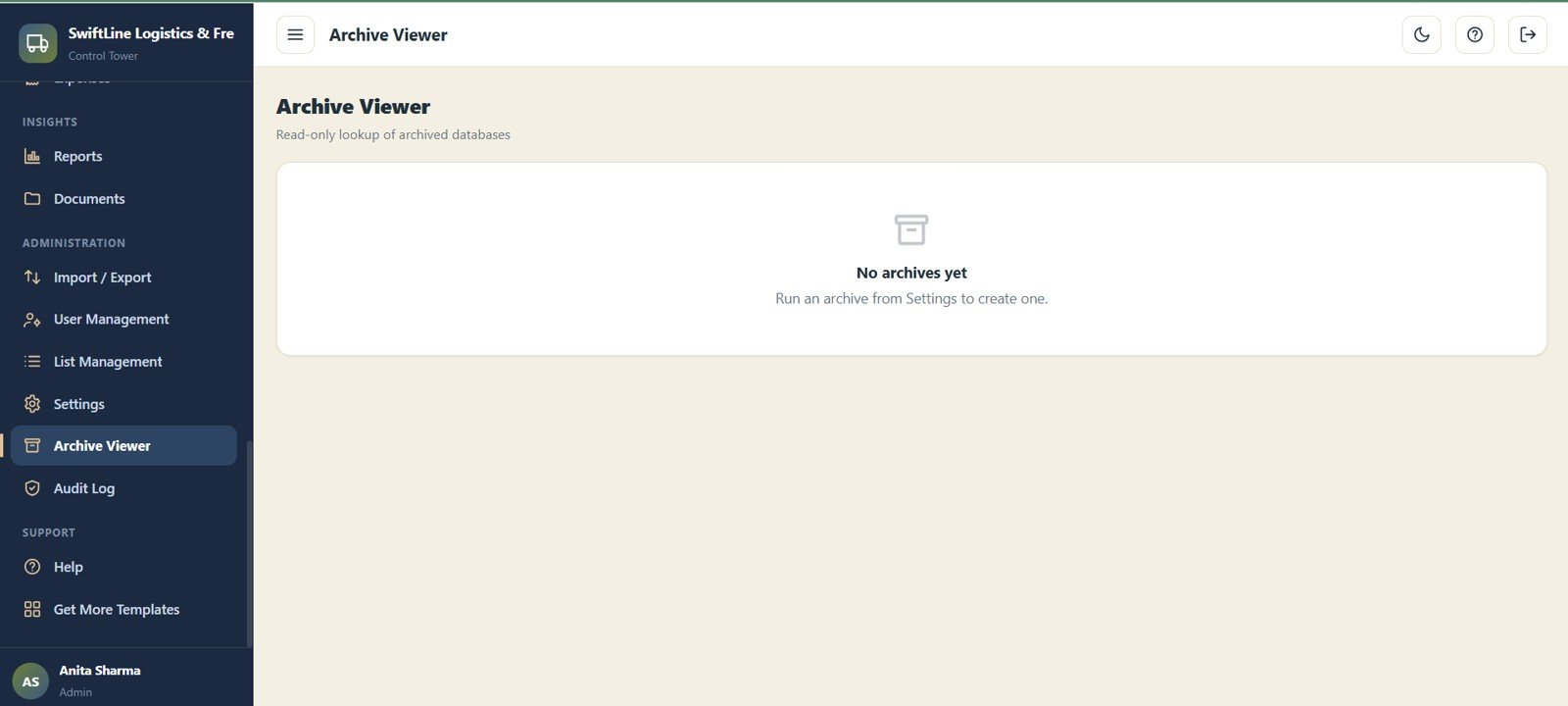
Archive Viewer
A read-only lookup of archived databases once an archive has been run from Settings, with an Archive List and read-only record lookup. Old data stays searchable without cluttering the live system.
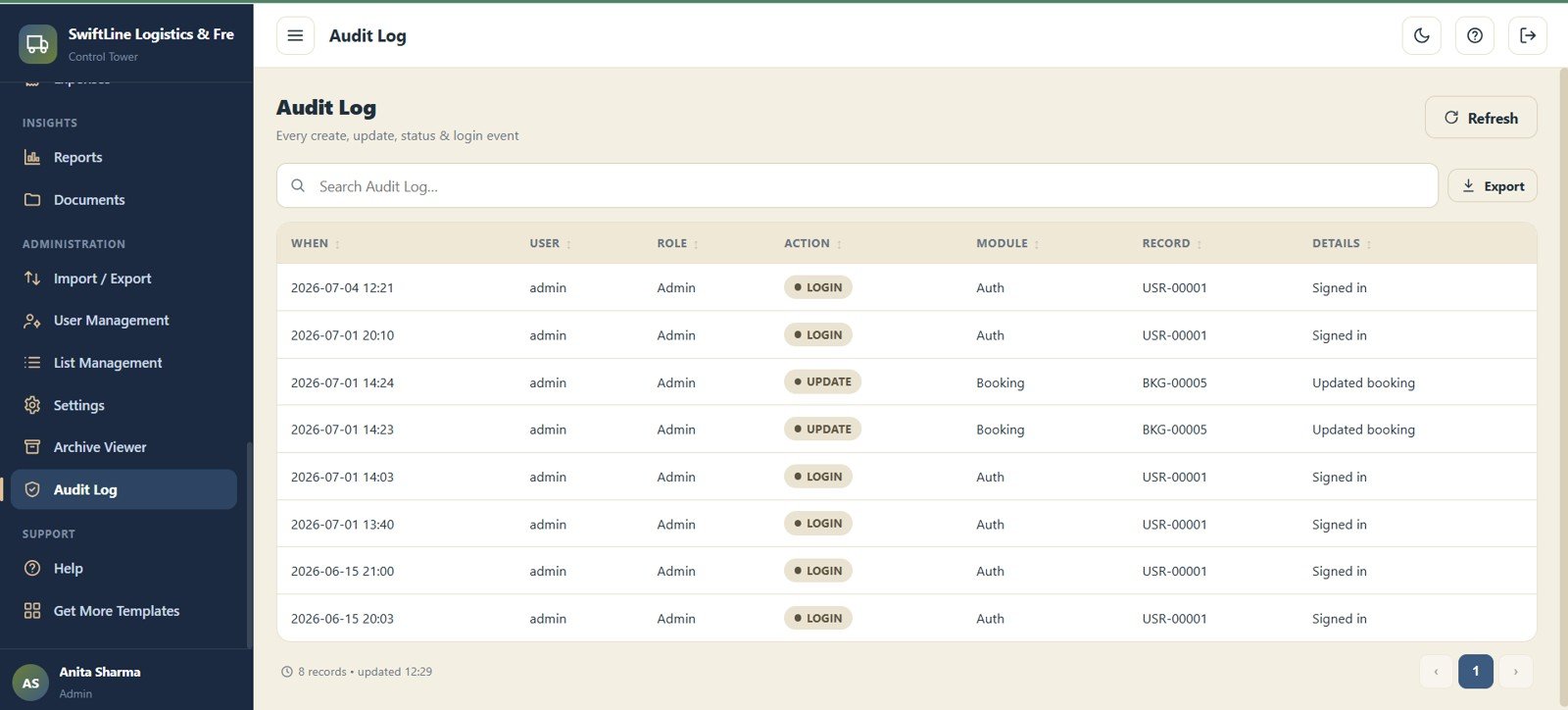
Audit Log
Record every create, update, status and login event with When, User, Role, Action, Module, Record and Details. Full accountability for a multi-user team, in one place.
Logistics Management System Web App vs. Spreadsheet Files vs. Logistics TMS SaaS
| Feature | Logistics Management System Web App | Excel / Google Sheets Files | Logistics TMS SaaS (Shipsy / FarEye / Locus) |
|---|---|---|---|
| Cost | $39.99 one-time | $0–15 one-time | $40–200+ / user / month |
| Platform | Google Apps Script — any browser | Excel / Google Sheets | Web SaaS (cloud-only) |
| Modules included | 29 connected modules | Whatever you build | Varies by plan tier |
| Multi-user login & roles | ✅ Admin & User, branch access | ❌ No real roles | ✅ Yes |
| Booking → tracking → POD → billing | ✅ End-to-end in one app | ❌ Disconnected sheets | ✅ Yes |
| Setup time | Under 20 minutes | Hours to build | Days + onboarding |
| Data ownership | ✅ Your own Google account | ✅ Your file | ❌ Vendor-hosted |
| Year-1 cost at 5 users | $39.99 | ~$0 | $2,400–12,000+ |
For logistics operators who want a real multi-user system without paying per user every month, this web app sits between fragile spreadsheets and expensive TMS SaaS.
Who Should Use This Template
Perfect for:
- Transport, courier, 3PL and freight-forwarding businesses handling 20–2,000 consignments a month
- Regional operators running multiple branches and warehouses that need branch-level access
- Fleet-owning distributors who want bookings, dispatch, fuel and billing in one place
- Operations managers replacing a stack of disconnected Excel and WhatsApp trackers
Not a fit if:
- You need live GPS/IoT tracking hardware and API-based carrier integrations
- You require SOC 2 certified, vendor-hosted infrastructure with signed data-processing agreements
- You have no Google Workspace or Gmail account to host the app
Real-World Use Cases
Anil runs a regional transport company moving 600 consignments a month across 4 branches. A booking now flows from consignment to POD to invoice in one system, and he watches Pending Dispatch and Outstanding on the dashboard each morning.
Priya manages operations for a 3PL serving e-commerce sellers. She uses Shipment Tracking to answer status queries instantly, the Freight Rate Master to auto-price each seller, and the Route Performance by Lane chart to fix two loss-making lanes.
A courier startup with 12 vehicles and 9 drivers keeps insurance and licences current through the Vehicles, Drivers, Fuel Log and Maintenance modules, while branch managers log in under their own accounts and see only their branch.
Advantages of the Logistics Management System Web App
- One system, not ten files — bookings, tracking, fleet, and billing share one dataset, so numbers reconcile automatically.
- No recurring cost — a one-time purchase running on free Google Apps Script instead of $40–200 per user per month.
- You own the data — everything lives in your own Google account, not a vendor cloud.
- Fast to deploy — most teams are live in under 20 minutes with no coding.
Opportunities for Improvement
The Logistics Management System Web App is honest about its scope. It does not include live GPS device integration, automated carrier API booking, or a native mobile app — it is a browser app, so it works on mobile browsers but is not published to app stores. Very large enterprises with strict SOC 2 or ISO hosting requirements will still need dedicated TMS platforms. For most small and mid-size logistics operators, though, these are acceptable trade-offs for owning the system outright.
Best Practices
- Set up your Branches, Routes, Customers, Consignees and Freight Rate Master first so bookings auto-fill and auto-price.
- Standardise dropdown values in List Management before your team starts entering data.
- Review the Operations Dashboard daily and clear Pending Dispatch and POD Pending items.
- Run the Documents and Vehicles expiry views weekly so no insurance or licence lapses.
Explore Relevant Templates
If you are building a wider operations stack, these related tutorials and templates pair well with the Logistics Management System Web App:
- Vehicle Movement Register Management System Web App — a focused fleet trip register with fuel, maintenance and document tracking
- Warehouse Efficiency Dashboard in Google Sheets — analyse hub throughput and space utilisation
- Inventory Status Analysis Dashboard in Google Sheets — keep stock visibility alongside logistics
- Moving Company Dashboard in Google Sheets — a lighter analytics view for relocation and transport jobs
- Inventory Tracker in Google Sheets — a simple starting point for stock control
The Logistics Management System Web App itself, along with the full Logistics and Transportation Hub bundle, is available on NextGenTemplates. It is built on Google Apps Script, so you deploy it in your own Google account.
Want to build skills like this step by step? The NextGenTemplates Academy learning paths walk you through spreadsheet and data skills with practice files.
Get the Logistics Management System Web App
Frequently Asked Questions
What modules are included in the Logistics Management System Web App?
The Logistics Management System Web App includes 29 modules covering Login, Operations Dashboard, Bookings, Shipment Tracking, Trips & Dispatch, POD, Warehouse Operations, Customers, Consignees, Routes, Branches, Warehouses, Vehicles, Drivers, Vendors, Maintenance, Fuel Log, Freight Rate Master, Billing, Payments, Expenses, Reports, Documents, Import/Export, User Management, List Management, Settings, Archive Viewer and Audit Log.
Does this web app require any paid subscription or server?
No. The Logistics Management System Web App runs entirely on Google Apps Script, which is free with any Google account. You pay once for the template and deploy it yourself, with no monthly fee and no separate server.
How does it compare to TMS SaaS like Shipsy or FarEye?
Those platforms typically charge $40–200 per user per month. The Logistics Management System Web App is a one-time $39.99 purchase covering the core booking, tracking, dispatch, POD, billing and fleet workflow while keeping data in your own Google account.
Can multiple branches use it at once?
Yes. The Logistics Management System Web App supports multiple simultaneous users with Admin and User roles and branch-level access, so each office sees only its own consignments while head office sees everything.
How long does setup take?
Most users deploy the Logistics Management System Web App in under 20 minutes: copy the script to Google Apps Script, deploy it as a web app, then configure company profile, numbering prefixes and master lists in Settings.
Can I use it on mobile?
Yes. Because the Logistics Management System Web App is browser-based, it works on any device with a modern browser, so drivers and branch staff can update records on the move.
About the Author
Built by PK — Microsoft Certified Professional with 15+ years of Excel, Google Sheets, and Power BI experience. Founder of NextGenTemplates, reaching 300K+ subscribers across YouTube channels. Every template is hand-built and tested before release.
Conclusion
The Logistics Management System Web App turns a stack of spreadsheets and WhatsApp threads into one login-based system covering the full journey from booking to POD to billing — with a 12-card dashboard, fleet suite and full audit trail. Deploy it in your own Google account and your whole team can be working from one shared system the same day.
Instant download · One-time payment · No subscription · Lifetime access.
Last updated: July 2026