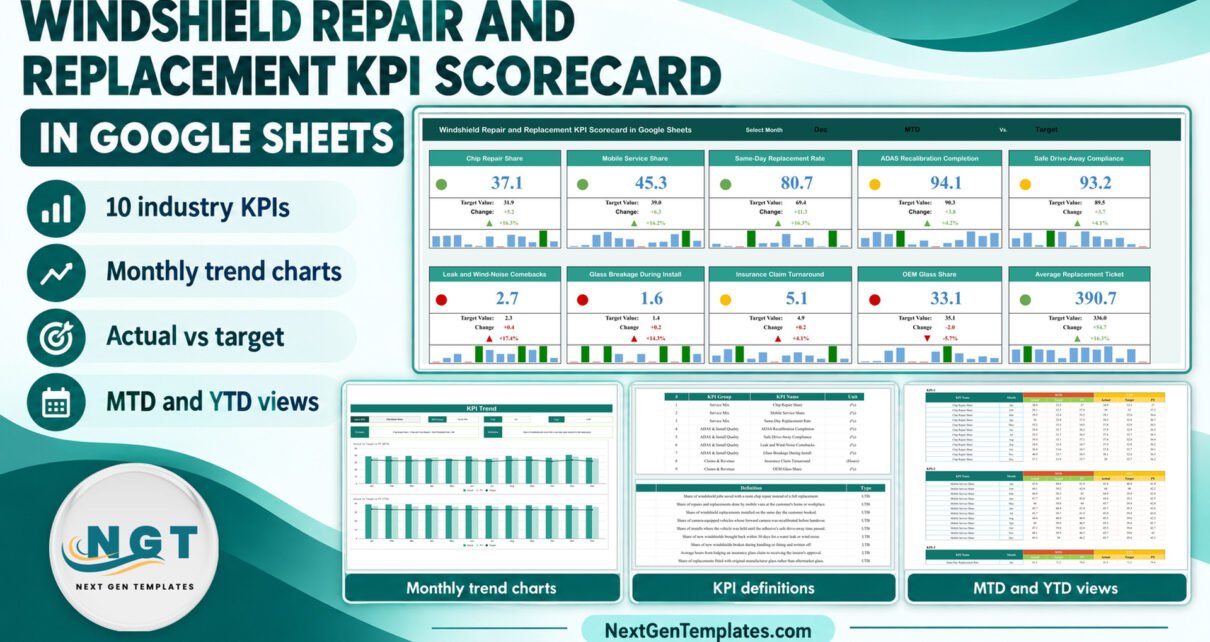
A 10-KPI traffic-light scorecard for windshield repair and auto glass shops in Google Sheets: service mix, install quality, claims and revenue KPIs, a KPI Trend page, setup steps and the known issues to fix first.
Online Tutorial for Data Analysis and Automation
A 10-KPI traffic-light scorecard for windshield repair and auto glass shops in Google Sheets: service mix, install quality, claims and revenue KPIs, a KPI Trend page, setup steps and the known issues to fix first.
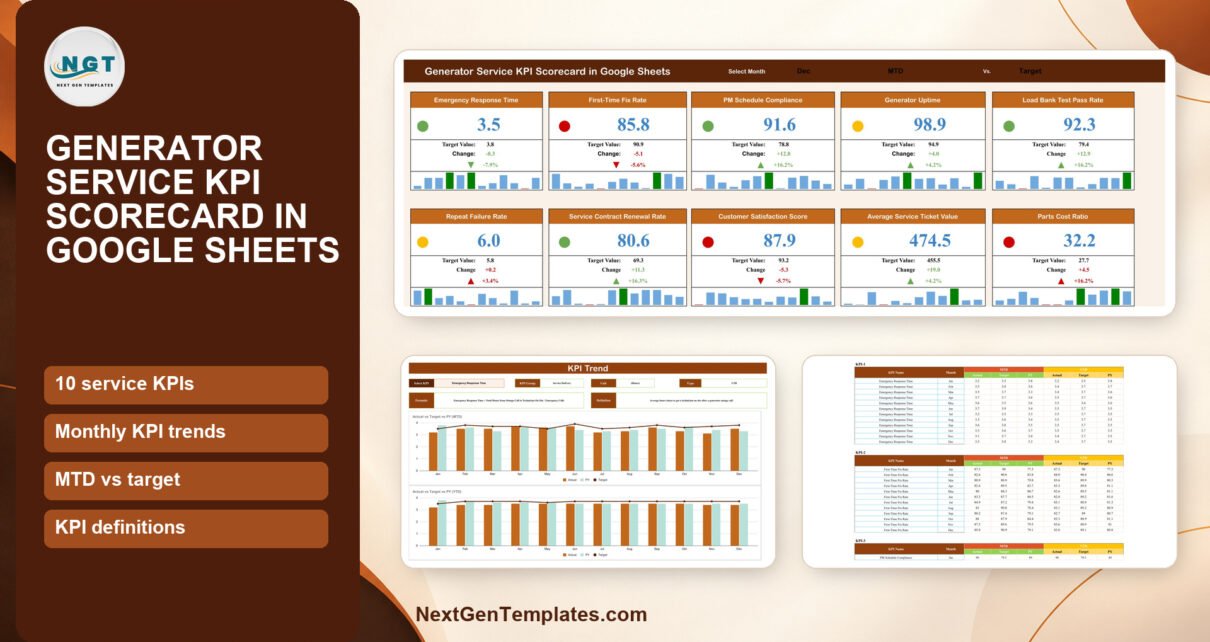
Generator Service KPI Scorecard in Google Sheets with 10 traffic-light KPI cards, a month picker, MTD/YTD and Target/PY views, and a KPI Trend page for monthly reviews.
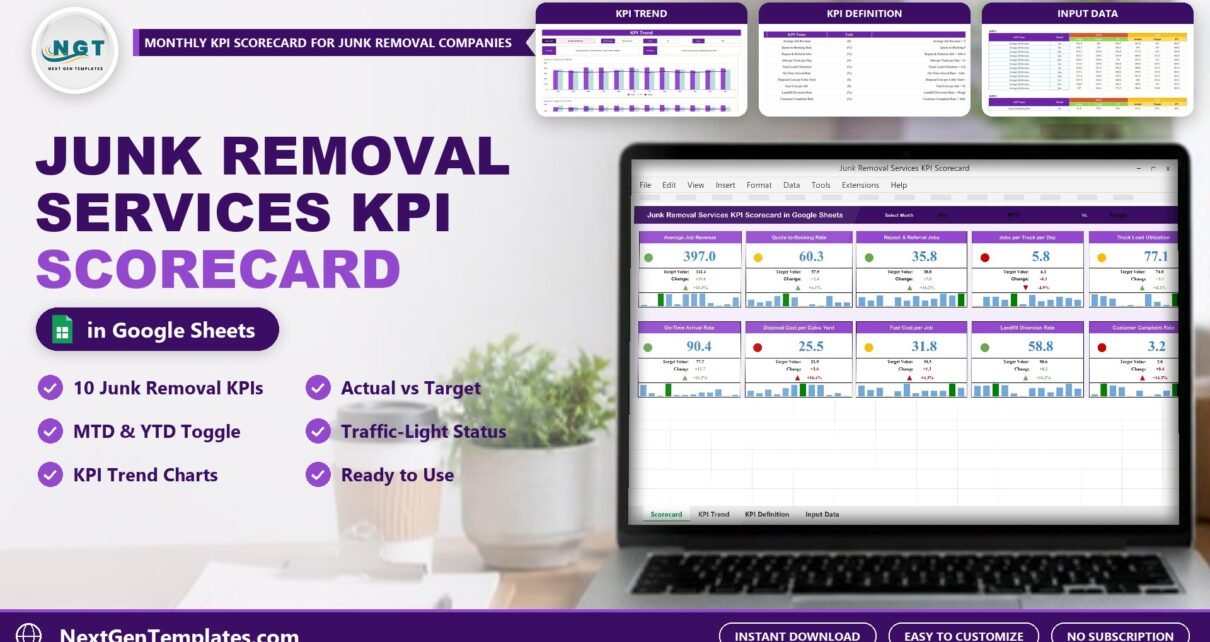
Junk Removal Services KPI Scorecard in Google Sheets with 10 traffic-light KPI cards, a month picker, MTD/YTD and Target/PY views, and a KPI Trend page for monthly reviews.
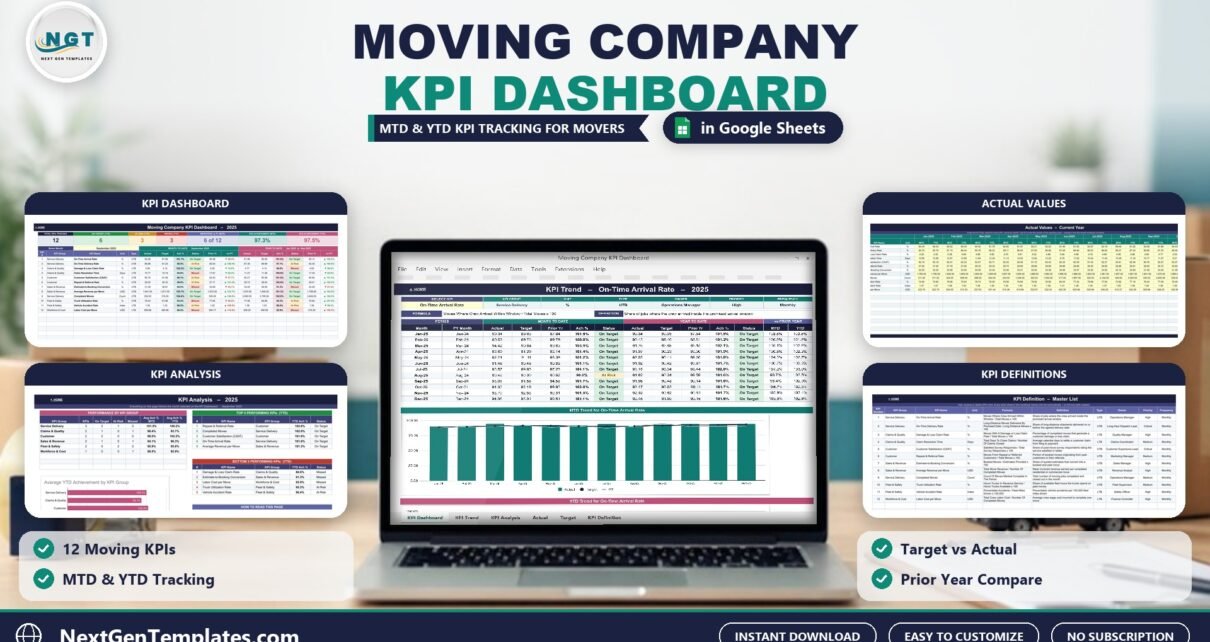
A Google Sheets KPI dashboard for moving companies: 12 KPIs in six groups, MTD and YTD against target and prior year, traffic lights, a KPI Trend page and group analysis.
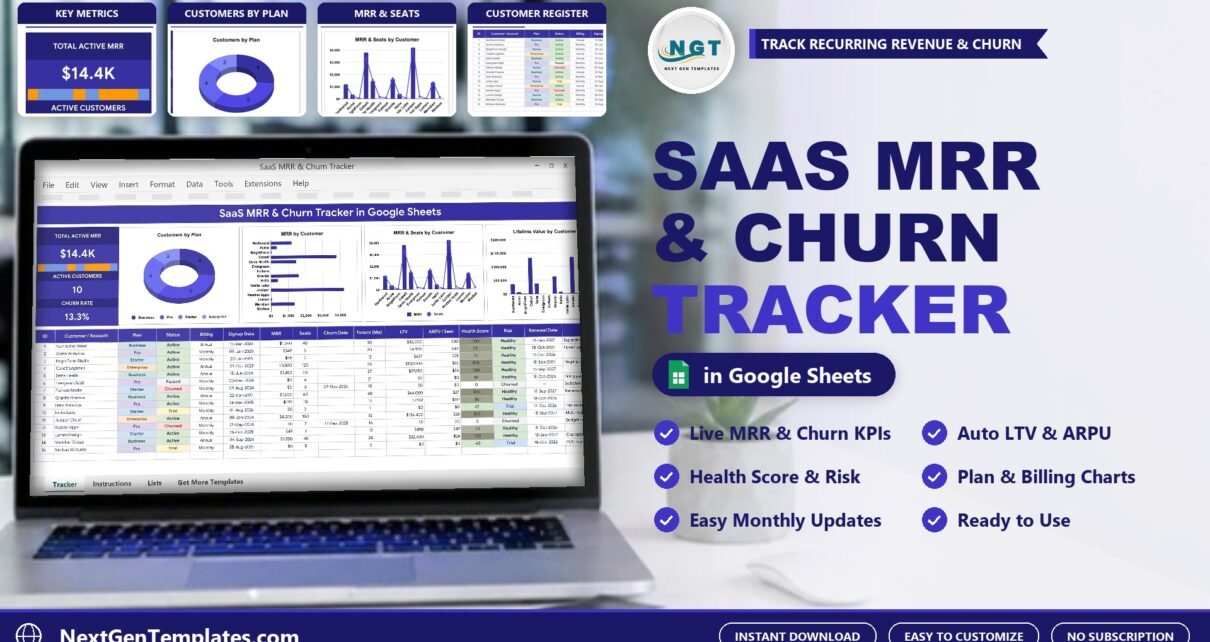
A one-page SaaS MRR and Churn Tracker in Google Sheets: live Total Active MRR, Active Customers and Churn Rate cards, four charts, and a 16-column account log with automatic LTV, ARPU per seat, Health Score and Risk.

The Domain and Website Portfolio Tracker in Google Sheets keeps every domain cost, revenue, visitor count, renewal date and ROI on one shareable page.
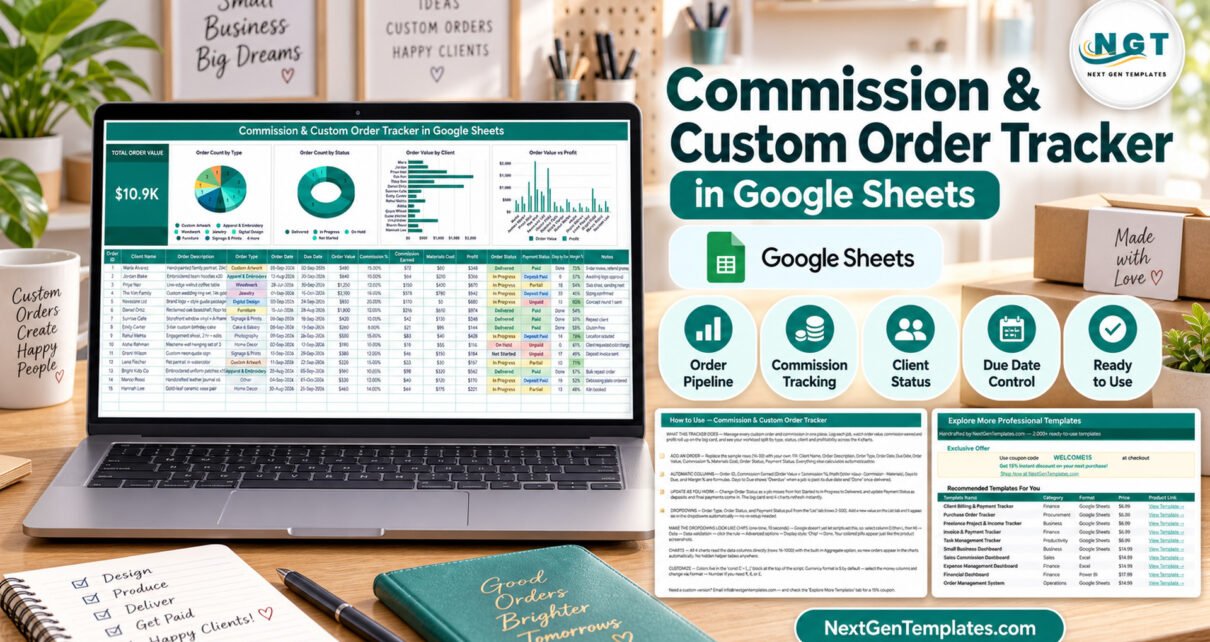
A one-page Google Sheets tracker for commissioned and custom orders: 16 columns per job, a Total Order Value KPI card, four live charts, and automatic commission, profit, margin and due-date columns.

A six-tab Google Sheets retail dashboard with 16 KPI cards, 19 pivot-backed charts and 15 slicers covering sell-through, size curve, channel mix and returns.
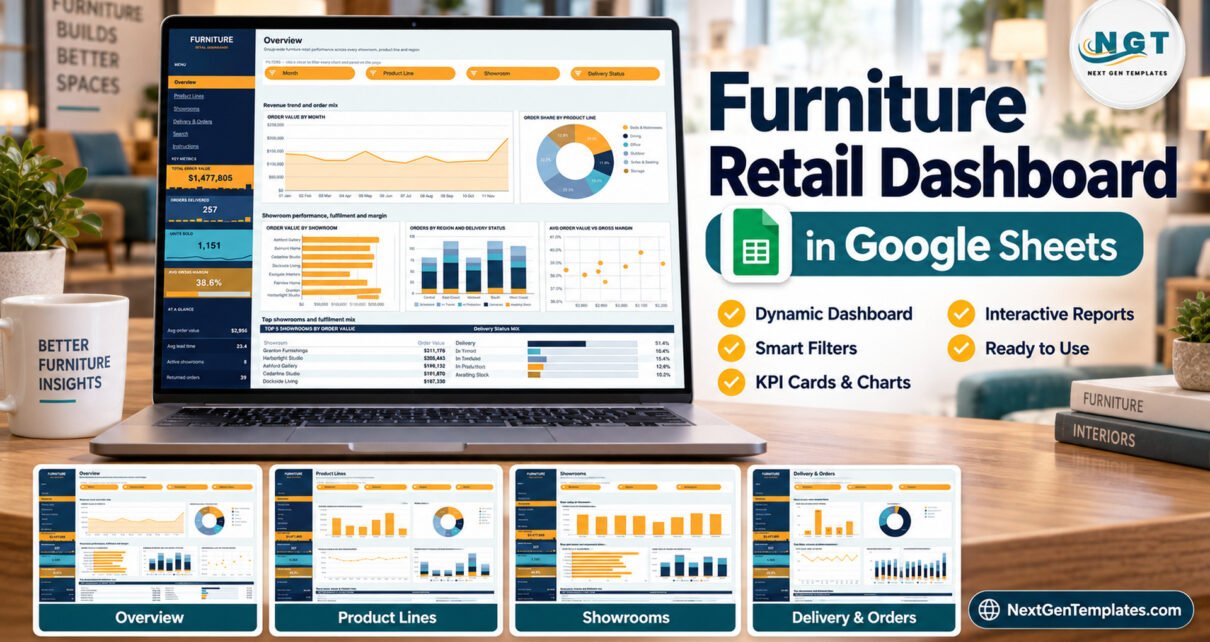
A 6-page Furniture Retail Dashboard in Google Sheets with 18 pivot-backed charts, 15 slicers and an Order ID lookup covering order value, units, margin and lead time.
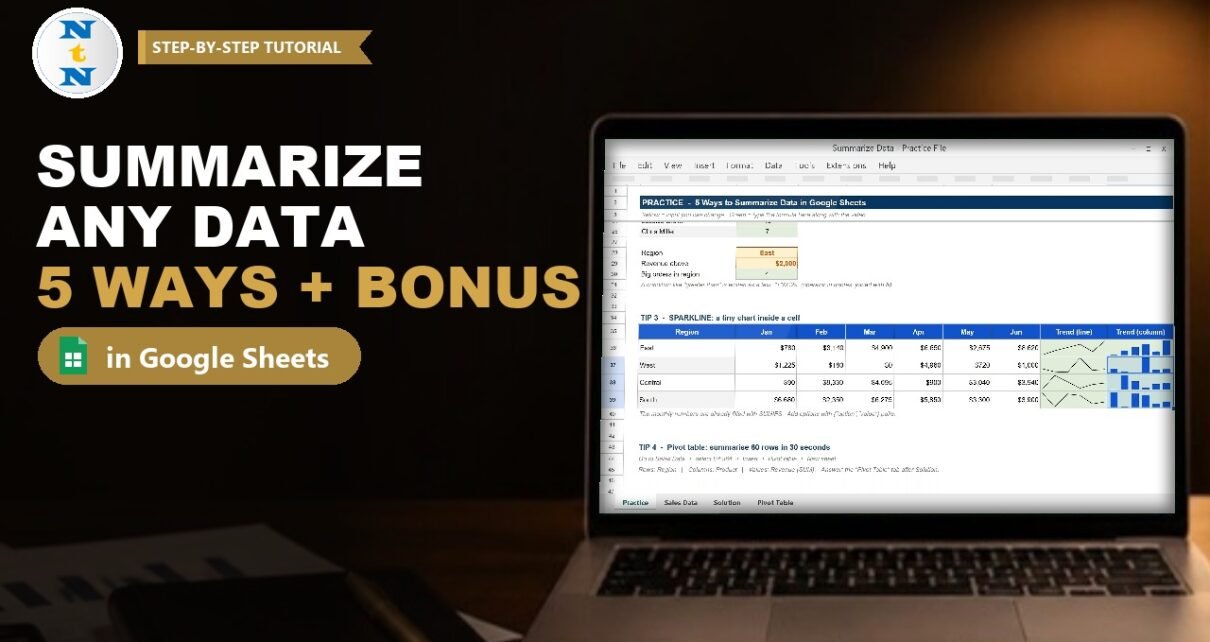
Summarize data in Google Sheets step by step: SUMIFS and COUNTIFS with one or more conditions, SPARKLINE charts inside a cell, a pivot table in a few clicks, QUERY for a sorted summary table, plus the status bar for instant totals. Free practice file included.