Ambulance Fleet and Dispatch Management Web App in Google Apps Script is a ready-to-deploy web app template for ambulance services that need one organized place to manage emergency requests, live dispatch, vehicle availability, crew assignment, patient transport, billing, documents, reports, and database archiving.
The scale of emergency medical operations makes clean records essential. The 2025 NEMSIS Public-Release Research Dataset includes 63,635,893 EMS activations submitted by 14,801 EMS agencies across 54 states and territories. Even a small ambulance operator needs a repeatable process for capturing requests, assigning vehicles, tracking trips, billing accurately, and reviewing response performance.
This template uses the familiar Google Apps Script web app model. Google documents that Apps Script web apps can publish browser-accessible interfaces through doGet or doPost functions and can be deployed from the Apps Script project. That makes this a practical option for teams that want an editable internal system without starting from a blank spreadsheet or buying a recurring SaaS plan.
Get the Ambulance Fleet and Dispatch Management System Web App
Sources: NEMSIS 2025 public-release dataset and Google Apps Script web app documentation.
🚀 Try the Live Demo Before You Buy
We have deployed this web app in our own Google account so you can test every page, every role — with real sample data — before purchasing. No signup, no email required.
🔑 Test Login Credentials
This system ships with nine separate role logins, so you can see exactly how role-based access control works before you buy. Sign in as admin for full access to every module, or log in as a dispatcher, fleet manager, driver, paramedic, billing, maintenance, hospital coordinator or read-only viewer to see how each user’s menu, permissions and data visibility change. Try opening two roles in two browsers side by side to watch a dispatch flow through the system in real time.
💡 What you get after purchase: The full source code (Code.gs + Index.html) plus a step-by-step deployment guide so you can deploy your own private instance in your own Google account in under 15 minutes.
Key Features of Ambulance Fleet and Dispatch Management System Web App
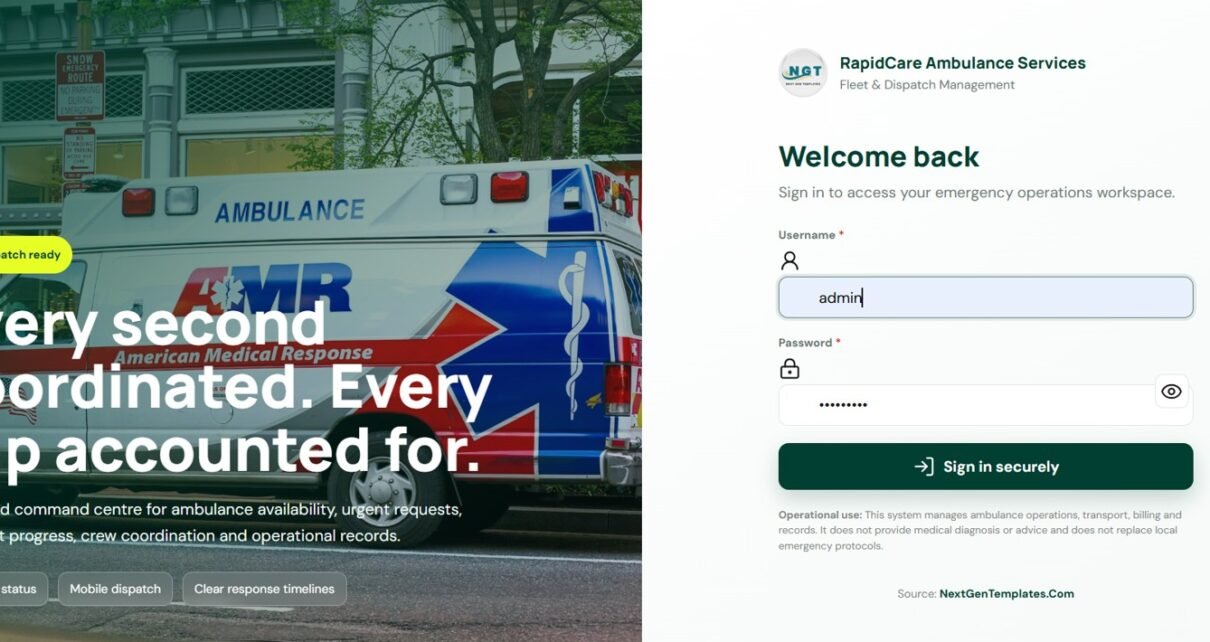
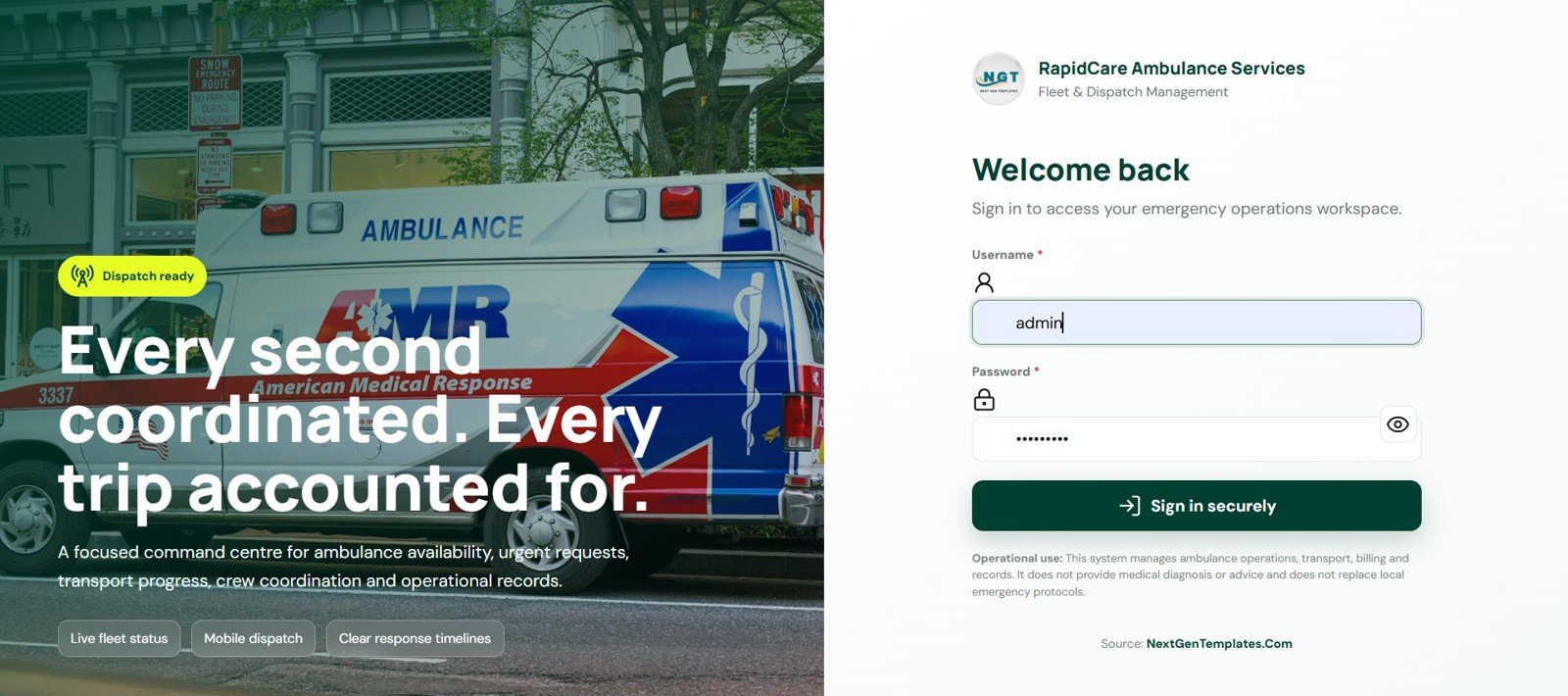
- Secure login: Branded RapidCare-style login screen with username, password, password visibility, dispatch-ready messaging, and source branding.
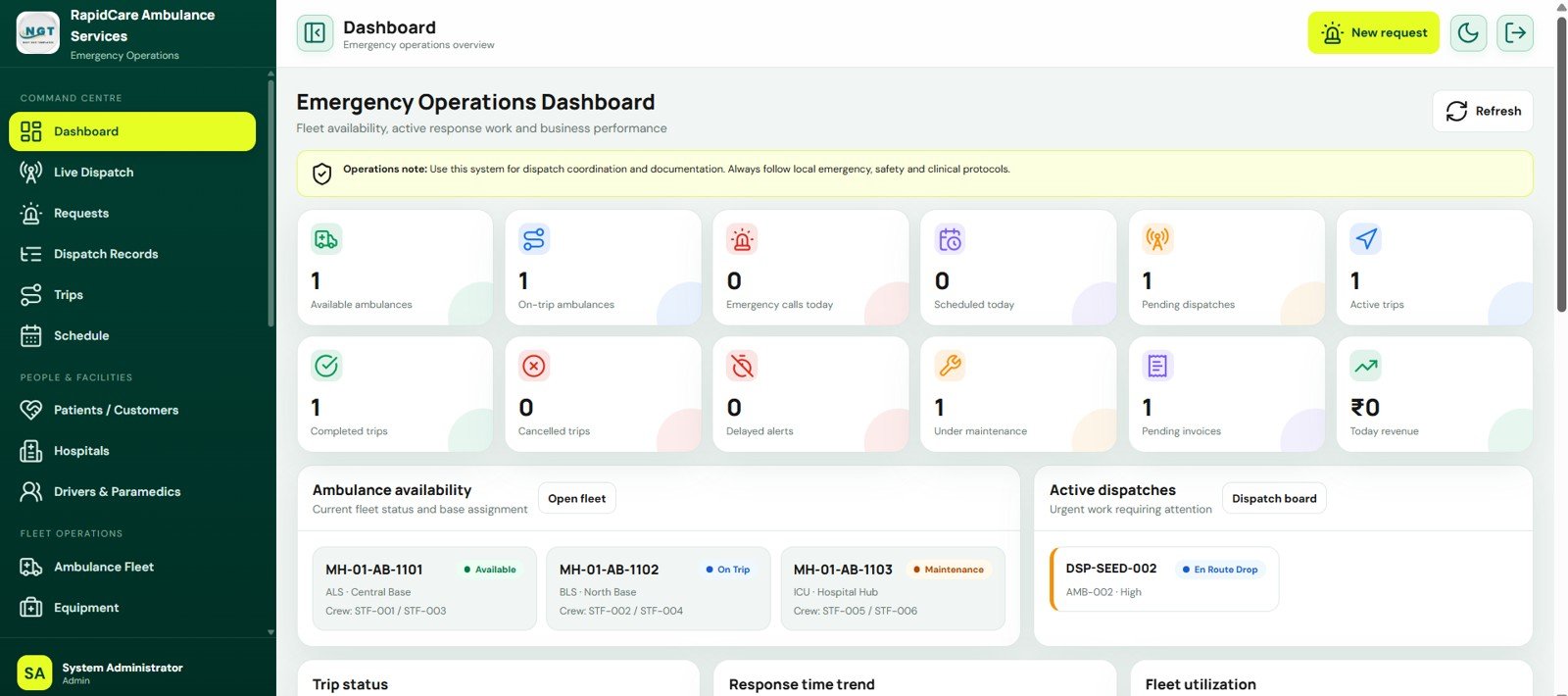
- Emergency operations dashboard: KPI cards for ambulance availability, calls, scheduled bookings, dispatches, trips, alerts, invoices, and revenue.
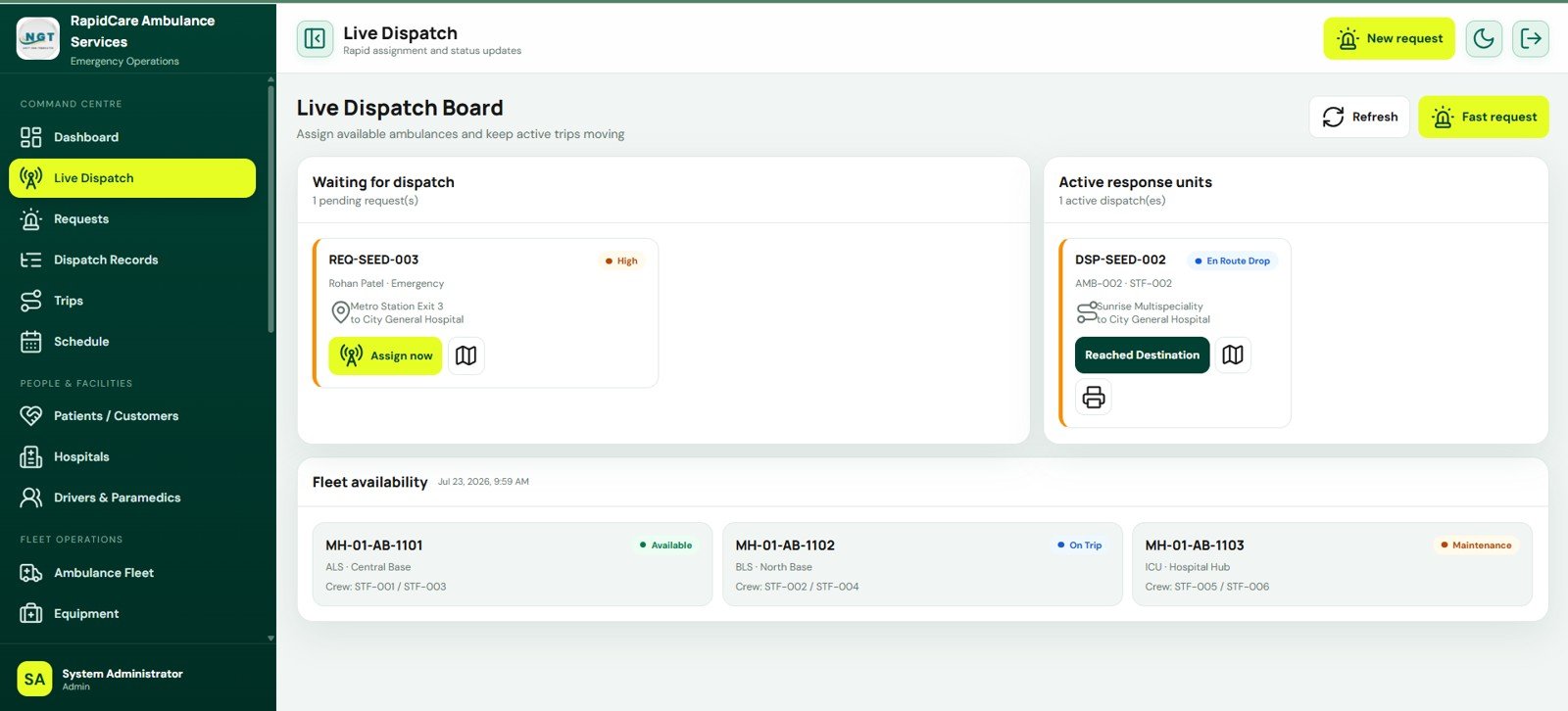
- Live dispatch board: Pending request cards, route details, priority context, assignment action, active response unit view, map route, and print controls.
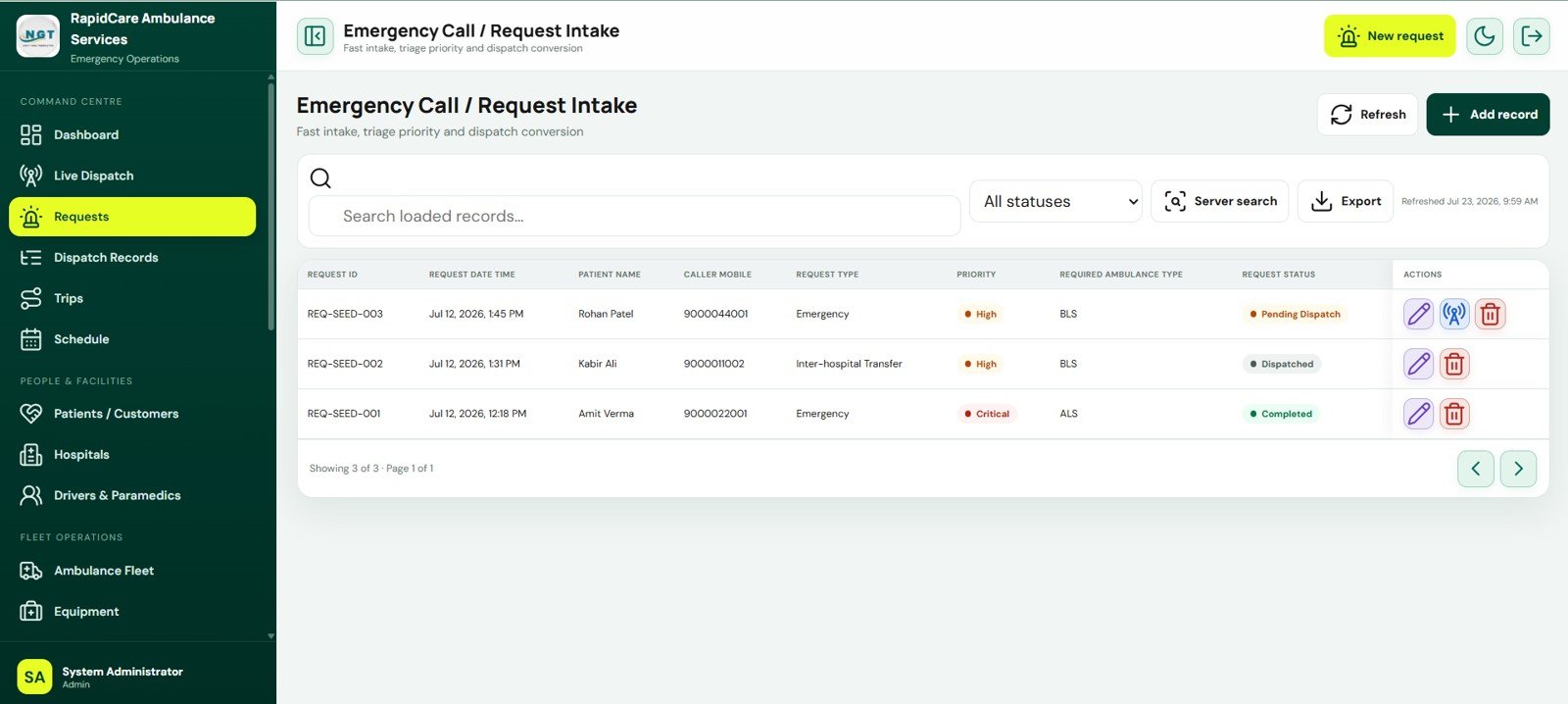
- Request intake: Capture request ID, date time, patient, caller mobile, request type, priority, ambulance type, and status.
- Dispatch records: Track dispatch ID, request ID, ambulance ID, driver ID, dispatch time, priority, and workflow status.
- Trip management: Link dispatches to trips with patient, ambulance, driver, start time, total kilometers, response minutes, and lifecycle actions.
- Fleet and crew records: Manage patients, hospitals, drivers, paramedics, ambulance vehicles, assigned drivers, status, and insurance expiry.
- Equipment and maintenance: Track equipment, consumables, checklist results, service dates, next service dates, fuel logs, and costs.
- Billing and finance: Create trip invoices, payments, receipts, expenses, paid amounts, balances, taxes, and payment statuses.
- Reports and archive: Use filters, export, print, Drive documents, import/export tools, user management, list management, settings, and database archive controls.
Dashboard Pages Explanation
1. Secure Login
The secure login page gives the ambulance system a controlled entry point. It includes branded RapidCare Ambulance Services messaging, username and password fields, password visibility, an ambulance-focused banner, and a note that the system is for dispatch coordination and documentation.
2. Emergency Operations Dashboard
The dashboard gives managers the fastest view of daily operations. Cards summarize available ambulances, on-trip ambulances, emergency calls today, scheduled bookings, pending dispatches, active trips, completed trips, cancelled trips, delayed alerts, maintenance, pending invoices, and revenue.
The analysis panels explain availability by vehicle, active urgent dispatches, trip status, response time by date, fleet utilization, driver-wise trips, hospital-wise trips, and recent activity by action.
3. Live Dispatch Board
The live dispatch board is designed for real-time assignment decisions. Dispatchers can review waiting requests, patient name, request type, priority, pickup and drop route, and then use Assign Now for rapid ambulance assignment.
The active response units area shows which ambulance and crew are already assigned. Status actions such as Reached Destination, map route, and print support the response workflow.
4. Emergency Call / Request Intake
The request intake module captures ambulance requests in a structured table. Each request includes request ID, request date time, patient name, caller mobile, request type, priority, required ambulance type, and current request status.
Search loaded records, status filter, server search, export, Add Record, and dispatch conversion actions help teams move requests into the correct next step.
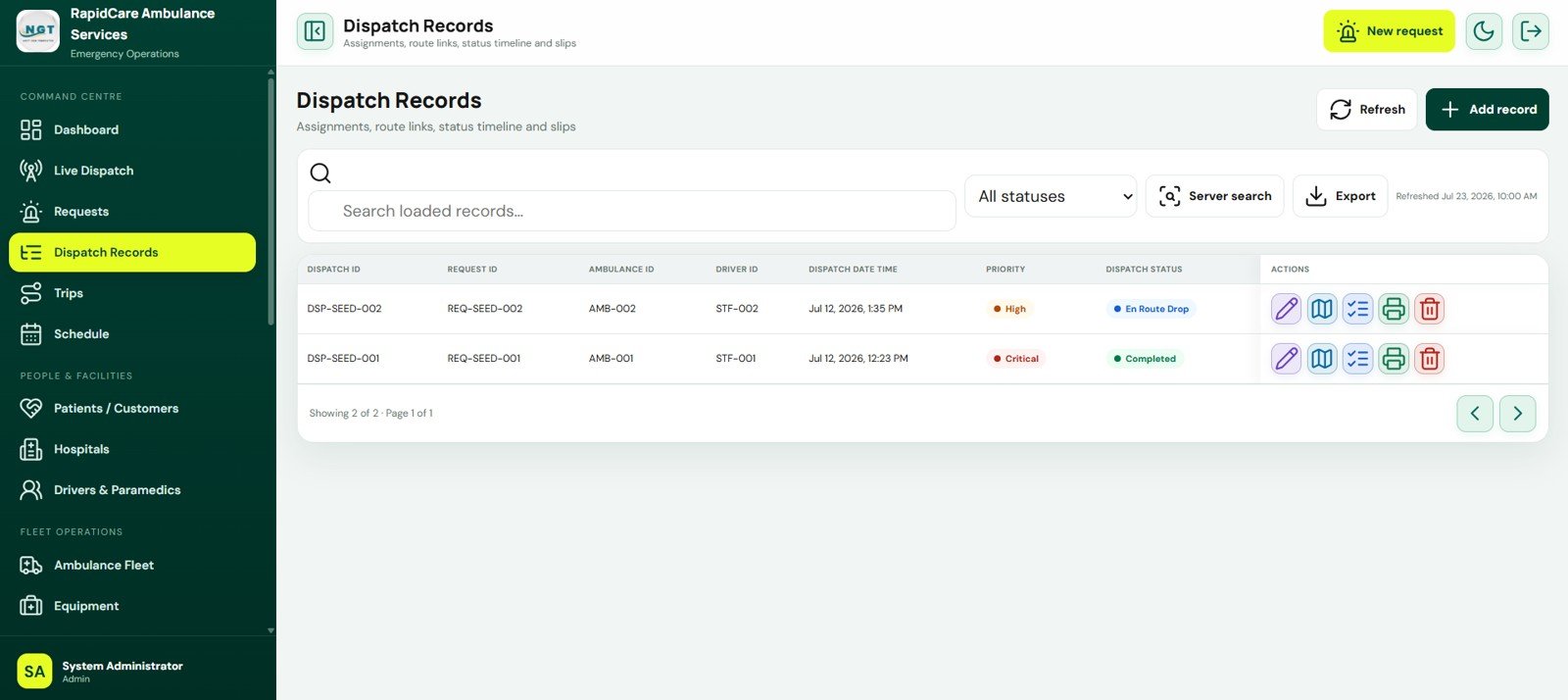
5. Dispatch Records
The dispatch records screen links each dispatch ID with the original request ID. It tracks ambulance ID, driver ID, dispatch date time, priority, and dispatch status such as En Route, Drop, or Completed.
Search, status filter, server search, export, edit, map, workflow, print, and delete actions make the module useful for both active coordination and later audit review.
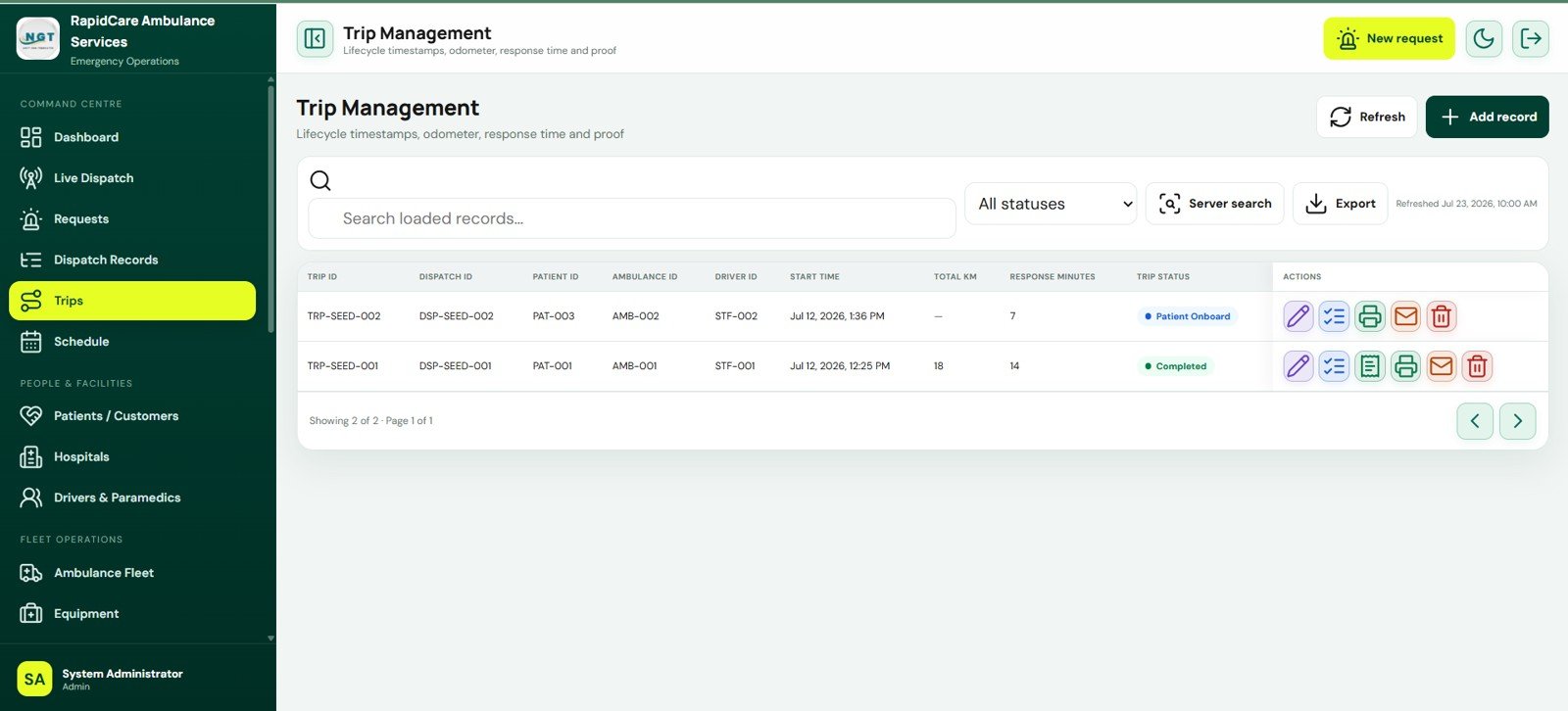
6. Trip Management
The trip management module connects the dispatch record to the actual patient transport lifecycle. It shows trip ID, dispatch ID, patient ID, ambulance ID, driver ID, start time, total kilometers, response minutes, and trip status.
Workflow, print, email, and delete actions help teams progress trips from patient pickup to completion while keeping billing and reports tied to the same trip record.
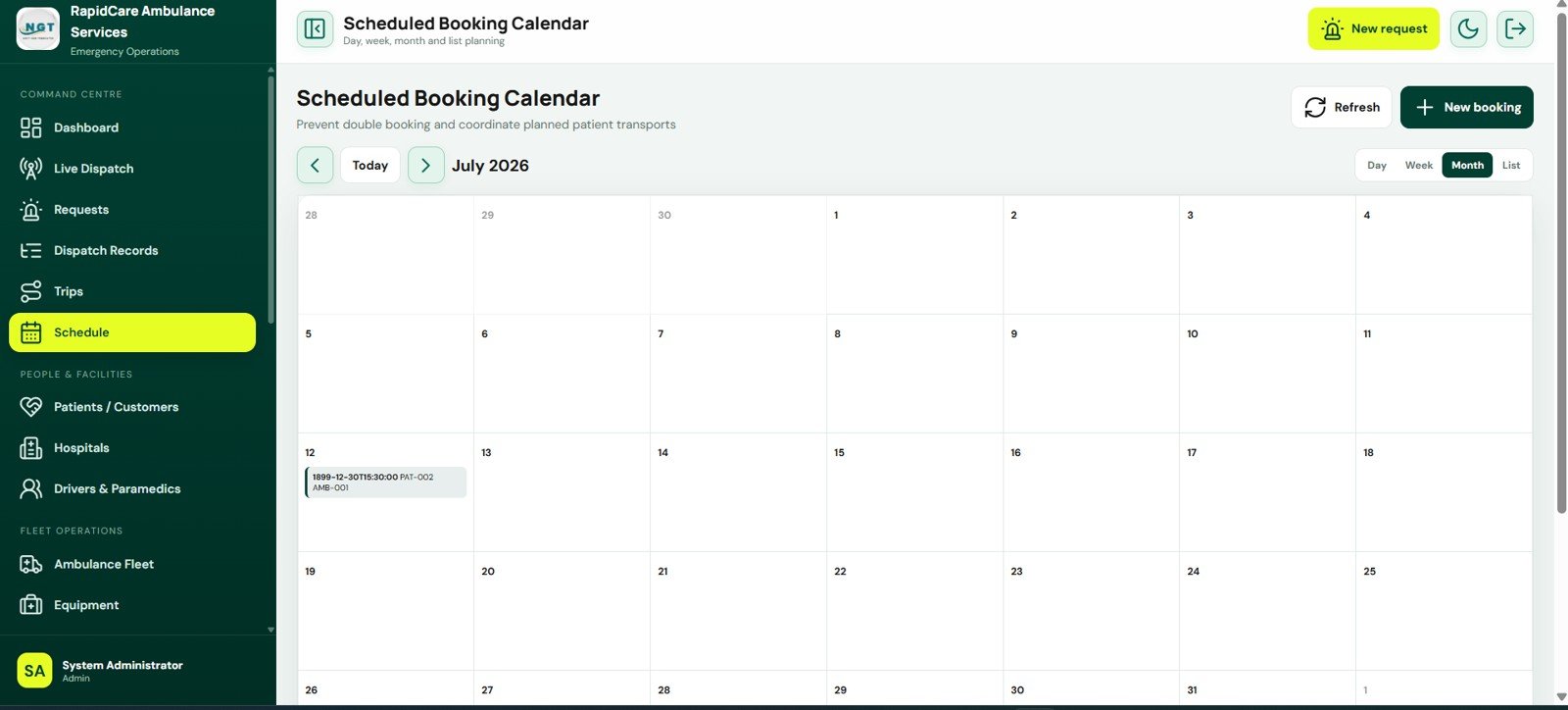
7. Scheduled Booking Calendar
The scheduled booking calendar supports planned patient transport. Day, week, month, and list views help dispatchers coordinate non-emergency movement and reduce double-booking risk.
The calendar view for July 2026 includes today, previous, next, and new booking controls, with entries that connect the patient and ambulance reference.
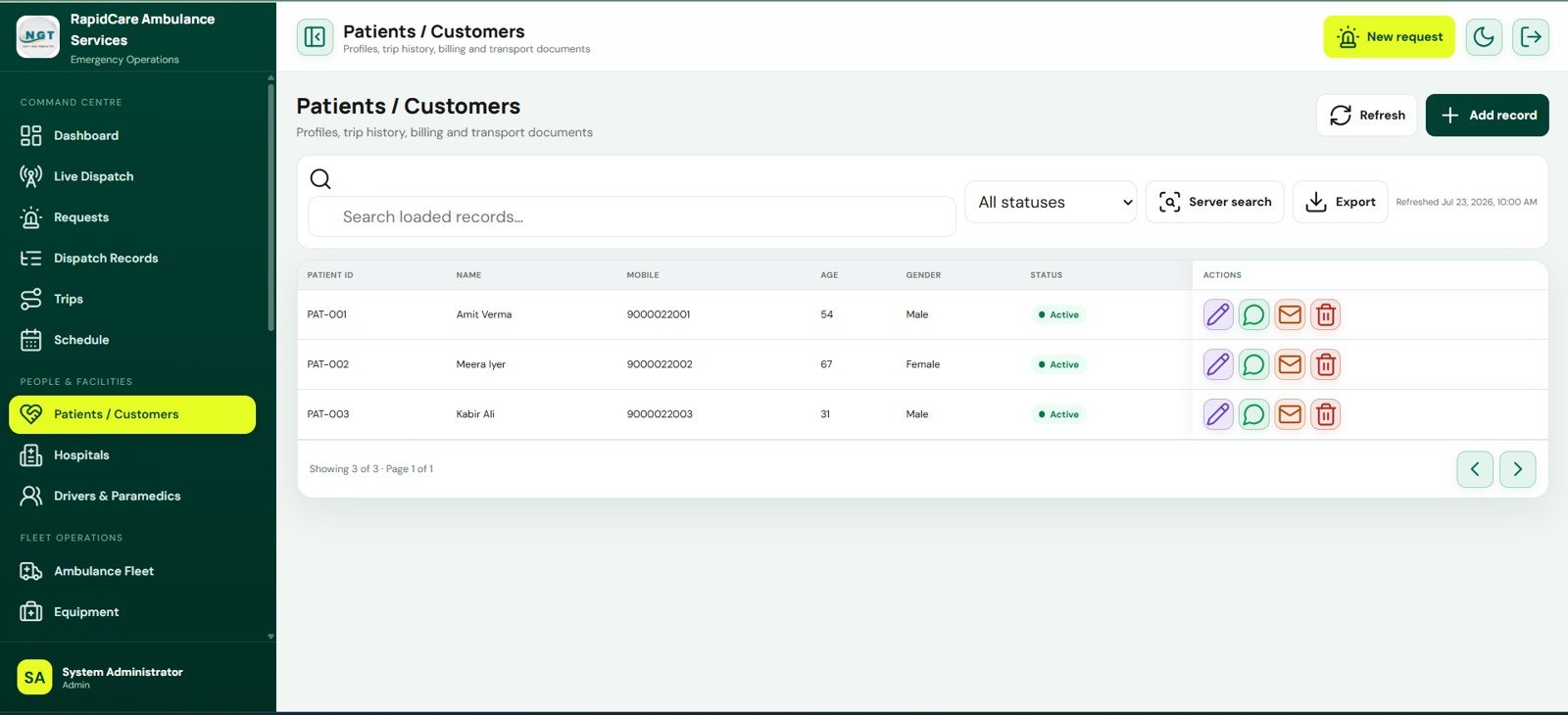
8. Patients / Customers
The patients and customers page stores patient ID, name, mobile number, age, gender, and status. This keeps request, trip, invoice, and document workflows tied to a consistent patient profile.
Search, status filter, server search, export, edit, message, email, and delete actions support everyday patient record maintenance.
9. Hospitals & Facilities
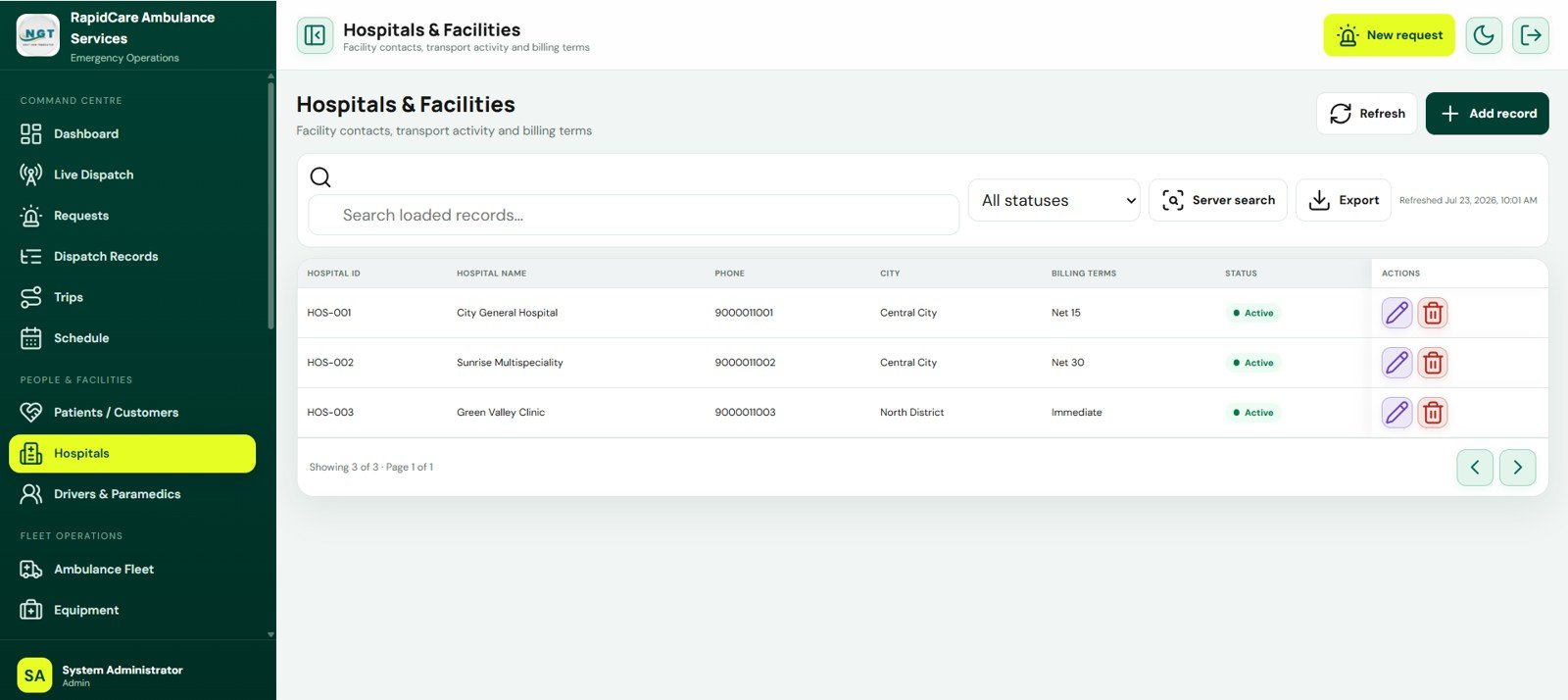
The hospitals and facilities page manages hospital ID, hospital name, phone, city, billing terms, and status. These records support transfers, billing references, and hospital-wise reporting.
Edit and delete actions help administrators maintain facility master data as partner hospitals or transfer destinations change.
10. Drivers & Paramedics
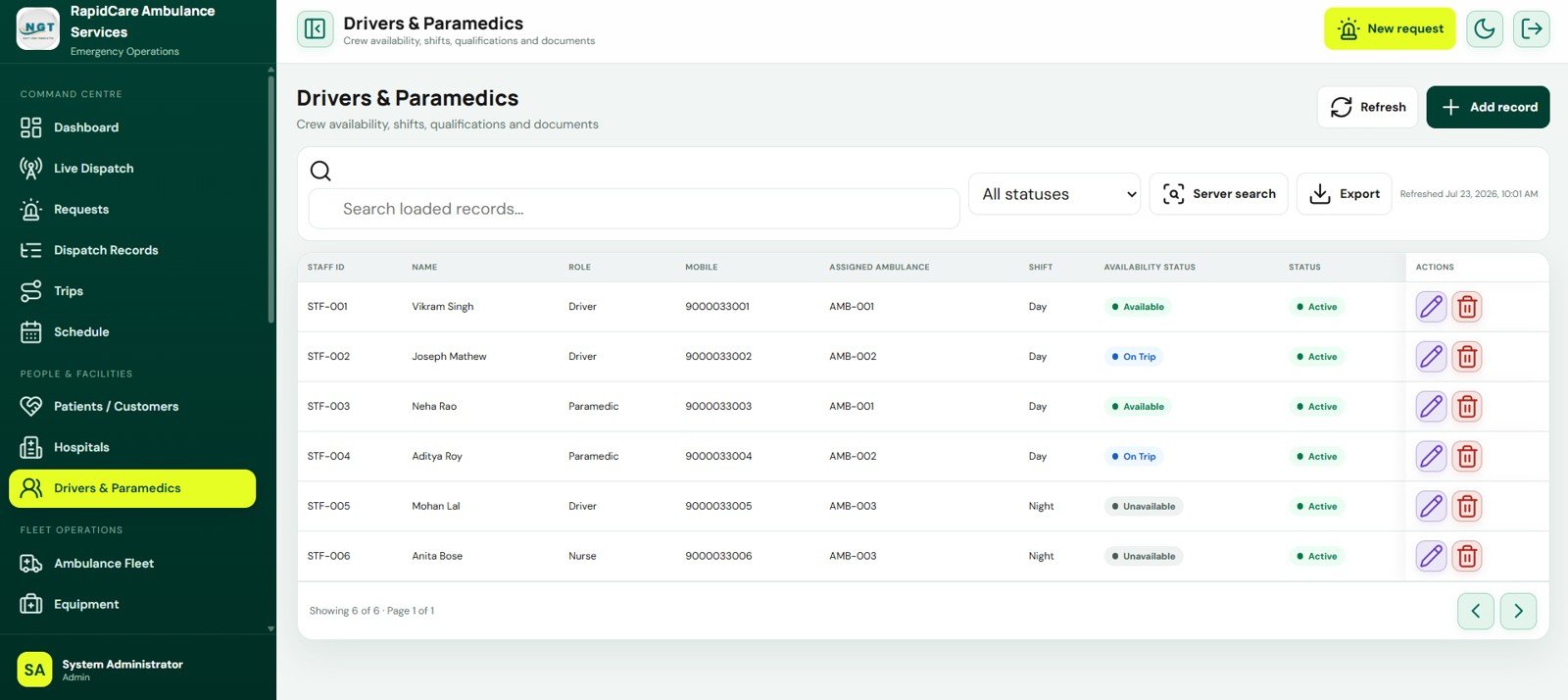
The crew page stores staff ID, name, role, mobile, assigned ambulance, shift, availability status, and active employment status. It gives dispatchers a quick reference for who can be assigned.
Because drivers and paramedics are part of each transport record, clean staff data improves trip history, crew workload review, and operational accountability.
11. Ambulance Fleet
The ambulance fleet page tracks ambulance ID, vehicle number, ambulance type, base station, availability status, assigned driver, insurance expiry, and fleet status such as Available, On Trip, or Maintenance.
Search, server search, export, edit, and delete controls make the fleet table useful for both daily dispatch and periodic compliance review.
12. Equipment & Consumables
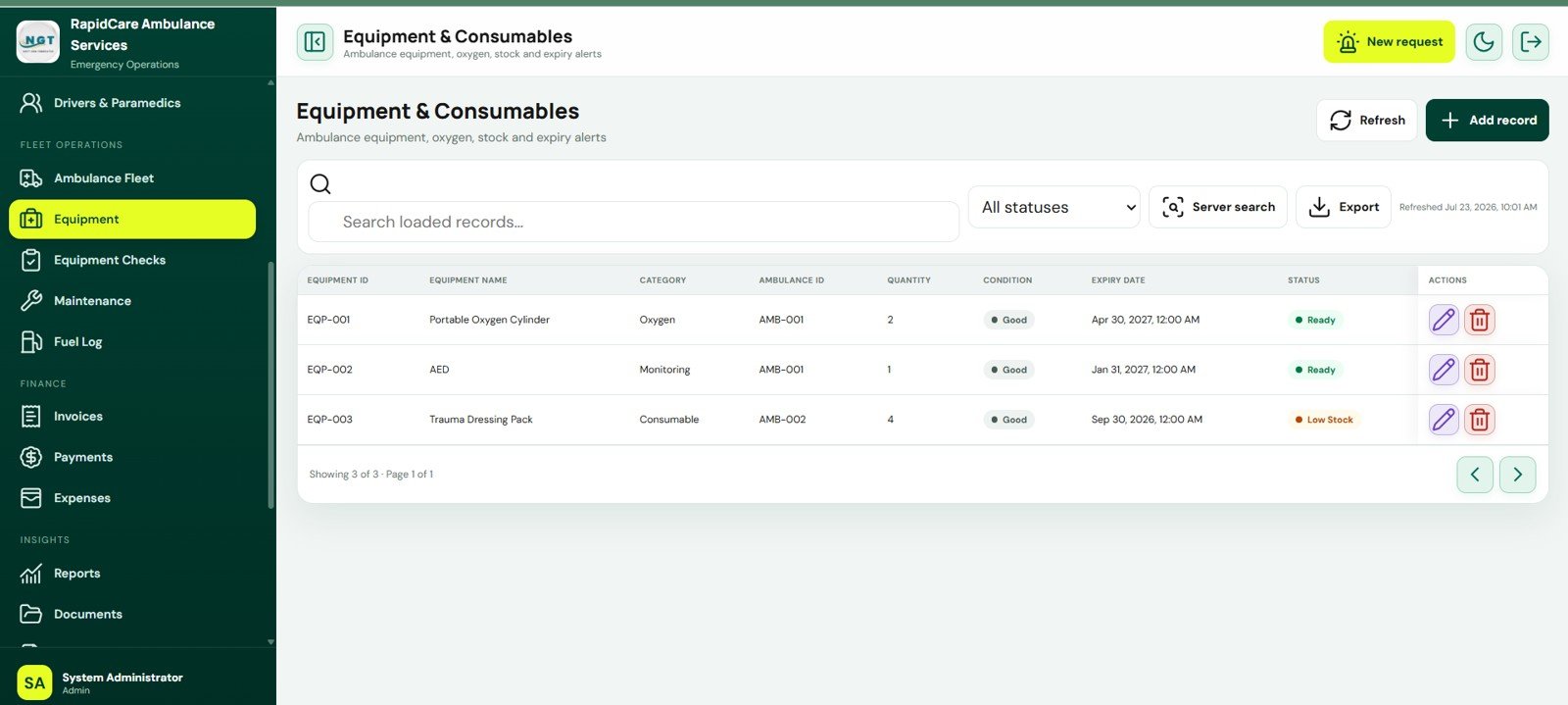
The equipment and consumables module records equipment ID, equipment name, category, ambulance ID, quantity, condition, expiry date, and status. This is useful for readiness checks before vehicles are dispatched.
Statuses such as Ready and Low Stock help teams identify supplies or vehicle equipment that need follow-up before the next trip.
13. Equipment Checklists
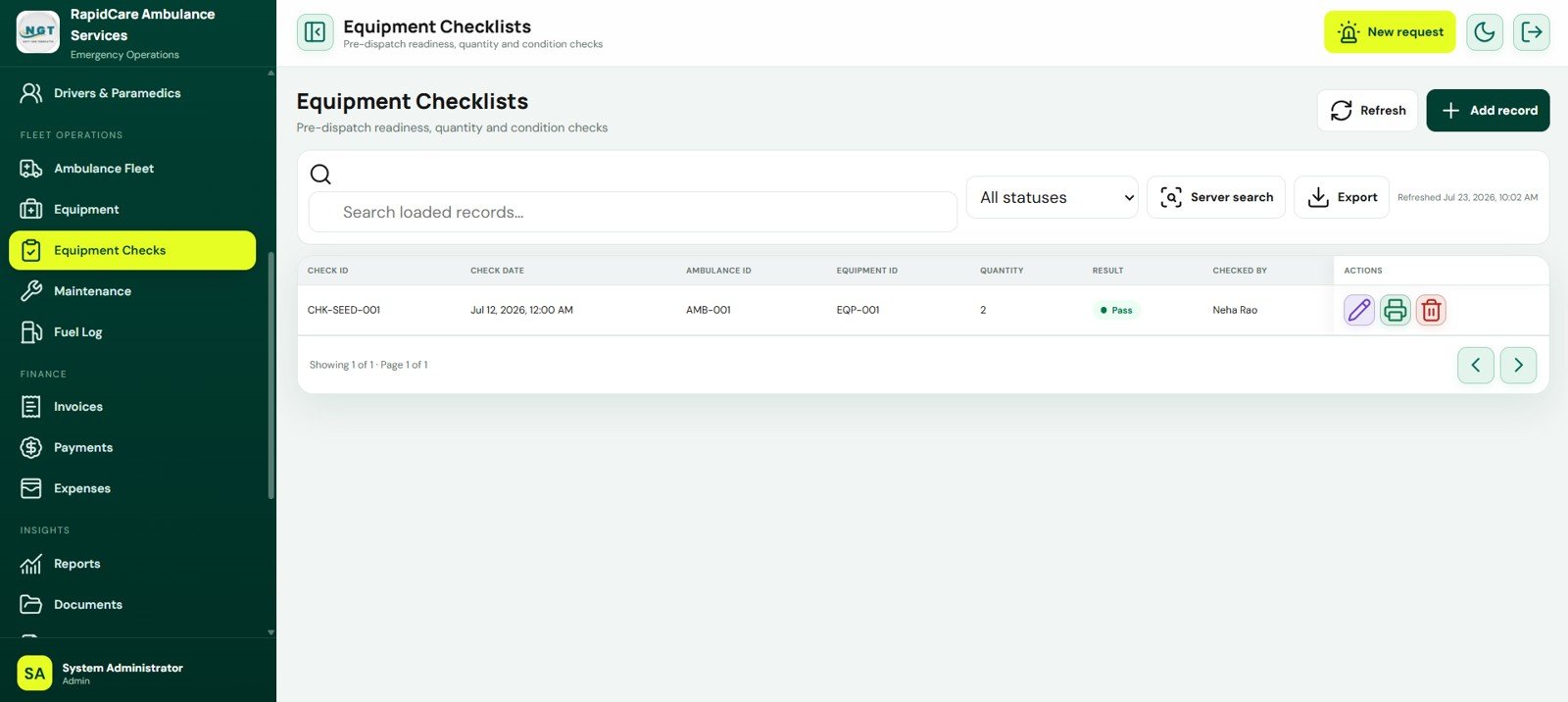
The equipment checklists page records check ID, check date, ambulance ID, equipment ID, quantity, result, and checked-by staff member. It helps standardize recurring vehicle equipment inspections.
Print, edit, and delete actions make checklist records easier to maintain and share during readiness review.
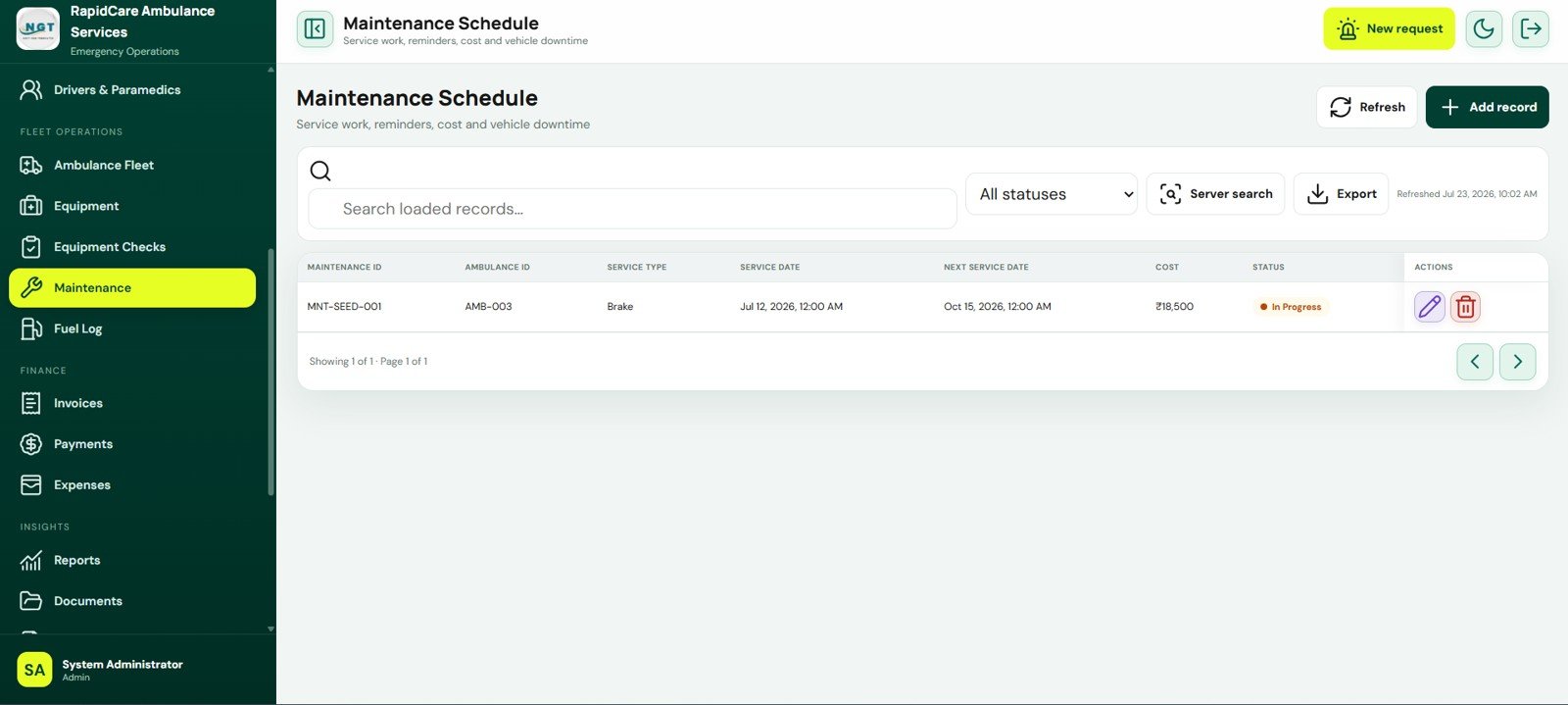
14. Maintenance Schedule
The maintenance schedule module tracks maintenance ID, ambulance ID, service type, service date, next service date, cost, and status. It supports preventive maintenance planning and vehicle availability decisions.
Search, status filter, server search, export, edit, and delete controls help fleet managers keep service records organized.
15. Fuel Log
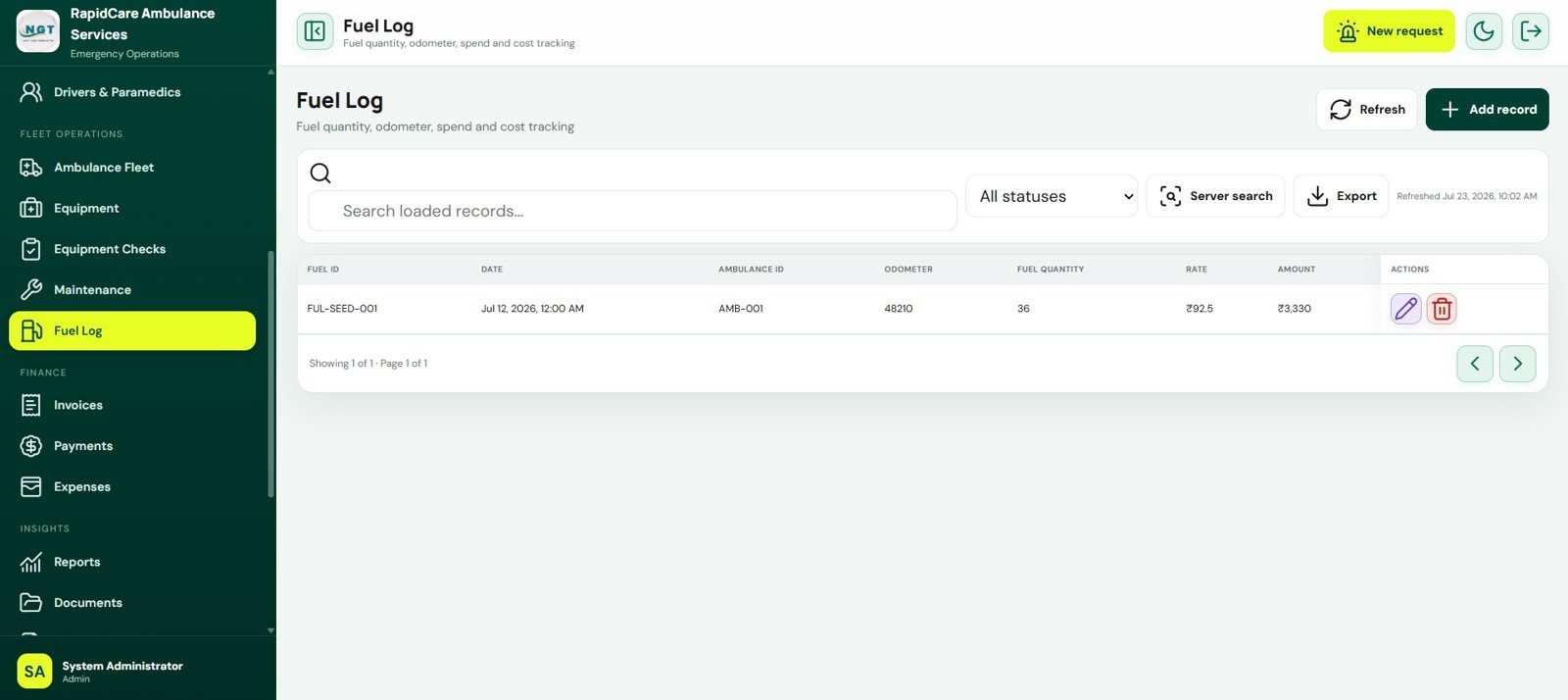
The fuel log tracks fuel ID, date, ambulance ID, odometer reading, fuel quantity, rate, amount, and cost details. This makes vehicle running cost easier to review by ambulance.
Edit and delete actions keep fuel records maintainable while supporting spend, consumption, and odometer-based analysis.
16. Billing & Invoices
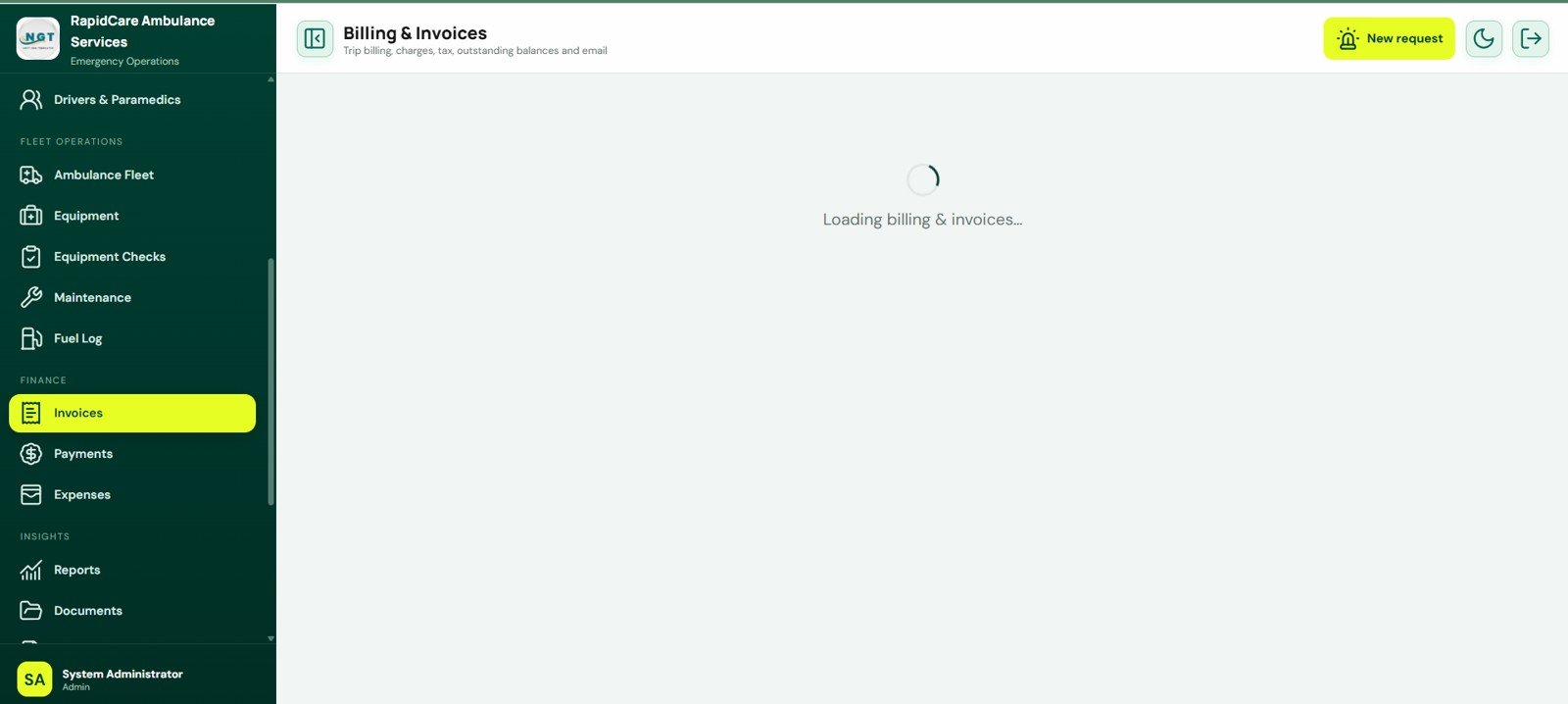
The billing and invoices screen turns completed trip data into a financial workflow. It supports base fare, kilometer charges, waiting charges, equipment charges, emergency charges, discount, tax, total, paid amount, balance, and payment status.
Invoice print and email actions help billing users move from completed transport to billing follow-up, while the loading state shows that records are being fetched.
17. Payments & Receipts
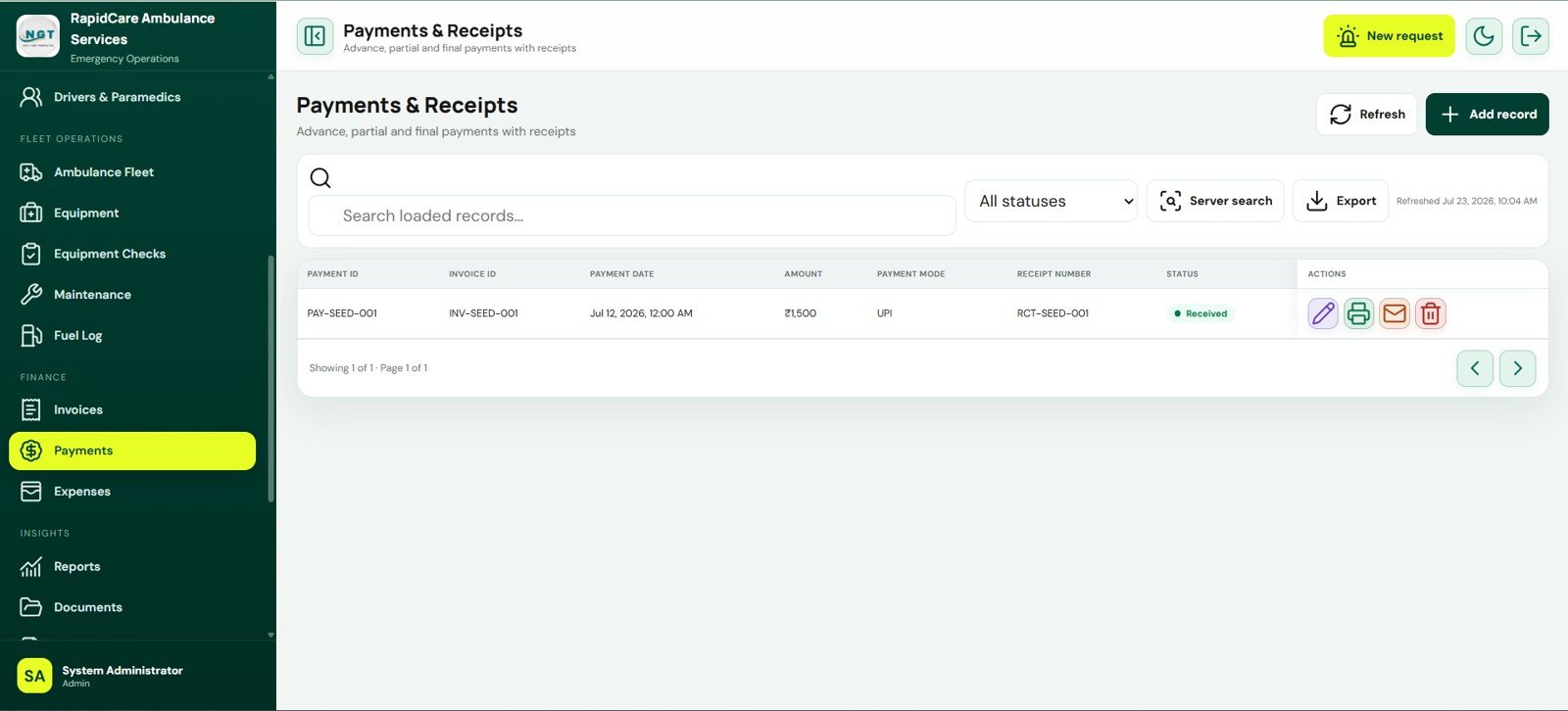
The payments and receipts page stores payment ID, invoice ID, payment date, amount, payment mode, receipt number, and status such as Received.
Edit, print, email, and delete actions support receipt management and payment follow-up after invoices are created.
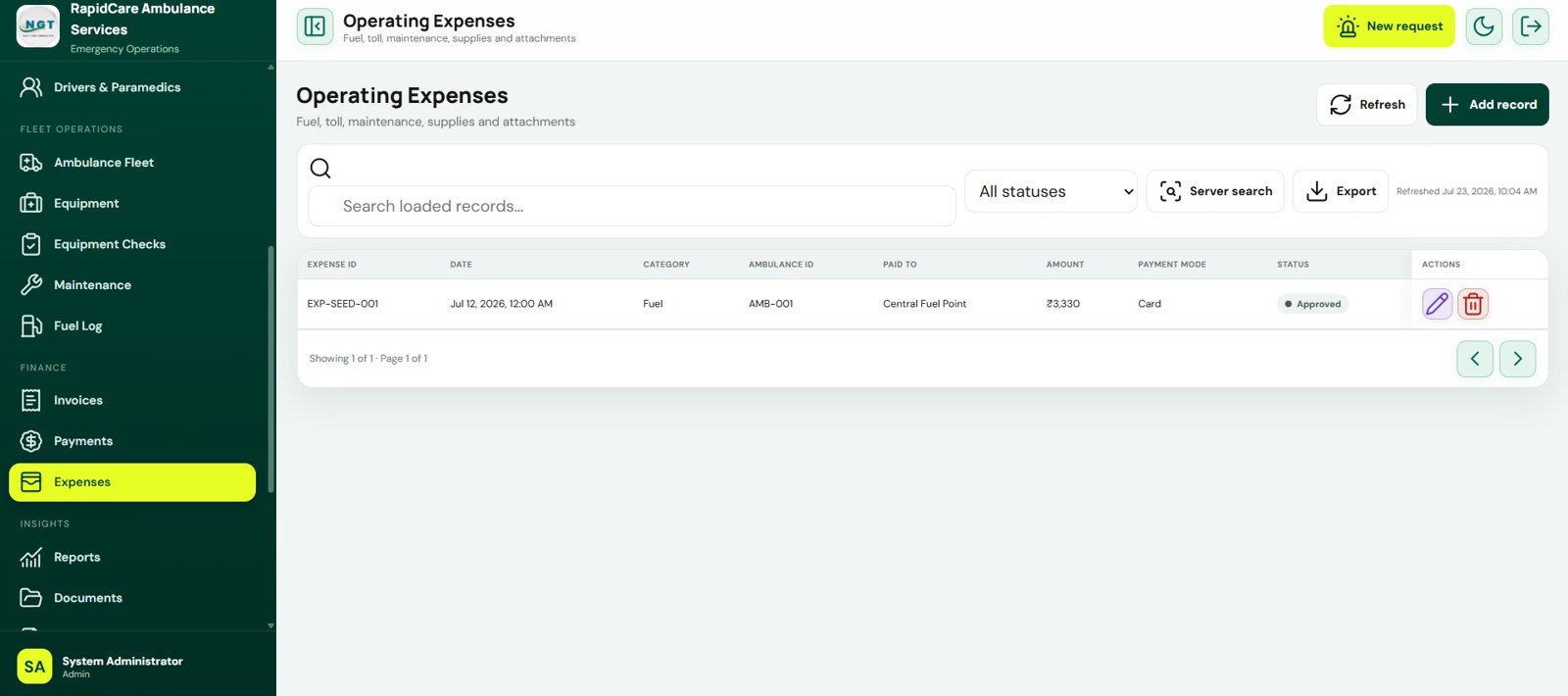
18. Operating Expenses
The operating expenses module records expense ID, date, category, ambulance ID, paid to, amount, payment mode, and approval status. It is designed for fuel, toll, maintenance, supplies, and attachment tracking.
This gives administrators a separate view of operational costs beyond customer invoices and receipts.
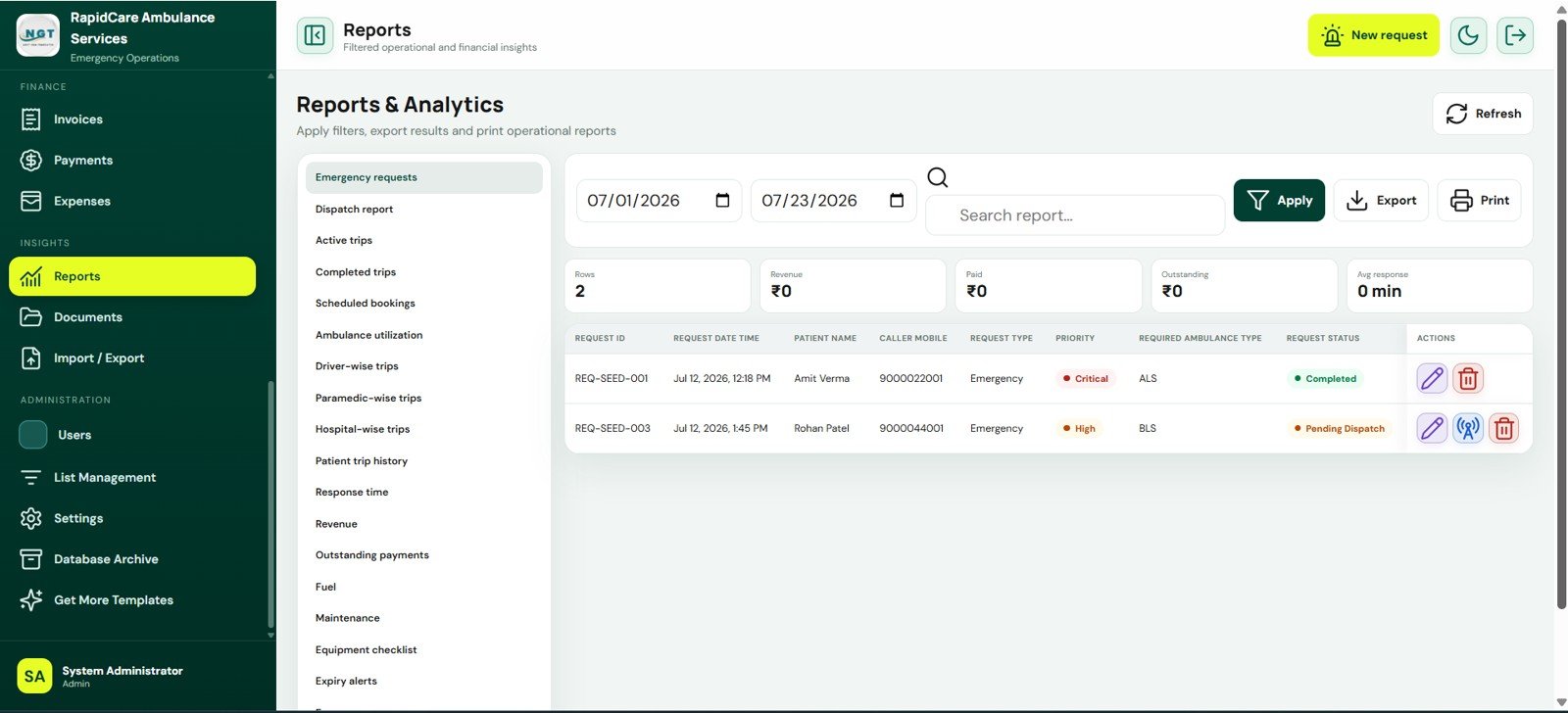
19. Reports & Analytics
The reports hub includes emergency requests, dispatches, active trips, completed trips, scheduled bookings, utilization, driver-wise trips, paramedic-wise trips, hospital-wise activity, patient history, response time, revenue, outstanding payments, fuel, maintenance, equipment checklists, expiry alerts, expenses, and audit log reports.
From date, to date, search, apply, export, and print controls support period-based review, while summary cards show rows, revenue, paid, outstanding, and average response.
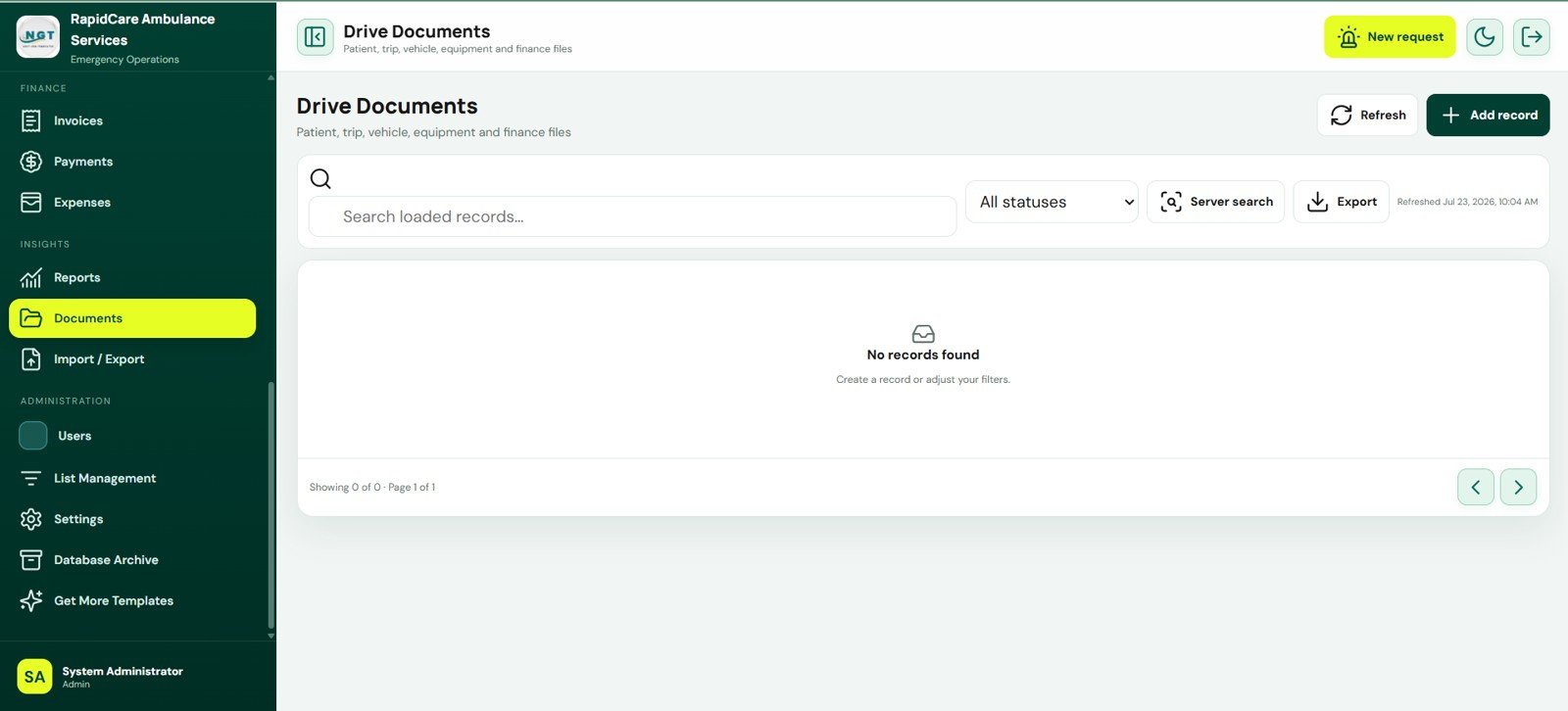
20. Drive Documents
The Drive Documents screen is built for patient, trip, vehicle, equipment, and finance file storage. It keeps database rows lighter while still connecting document references to operational records.
Search loaded records, status filter, server search, export, and add record controls help teams find or add files when needed.
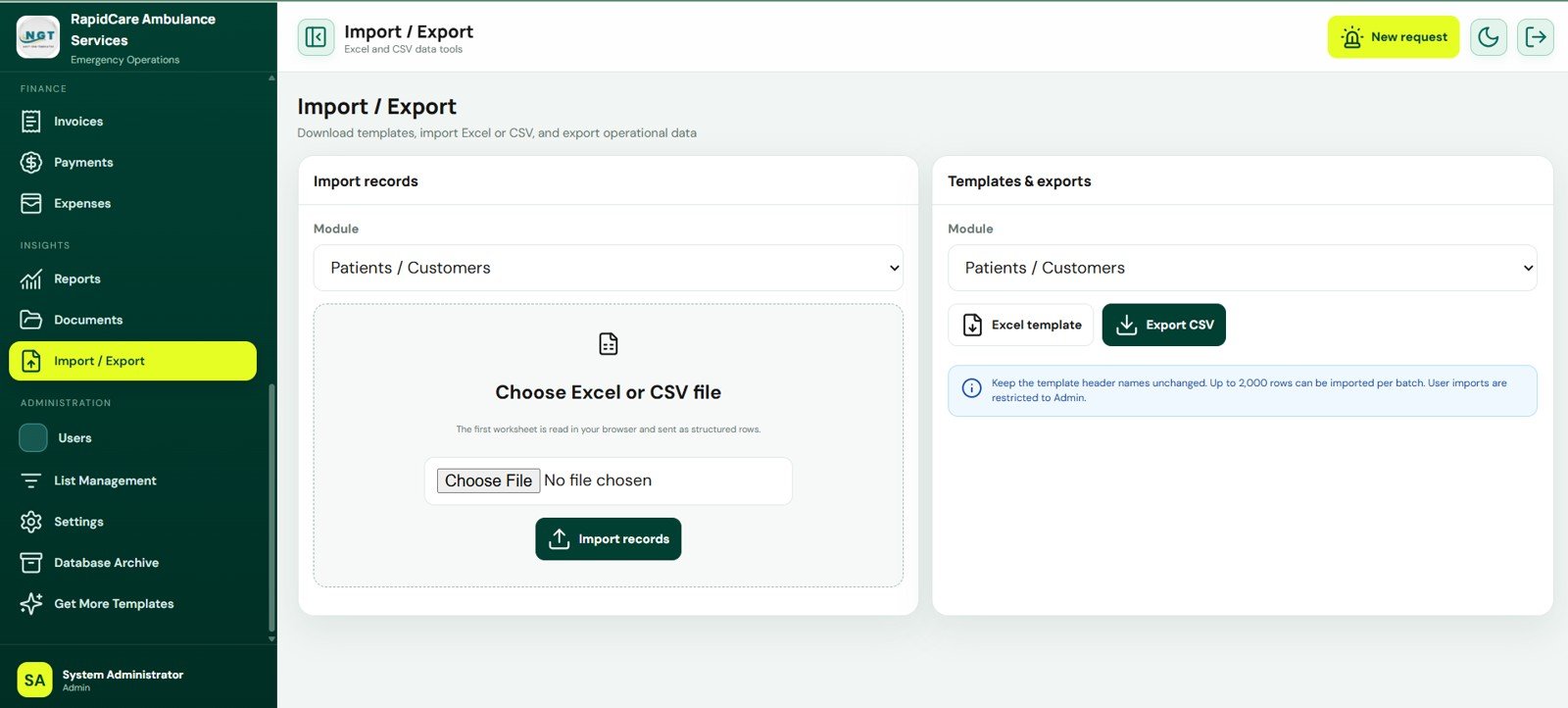
21. Import / Export
The import and export module lets admins import records by selected module through Excel or CSV upload. It also provides template download and CSV export controls.
The screen reminds users to keep template headers unchanged, limits batch imports to 2,000 rows, and restricts imports to Admin users.
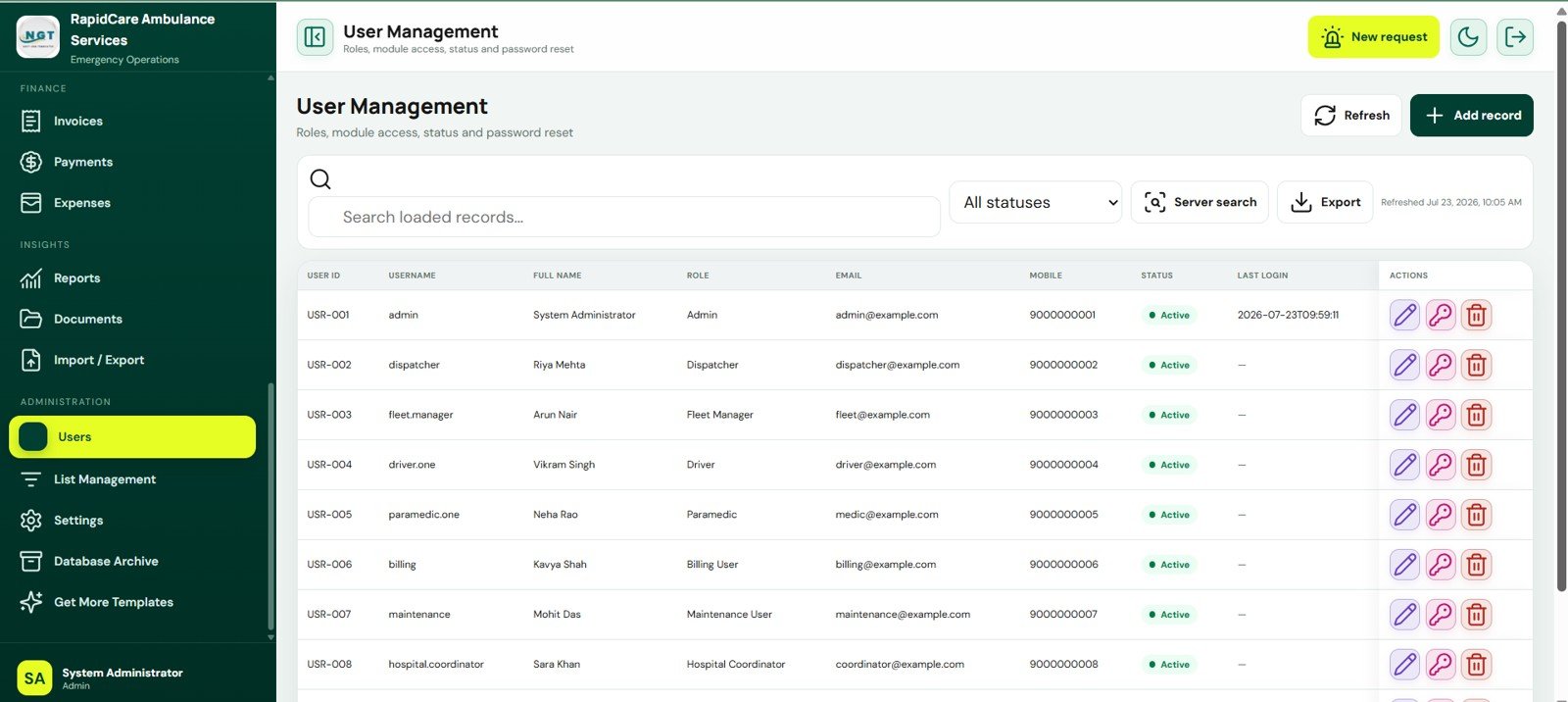
22. User Management
User Management tracks user ID, username, full name, role, email, mobile, status, and last login. It includes edit, reset password, and delete actions.
Roles such as Admin, Dispatcher, Fleet Manager, Driver, Paramedic, Billing User, Maintenance User, and Hospital Coordinator help split access by responsibility.
23. List Management
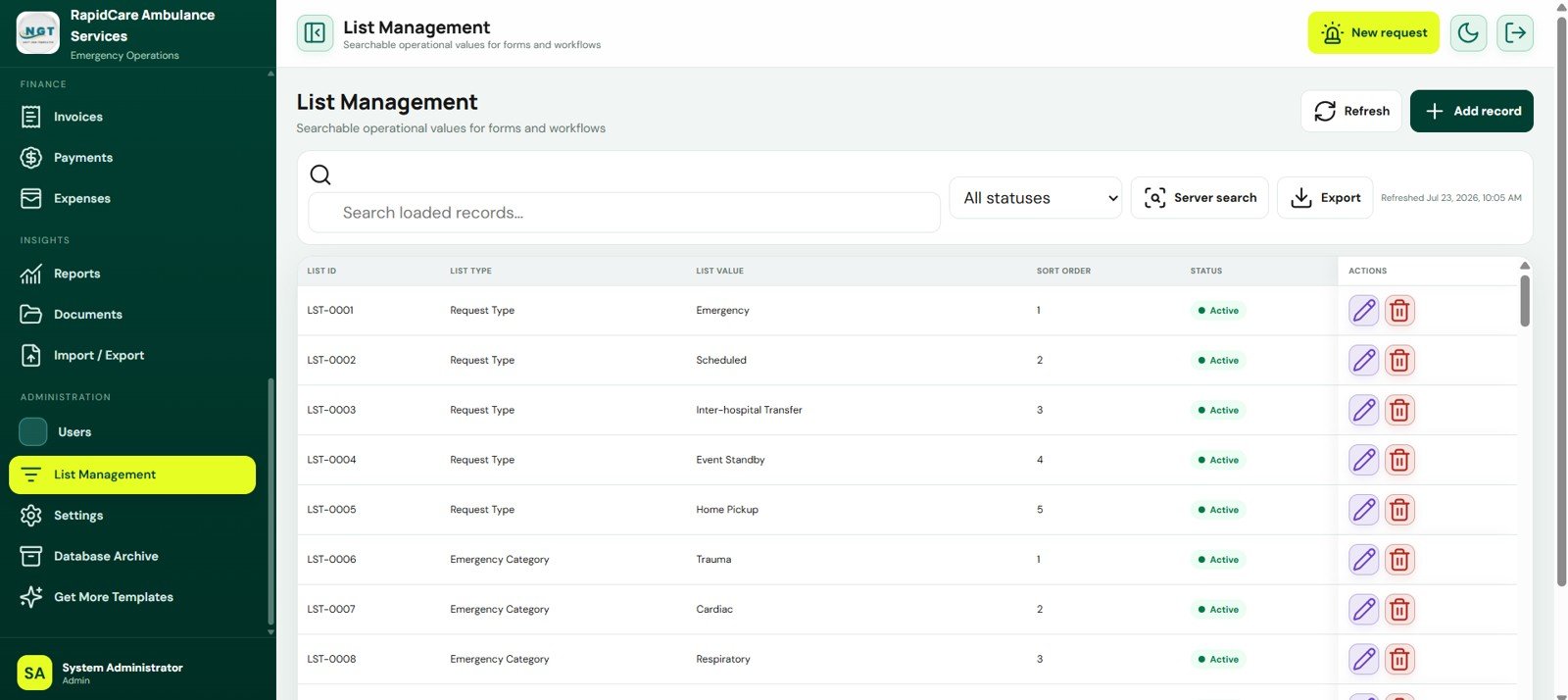
List Management controls list ID, list type, list value, sort order, and status. This module is important because consistent dropdown values make reporting and filtering more reliable.
Request types can include Emergency, Scheduled, Inter-hospital Transfer, Event Standby, and Home Pickup, while emergency categories can include Trauma, Cardiac, and Respiratory.
24. System Settings
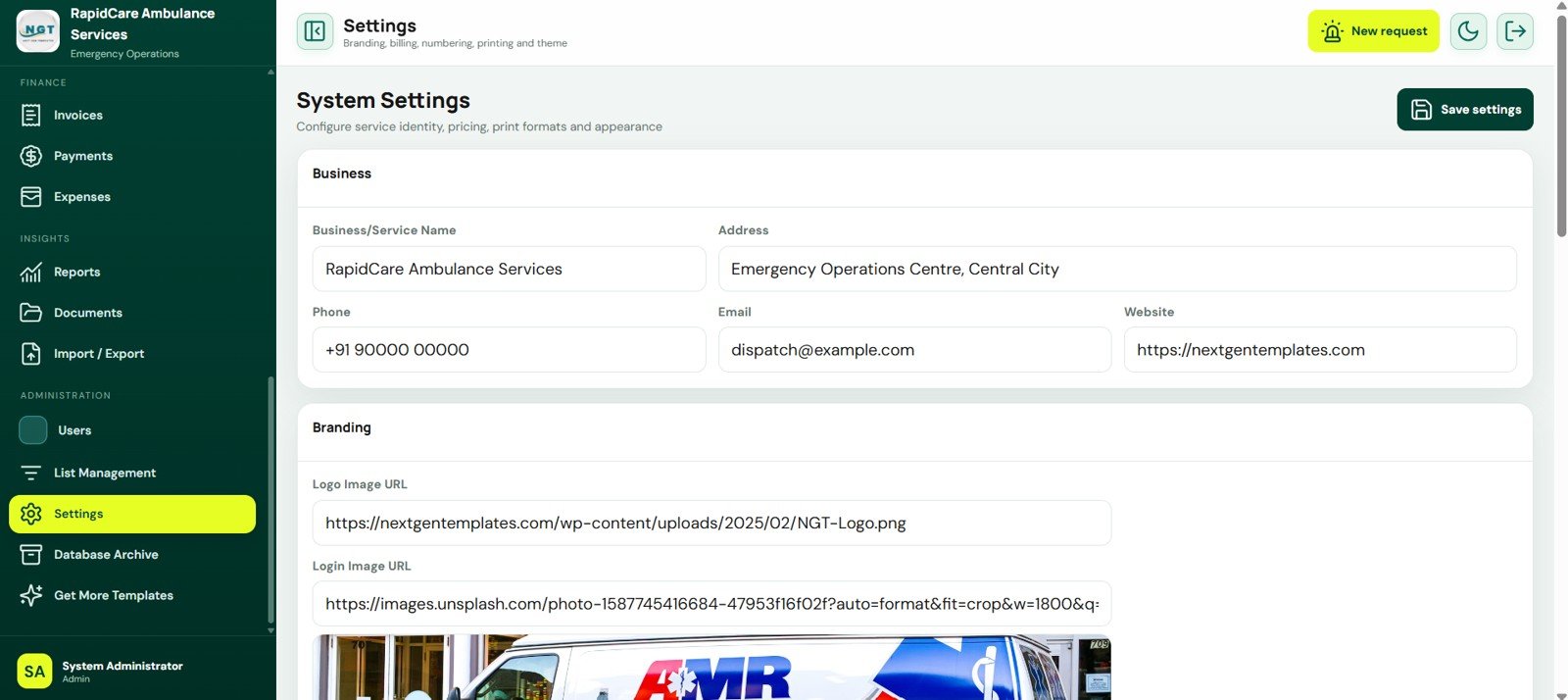
The settings screen manages business and service name, address, phone, email, website, logo image URL, login image URL, and save settings action.
These settings support service identity, pricing, print formats, and appearance customization after deployment.
25. Database Archive
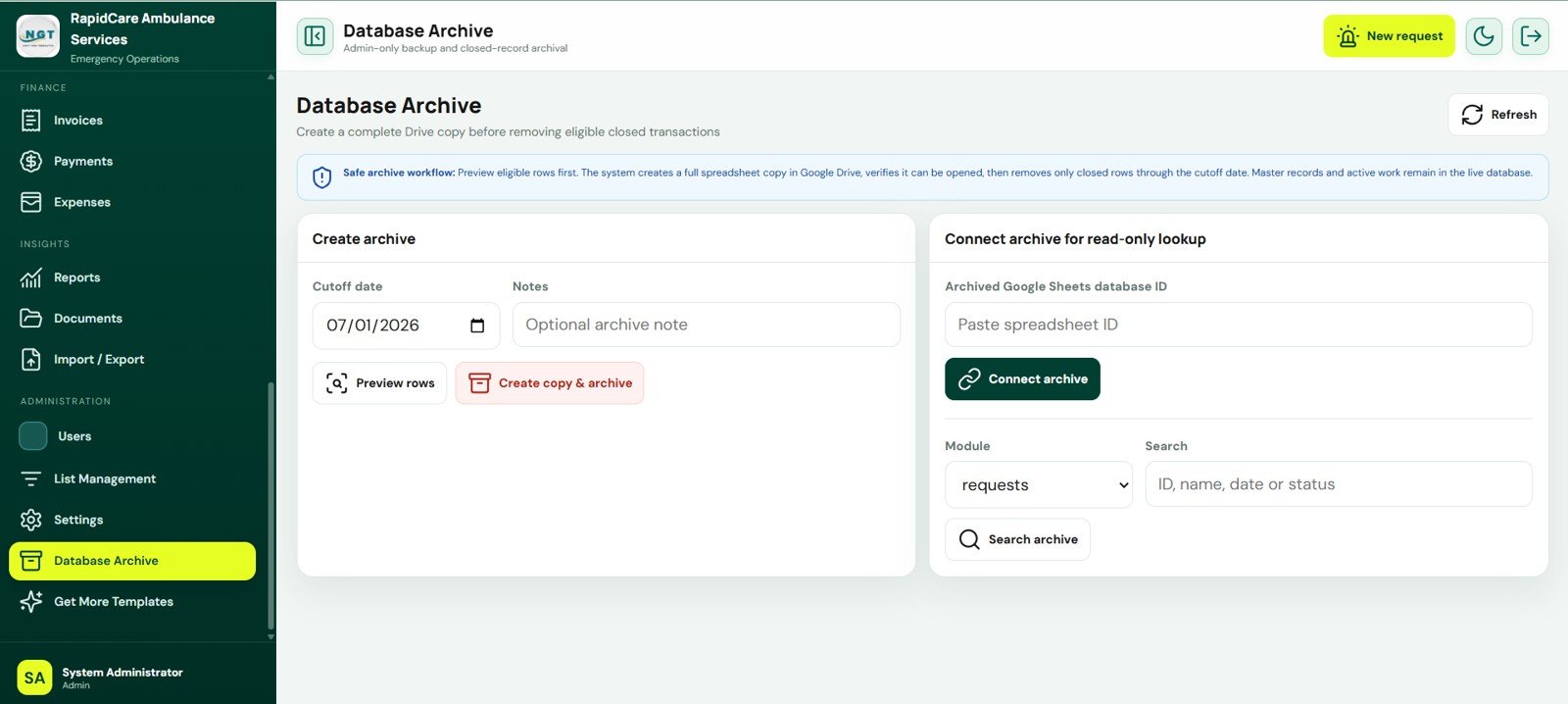
The Database Archive screen provides a safer workflow for closed records. Admin users can choose a cutoff date, add notes, preview rows, create a copy and archive, and connect an archive for read-only lookup.
The archived Google Sheets database ID field and archive search controls help teams find older closed records without loading everything into the live database.
Ambulance Fleet and Dispatch Management System Web App vs. Google Sheets Tracker vs. Paid Ambulance SaaS – Feature Comparison
| Feature | This web app | Basic Google Sheets tracker | Paid ambulance SaaS |
|---|---|---|---|
| Cost model | One-time template purchase | Low software cost but high manual setup time | Monthly or annual subscription |
| Platform | Google Apps Script web app with spreadsheet-style data storage | Spreadsheet tabs and filters | Vendor cloud platform |
| Setup time | Deploy source files, configure settings, replace sample data | Build forms, tables, formulas, and reports manually | Vendor onboarding and configuration |
| Real-time team collaboration | Browser access after deployment and permissions setup | Shared sheet collaboration | Usually included by plan |
| Mobile access | Browser access, depending on deployment settings | Google Sheets app or mobile browser | Usually app or responsive portal |
| Customizable fields | Editable lists, settings, HTML, Apps Script code, and data structure | Fully editable but manually maintained | Often limited by vendor configuration |
| Dispatch workflow | Request intake, assignment, trip lifecycle, active response units, map, and print actions | Manual status columns | Usually included by plan |
| Fleet readiness | Ambulance status, crew, insurance expiry, equipment, checklists, maintenance, and fuel logs | Manual sheets or separate files | Usually included in fleet module |
| Year-1 cost at 5 users | Template price plus any Google Workspace costs already used | Internal build and maintenance time | Often much higher due to per-user or per-vehicle pricing |
Who Should Use This Template
- Ambulance service owners who need one internal workspace for dispatch and fleet records.
- Dispatch coordinators who assign requests and monitor active response units.
- Fleet managers tracking ambulance status, fuel, maintenance, equipment, and expiry alerts.
- Billing administrators creating invoices, receipts, payment records, and outstanding balance reports.
- Healthcare operations consultants building a lightweight ambulance workflow for a client.
Real-World Use Cases
- Emergency dispatch desk: Capture a request, review priority, assign an ambulance, monitor response, and complete the trip record.
- Scheduled transport service: Use the calendar to coordinate planned patient movement and avoid double booking.
- Fleet readiness review: Check vehicle status, maintenance schedule, fuel costs, insurance expiry, equipment readiness, and checklist results.
- Month-end billing review: Compare invoices, payments, outstanding balances, operating expenses, and today revenue.
Advantages of Ambulance Fleet and Dispatch Management System Web App
- Runs as an editable Google Apps Script web app instead of a locked SaaS account.
- Combines request intake, dispatch, trips, fleet, equipment, billing, documents, reports, users, settings, and archive screens.
- Uses role-based workflows that match ambulance operations rather than a generic spreadsheet layout.
- Supports search, filters, server search, export, print, and workflow actions across operational modules.
- Lets teams keep ownership of their own deployed system and data structure.
Opportunities for Improvement
- Teams may still need GPS, live vehicle tracking, telematics, mapping APIs, or emergency communications integrations for production dispatch environments.
- Compliance, privacy, consent, audit retention, and medical documentation rules must be validated locally before live patient use.
- Large ambulance networks may need deeper branch hierarchy, API integrations, mobile apps, and formal security review.
- Users should test roles, permissions, backups, and archive workflows before replacing an existing process.
Best Practices
- Change all default users and passwords before live use.
- Clean patient, hospital, ambulance, staff, equipment, and list data before import.
- Test every request, dispatch, trip, invoice, payment, document, report, and archive workflow with sample records.
- Define who owns dispatch updates, fleet maintenance updates, billing records, and archive operations.
- Create a backup and archive policy before adding real operational data.
- Review Google Apps Script deployment permissions and OAuth scopes before sharing the app with users.
Explore Relevant Templates
- Ambulance Fleet and Dispatch Management System Web App
- Dental Clinic Management System
- Patient Care Homes Dashboard in Power BI
- Fleet Management Dashboard in Excel
- E-commerce Order Fulfillment Tracking System Web App
- Logistics Manager Toolkit
- HR Employee Management System Web App
If you want to build the spreadsheet skills behind systems like this, the NextGenTemplates Academy learning paths walk through trackers and templates with practice files.
Frequently Asked Questions
What is the Ambulance Fleet and Dispatch Management System Web App?
It is a downloadable Google Apps Script web app template for managing ambulance requests, dispatches, trips, fleet records, crew assignments, billing, documents, reports, and database archiving.
Is this a monthly software subscription?
No. It is a one-time ZIP download. You deploy and manage your own copy after purchase.
Does it include live dispatch workflow?
Yes. The live dispatch board shows pending request count, request cards, pickup and drop route details, assign-now action, active response units, and workflow actions.
Can it manage ambulance fleet records?
Yes. The fleet screen tracks ambulance ID, vehicle number, ambulance type, base station, availability status, assigned driver, insurance expiry, and fleet status.
Does it include billing?
Yes. It includes billing and invoice workflows for trip charges, kilometer charges, waiting charges, equipment charges, emergency charges, discount, tax, total amount, paid amount, balance, and payment status.
Is it a certified emergency communications system?
No. Treat it as an editable operations template. Validate local emergency response, medical documentation, privacy, security, and compliance requirements before using it with live patient or dispatch data.
About the Author
Built by PK – Microsoft Certified Professional with 15+ years of Excel, Google Sheets, and Power BI experience. Founder of NextGenTemplates, reaching 300K+ subscribers across YouTube channels. Every template is hand-built and tested before release.
Conclusion
The Ambulance Fleet and Dispatch Management System Web App gives ambulance teams a structured way to manage the operational path from request intake to dispatch, trip completion, billing, reporting, and archive lookup. It is best for teams that want editable source files, Google-account deployment, and a practical internal system without recurring per-user SaaS costs.
Get the Ambulance Fleet and Dispatch Management System Web App
Last updated: July 23, 2026.